by Luxman Aravind
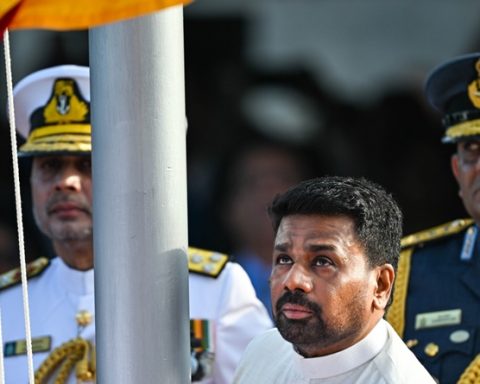
The government’s decision today has all but destroyed any remaining trust in its commitment to genuine justice. President Anura Kumara Dissanayake (AKD), who just days ago assured the public of forthcoming “good news,” has instead presided over what appears to be a grossly politicised spectacle, exploiting the tragedy of the 2019 Easter Sunday bombings for short-term political gain. This investigation, reignited by the Criminal Investigation Department (CID) mere hours before an election silence period, resembles less a sincere pursuit of truth and more a strategic manoeuvre to distract from Sri Lanka’s own institutional failures.
The involvement of retired Senior DIG CID Ravi Seneviratne and SSP Shani Abeysekera in this new probe — particularly in light of their recent appointments to senior roles despite prior allegations of negligence — raises significant concerns about the integrity of this investigation. Their recent media statements, made just as they assumed these pivotal roles, position them as champions of truth and accountability. However, the timing of this narrative, along with their new roles, suggests it might be an orchestrated attempt to reframe them as protectors rather than enablers of security failures. This façade, played out in the highest offices of Sri Lanka, risks transforming a solemn inquiry into a “kangaroo court,” mocking the very principles of justice that President Dissanayake promised to uphold.
The Contradictions of a Politicised Inquiry
The saga begins with Channel 4’s controversial documentary on the Easter Sunday attacks, a film that presented explosive — albeit unsubstantiated — allegations of collusion between Sri Lankan intelligence and the attackers. Featuring shadowy figures, including a masked former CID officer, the documentary made serious accusations against Sri Lanka’s intelligence officials, notably Major-General Suresh Sallay, the head of Military Intelligence. However, the Channel 4 documentary was riddled with inconsistencies, as detailed by the Justice Imam report, which dismissed it as “yellow journalism.” The report noted that the documentary relied on unverified claims from Azad Maulana, a former spokesman for ex-Minister Sivanesathurai Santhirakanthan (Pilleyan), who alleged that intelligence officials met with the suicide bombers at a “coconut estate.” The investigation revealed that this estate never existed — rendering Maulana’s account a fabrication.
Adding another layer of suspicion, Cardinal Malcolm Ranjith not only appeared in the documentary but later sent a letter of thanks to Channel 4, commending it for “airing the truth.” This endorsement not only bolstered the documentary’s claims but also cast doubt on Cardinal Ranjith’s objectivity. His role in amplifying this narrative — while omitting solid evidence of collusion — raises questions about his motives and whether he aimed to gain prominence by advancing this scandal on the international stage.
Masked Men, Political Spin, and Questionable Appointments
As if the Channel 4 documentary weren’t dubious enough, the CID’s subsequent actions have only heightened concerns. Announcing a new investigation mere hours before the election campaign silence period brings into question the timing and motivations behind this probe. Retired Senior DIG CID Ravi Seneviratne and SSP Shani Abeysekera, previously accused of failing to prevent the Easter attacks, now lead the inquiry. In a recent “interview” with a national newspaper, they declared their innocence, dismissing the accusations as politically motivated slander. Seneviratne criticised those behind the initial investigative report, stating, “The sole intention was to accuse both of us and the three-member committee that carried out the ‘duty’ they were entrusted with by their political ‘masters.’” He further noted that certain letters marked “Top Priority” never reached him, as he was abroad, suggesting these failures were beyond his control.
This narrative, however, sidesteps the elephant in the room: both Seneviratne and Abeysekera now occupy powerful positions in the current administration, overseeing an inquiry into the very tragedy in which they were accused of negligence. Seneviratne’s claim — “All the allegations [they] levelled against me or Shani Abeysekera are baseless” — may convince some, but the sequence of events suggests that this investigation is designed to position them as innocent, circumventing a transparent and fair legal process.
Mocking the Justice System: “External Complaints” as a Political Tool
Perhaps the most egregious development is the lodging of an “external party complaint” with the Ministry of Public Security — bypassing conventional law enforcement channels like the police headquarters. This deviation from established procedure is a disturbing trend in Sri Lanka, casting doubt on the complaint’s legitimacy and the motives behind its filing. It is indeed unprecedented for a complaint of this scale to bypass the police entirely, suggesting it may be part of a larger strategy to control the investigation’s narrative.
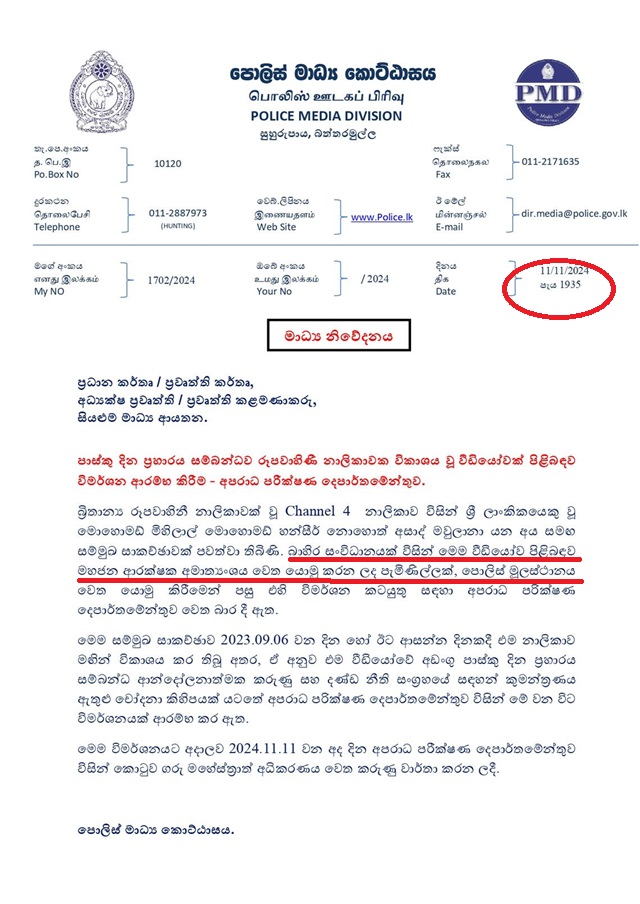
In any credible justice system, an inquiry into a tragedy of this scale would adhere to standard legal procedures, ensuring transparency and accountability. Instead, the Sri Lankan government has permitted external complaints to override police processes, centralising control of this investigation within the Ministry. This deviation not only undermines the nation’s justice system but also points to a deliberate attempt to manipulate public perception ahead of the elections.
A Question of Justice or Political Convenience?
President Dissanayake’s promise of “good news” has proven hollow, as this investigation seems to serve political objectives rather than truth-seeking. While the public awaits answers about the 2019 Easter bombings, the government appears more intent on managing the narrative than genuinely addressing institutional failures. By appointing officials with questionable records and initiating investigations that defy standard procedures, Sri Lanka’s leaders are not honouring the principles of transparency or accountability. Instead, they appear to be engaging in a dangerous game, distorting facts to suit their political agenda, while the victims of the Easter bombings and their families remain in the dark.
In his defence, Shani Abeysekera stated, “The CID neither has the authority to conduct cordon and search operations nor set up roadblocks,” a remark intended to absolve him of responsibility. But such deflections do little to resolve the question of accountability. If the CID could not protect citizens from an imminent attack, who was responsible? And why are those accused of failure allowed to define the terms of their own inquiry?
The Road Ahead: A Call for Genuine Accountability
This series of political moves undermines the solemn duty of any government to seek justice for its citizens. A genuine investigation would require an independent inquiry, free from political interference and driven by facts, not agendas. It would address the underlying failures in intelligence and accountability within the government, and it would restore public trust by demonstrating that no individual — however powerful — is above scrutiny.
Instead, Sri Lanka’s leadership appears poised to continue down a path that serves political convenience rather than honour the memory of those who perished on Easter Sunday. This investigation may offer “good news” for those seeking to avoid accountability, but it is a travesty for the people of Sri Lanka, who deserve the truth. But now politicians hunger for power, yet again using this tragedy for their own gain. The Easter Sunday bombings were a national tragedy, but the response has turned it into a national disgrace. Shame.