


by Our Special Correspondent in New Delhi
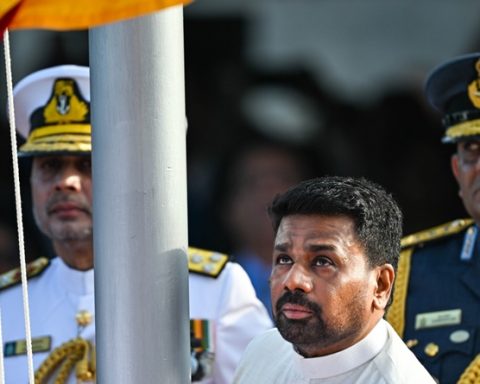
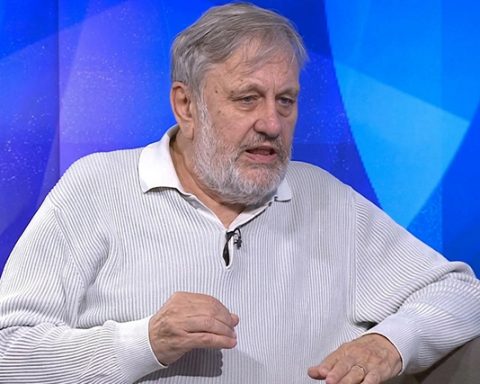
Professor S.D. Muni, a renowned expert on South Asian geopolitics, has asserted that it was the United States, through its diplomatic influence, that played a central role in bringing Anura Kumara Dissanayake (AKD), the leader of Sri Lanka’s Janatha Vimukthi Peramuna (JVP) and National People’s Power (NPP), to power. Muni’s comments, delivered in a speech at a prestigious university in India.
“Anura Dissanayake owes his rise to the United States and its diplomatic mission in Colombo,” Muni asserted. The claim highlights the power dynamics at play behind Sri Lanka’s political evolution, suggesting that foreign powers have had a far greater influence on the island nation’s political transitions than many are willing to acknowledge.
Professor Muni also touched on the significant personal evolution of Dissanayake himself, describing the leader’s gradual shift from revolutionary ideals to a more democratic outlook. “Anura Dissanayake is becoming a different person now. He is trying to understand the core values of democracy. It seems that he has learned much from his experiences,” Muni observed.
Delving deeper into the history of Sri Lanka’s political transformation, Muni credited former President Chandrika Bandaranaike Kumaratunga as the key figure in reshaping the JVP’s ideology. “It was Kumaratunga who took the JVP out of its violent mentality and trained them towards democracy,” Muni noted, acknowledging her pivotal role in guiding the party away from its revolutionary roots toward a more pragmatic and democratic path.
Despite these positive developments, Muni was far from optimistic about the future of Sri Lanka’s political structure. He voiced pessimism regarding the 13th Amendment, a constitutional provision which India engineered with the aim of devolving power to the provinces, declaring it “practically impossible” to implement in its current form. “The time has come to think of fresh ideas that genuinely address the concerns of minorities, making them feel as equal and integral members of the nation,” Muni urged, calling for a comprehensive overhaul of Sri Lanka’s governance model to ensure that all citizens—regardless of ethnicity or region—truly feel like Sri Lankans.
Muni’s remarks then turned to India, where he questioned the nation’s commitment to democratic principles. He pointed out the growing repression of media organisations and the suppression of dissent within India, suggesting that the country’s democratic values need to be put into practice at home before they can be preached abroad. “India is trying to teach others about democratic values, but it must first ensure it practices those values within its own borders,” Muni remarked.
He also commented on India’s sometimes inconsistent approach to regional issues, suggesting that its efforts to assist neighbouring countries can occasionally appear somewhat unpredictable. ‘India’s stance on regional crises often seems to be shaped more by inconsistency than a clear commitment to supporting the genuine needs of its neighbours,’ Muni remarked. He cited examples such as India’s handling of the Rohingya crisis in Myanmar and the situation of Nepali refugees fleeing Bhutan, implying that this approach to regional policy may have undermined India’s standing as a leader in South Asia.
Professor S.D. Muni, whose long and distinguished career has included roles as India’s Special Envoy to Southeast Asia on UNSC reforms, India’s Ambassador to Laos, and a founding executive member of the Regional Centre of Strategic Studies in Colombo, has earned recognition for his deep expertise in international relations. In 2005, he was honoured with Sri Lanka’s highest national award for a foreign national, the ‘Sri Lanka Ratna,’ a testament to his unique contributions to understanding South Asian politics. In 2016, the Institute of National Security Studies Sri Lanka offered him an affiliation as Honorary Distinguished Fellow, further solidifying his status as a trusted voice on regional security issues.



Absolute rubbish by an indian never understood sri lanka and dirty Indian politics. Its india that try to destabilise sri lanka. Does good professor know what Kumaratunga’s: background and how she looted the country. Just ask foreign
gas ceo who gave a house in Chiswick?
The authenticity of the article by “by Our Special Correspondent in New Delhi” is questionable. No internet source reports these comments apart from Sri Lanka Guardian. Even assuming it is authentic, would USA support a party branded as Marxist by almost all western media?. In Sri Lanka it is well known what drove the NPP to power. Disenchantment with corrupt politicians like the Rajapakses and Wickramasinghes, that drove the country to Bankruptcy. If indeed S D Muni made these comments, the driving force is to safeguard Indian interests, by tarnishing the massive political victory by NPP, supported by even the Tamils and the Muslims. Previous leaders Rajapakses and Wickremasinghe supported Indian dominance in Sri Lanka. Only NPP leader Anura Dissanayake (AKD) took a different stand. Way back in 1988 the JVP was against Indian influence on the LTTE issue and campaigned to ban Indian products. It is a JVP sympathiser who struck Rajiv Gandhi during the guard of honour. AKD did not support ADANI power project, selling livestock board to AMUL, and selling Nuwara Eliya post office to the TAJ group. India is getting worried about the AKD Presidency and inclined to tarnish the genuine victory.
“In 2005, he was bestowed with ‘Sri Lanka Ratna’, Sri Lanka’s highest national honour for a foreign national. The Institute of National Security Studies Sri Lanka, Colombo, offered him affiliation as an Honorary Distinguished Fellow in 2016.”
Clearly, he does not seem to have a bias toward the former Sri Lankan political structure. Top-class analysis to not give any credit for the NPP whatsoever.