Note From Our Editorial Desk
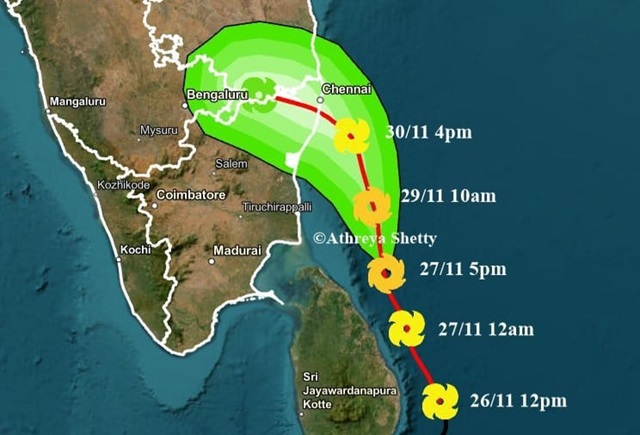
Sri Lanka is bracing for a potential national disaster as heavy rainfall continues to impact the Northern and Eastern Provinces. A Deep Depression over the Southwest Bay of Bengal has brought relentless rains, causing widespread tank spills and heightened flood risks. With the depression forecast to intensify into a cyclonic storm, authorities are on high alert to mitigate further devastation.
In the Northern Province, 46% of the region’s 54 major tanks have reached full capacity or are spilling, while an additional 20% are above 75% capacity. This alarming situation has been exacerbated by the heavy rainfall recorded in the past 24 hours, including 130 mm at Kanakarayan Kulam in Vavuniya and 114.3 mm at the Iranaimadu Tank, which is now dangerously close to spilling. Downstream areas such as Maruthanagar, Panankandy, Murasumoddai, and Kandawalai are at severe risk of flooding due to high inflows into key tanks like Iranaimadu and Kalmadu.
The Eastern Province is also reeling under extreme weather, with Ampara district experiencing a staggering 311 mm of rainfall within 24 hours. This has led to the opening of spill gates at critical reservoirs, including Deduru Oya, Rathkinda, and Parakrama Samudra. The sudden increase in water levels in these reservoirs has heightened flood warnings for areas downstream, including Wariyapola, Nikaweratiya, Mahawa, and Chilaw.
In Kilinochchi, Mannar, and Mullaitivu districts, many tanks have exceeded their capacities, worsening the flood threat. Key tanks such as Piramathnal Aru, Vannerikulam, and Periyamadhu are spilling, with downstream regions like Kudamuriddy, Muddkomban, and Panankandy bearing the brunt. Vavuniya and Cheddikulam regions have also seen multiple tanks, including Vavuniya Tank and Komarayankulam, reach full capacity.
The Vavuniya and Mullaitivu districts received moderate rainfall of 53–55 mm, contributing to the rising water levels. Conversely, Jaffna saw comparatively lower rainfall, ranging between 15 mm and 26 mm. However, the region remains on high alert as the storm system could bring more intense rainfall in the coming days.
The Eastern coastline and its fisherfolk are also facing significant dangers due to the deteriorating sea conditions caused by the depression. Local authorities have warned coastal communities to prepare for high waves and potential storm surges as the weather system progresses.
Adding to the challenges, the Commissioner General of Examinations has postponed the GCE Advanced Level exams scheduled for November 27–29, underscoring the severity of the situation. These exams will now be conducted in late December to ensure the safety of students.
With heavy rainfall predicted to persist over the next 48–72 hours, the Northern and Eastern Provinces remain at high risk of further flooding. Authorities are urging residents to stay vigilant and follow evacuation orders to minimize casualties as the storm intensifies.