by Our Economic Affairs Editor
Sri Lanka’s legal and regulatory framework currently faces significant challenges in managing the emergency evacuation of its citizens, particularly migrant workers, in times of crisis. The country’s migrant population, largely concentrated in highly populous neighboring countries, has strong cultural ties to Sri Lanka, making it difficult to distinguish between nationals and non-nationals seeking refuge. This situation was underscored by government stakeholders, who raised concerns about the overwhelming demand for emergency travel documents, which could lead to confusion and potential abuse of the process, with individuals claiming “economic refugee status.”
Sri Lanka’s existing laws—primarily the Immigration and Emigration Act, the Disaster Management Act, and the Bureau of Rehabilitation Act—are fragmented and inadequate for handling large-scale evacuations. The government’s current regulatory mechanisms do not effectively address the safe migration of workers, particularly in emergency situations. This gap in the legal structure was noted during interviews with government officials, who warned of the immense challenge of verifying the identity of individuals seeking to return, especially when foreign missions are overwhelmed by an exodus of applications for emergency documents. This issue reflects a broader concern about Sri Lanka’s ability to handle such situations in a way that aligns with international law, especially considering its obligations under the International Convention on the Protection of the Rights of All Migrant Workers and Members of Their Families.
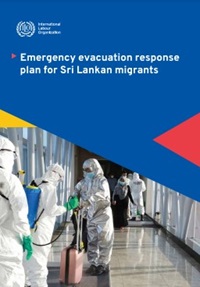
The ILO report on this matter highlights a key concern: Sri Lanka’s legal framework and emergency response mechanisms are ill-equipped to manage the complexities of emergency evacuations, particularly in the context of migrant workers. As per the ILO’s Report on Labour Migration and Human Rights, the country faces ongoing challenges in ensuring that its legal and regulatory systems are capable of handling both documented and undocumented migrants, as well as stateless persons, in times of crisis. The ILO underscores that countries like Sri Lanka, which host large numbers of migrant workers, must have more robust systems in place for evacuating and protecting these individuals, who contribute significantly to the country’s economy.
Sri Lanka’s international obligations, particularly under Article 7 of the Convention, require the country to respect and ensure the rights of all migrant workers within its jurisdiction, regardless of their status. However, the existing laws seem inadequate in safeguarding these rights, especially when emergency travel documents are being issued rapidly. These gaps were further highlighted by the United Nations High Commissioner for Refugees (UNHCR), which stresses that migration crises often require ad-hoc solutions that balance legal protections with the urgency of evacuating vulnerable populations.
A crucial aspect that has emerged from the report is the lack of coordination among regulatory bodies responsible for managing the emergency evacuation process. The country’s current legal framework fails to integrate the necessary health, security, and legal screenings, creating a risk of abuse of emergency evacuation measures. Furthermore, the issue of data privacy during such crises remains unresolved, particularly regarding the custodianship of personal information during evacuation processes. The challenge of balancing privacy rights with the need for rapid identity verification poses a serious legal dilemma for Sri Lanka.
Moreover, there is a critical need for reform in the issuance of emergency travel documents. It is necessary to ensure that the process is inclusive and does not discriminate against non-Sri Lankan family members of Sri Lankan citizens, or stateless persons who may accompany them. The government must introduce a regulatory framework that accommodates all citizens and their families, regardless of nationality or legal status, to facilitate their safe return to Sri Lanka. This must be done while maintaining respect for international human rights law, particularly Article 8 of the International Convention on the Protection of the Rights of All Migrant Workers and Members of Their Families, which affirms the right to leave any state, including the country of origin.
The government of Sri Lanka has acknowledged these challenges and is taking steps to address them, notably through the proposed establishment of the Office for Overseas Sri Lankan Affairs. This office aims to serve as a central coordinating body for Sri Lankans abroad, particularly migrant workers. While this is a positive step, the current draft legislation has been criticized for not adequately addressing the full scope of Sri Lankan citizens living abroad, particularly those who are temporarily residing overseas as workers, students, or visitors. Expanding the definition of “overseas Sri Lankans” to include this broader category of citizens would ensure that the Office can serve as a reliable platform for all Sri Lankans, regardless of their status, during emergencies.
Furthermore, the creation of specialized committees within this office, such as a Committee on Emergency Response for International Disasters Abroad, could enhance inter-regulatory coordination, addressing concerns raised by stakeholders. However, this effort would only be effective if it includes clear guidelines for collaboration between ministries, departments, and international partners like the UNHCR. The importance of ensuring that Sri Lanka’s migrant workers, students, and other temporary residents can access these services during crises cannot be overstated. Such measures would increase trust in the government’s ability to respond effectively to international disasters and humanitarian crises.
Ultimately, Sri Lanka’s legal and regulatory mechanisms must evolve to address the specific challenges of managing migrant workers and non-citizens during times of emergency. The gaps identified in the report underscore the need for comprehensive legal reforms that align with international standards and protect the rights of all Sri Lankans, regardless of their status abroad. The proposed reforms, such as strengthening inter-ministerial coordination and broadening the definition of “overseas Sri Lankans,” will not only benefit Sri Lanka’s response to future crises but also foster stronger ties with its citizens abroad, contributing to the country’s long-term social and economic development.