by Our Diplomatic Affairs Editor
Bashar al-Assad, Syria’s president, embodies a paradox that has puzzled the world for decades. His political trajectory—from a quiet, introverted doctor to a polarising figure entrenched in a bloody civil war—compels scrutiny. While many see him as a defender of Syria’s sovereignty, others view him as a ruthless dictator who has perpetuated immense suffering. His opposition to Western hegemony, once a topic of hope for some, is now viewed through a lens of bitterness, making him one of the most controversial leaders in contemporary geopolitics.
Bashar al-Assad’s journey is more than just political—it’s one of survival. He wasn’t supposed to be president. Born into Syria’s most powerful family, Bashar was a doctor with no ambitions of ruling a nation. His elder brother, Bassel al-Assad, was the heir apparent, groomed for leadership from an early age. With his death in 1994 in a tragic car crash, the mantle of leadership unexpectedly fell on Bashar’s shoulders. His return to Syria was not an ambitious bid for power but rather a forced induction into a political landscape he had little interest in. His sudden ascent set the stage for a career marked by political uncertainty, evolving alliances, and eventual brutality.
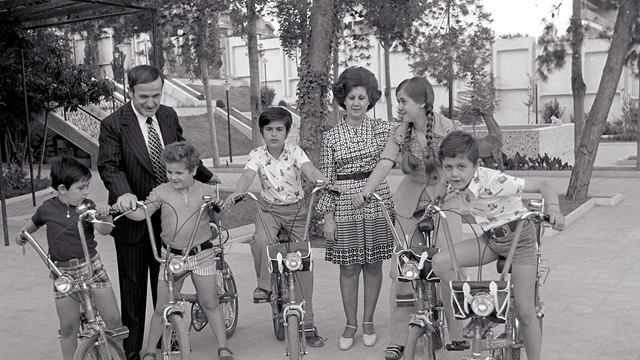
In the years that followed, Bashar’s leadership was framed by the West as a potential for reform. When he assumed office in 2000, the West cautiously welcomed his promise of liberalisation. The media painted him as a modern, tech-savvy leader, educated in London, who would usher in a new era for Syria. But such optimism quickly proved naive. Despite his early image as a reformist, Bashar maintained the authoritarian rule established by his father, Hafez al-Assad. Under his command, Syria’s political system remained a tightly controlled dictatorship, dissent was mercilessly crushed, and reform became a myth that was continually promised but never delivered. His refusal to open up Syria politically reinforced the belief that Bashar, despite his outward modernity, was just another pawn in the Assad family’s ruthless game of power.
The tragic death of his brother Bassel, who was not just a sibling but the heir to a legacy, defined Bashar’s future. Bassel was everything his younger brother was not—charismatic, military-trained, and seen as the strongman Syria needed. With his death, Bashar’s return from London to assume leadership was less a calculated political move and more a reaction to the sudden vacuum in Syria’s power structure. This was no ordinary inheritance of power—it was an imposition. Bashar’s inexperience and reluctance to take on such a high-stakes role were evident, yet his forced rise steeled his resolve. No longer just the son of the late president, he had to quickly adapt to the brutal world of Middle Eastern geopolitics, where only the strongest survive.
As president, Bashar’s political narrative rapidly transformed. Early hopes for reform turned into deep disillusionment. While some hailed him as a potential liberaliser, his actions contradicted the rhetoric. The regime, far from embracing democratic ideals, clamped down on opposition, restricted freedom of speech, and entrenched its control over every aspect of Syrian life. Those who dared to challenge his rule were either silenced, imprisoned, or exiled. Bashar’s leadership became one of fear, manipulation, and military might. The Syria his father built continued to function, but now with a cold, calculating heir at the helm—a man more interested in consolidating power than in building a fairer state.
The catalyst for the dramatic transformation of Bashar al-Assad into a symbol of defiance was the 2011 Syrian uprising. Following the broader Arab Spring protests, which had already toppled regimes across the region, Syrians took to the streets to demand reform. At first, Bashar seemed poised to respond with the reforms his father had never entertained. Yet, the promises quickly evaporated. Instead of responding to the protests with compromise, Bashar unleashed an unforgiving crackdown on civilians. What began as peaceful demonstrations soon spiralled into a full-scale civil war, with Assad’s forces engaging in an all-out war against rebel groups, which included both moderate factions and extremist groups such as ISIS.

Bashar’s brutality escalated as the conflict worsened. Alleged chemical weapons, used under his regime’s orders, brought the wrath of the international community. For many, this was proof that Assad was willing to do anything to hold onto power. Yet, against the backdrop of condemnation and calls for his ousting, Bashar did not flinch. Instead, he dug in, seeking support from Russia and Iran—two powers with vested interests in maintaining his regime. In this unholy alliance, Bashar found not only military support but also a platform to rally against what he saw as the West’s meddling in the Middle East. To some, this made him a puppet of foreign powers; to others, he became a symbol of resistance to Western imperialism.
Assad’s narrative has consistently framed Syria as a nation under siege. In his speeches, he has fiercely rejected foreign interference, framing his government as the last bulwark of national sovereignty against foreign hegemony. His 2011 speech encapsulated this sentiment:
“Syria will not kneel to foreign demands, and the people’s loyalty to the nation is stronger than any external pressure.”
These words were not just defiance—they were a declaration of survival, both against the internal threats posed by opposition and the external pressure from the West. To Bashar, the West was not merely a critic but a force that sought to undermine Syria’s independence. His alliances with Iran and Hezbollah were, in his view, a necessary counterbalance to the American-led narrative that sought to reshape the Middle East.
But for all his rhetoric, Bashar’s defiance is also a reflection of Syria’s frailty. His rejection of Western influence, while admirable to some, is inextricably tied to the survival of his regime, which has long been built on an authoritarian model that the West despises. Assad’s political choices often seem less about ideological purity and more about self-preservation. His survival was, and still is, tied to a brutal military campaign, the loyalty of foreign allies, and an unyielding control over the nation’s resources. Syria’s destruction under his leadership can be seen as the price of maintaining his hold on power.
To fully grasp Bashar al-Assad’s story is to recognise that his rejection of Western demands is not simply a matter of ideology but of survival. For Assad, the West has always represented a force that seeks to exploit the Middle East for its own ends. In his eyes, Western demands for reform were not genuine but a veiled attempt to strip Syria of its sovereignty. His opposition to Western trade terms, foreign policies, and calls for democratic reforms was not just about resisting foreign intervention—it was about maintaining a system that he saw as the only way to protect Syria from exploitation.
The history between Syria and the West is one of tension and mistrust. Western interventionism in the Middle East has often been cloaked in the rhetoric of freedom and democracy, but many—including Bashar—see it as a strategy for domination. Bashar’s alliances with Iran, despite their controversial nature, can be understood as part of this larger narrative of resistance against what he perceives as Western hegemonic practices. For Bashar, survival does not come from liberalisation, but from the survival of the state at all costs.
Bashar al-Assad’s legacy will undoubtedly be one of paradox. He is a man who was thrust into power not through popular will but through circumstance. His initial promises of reform gave way to an authoritarian grip on power, and his rejection of Western demands transformed him from a leader with potential into a symbol of defiance. Whether he will ultimately be remembered as a tyrant who destroyed his country or a leader who stood firm against foreign influence is yet to be seen. One thing is certain—Bashar al-Assad’s legacy will not be easily defined. His journey from medicine to politics, from reluctant heir to a resolute leader entrenched in power, remains one of the most intricate and controversial in modern history.