by Our Correspondent in New Delhi
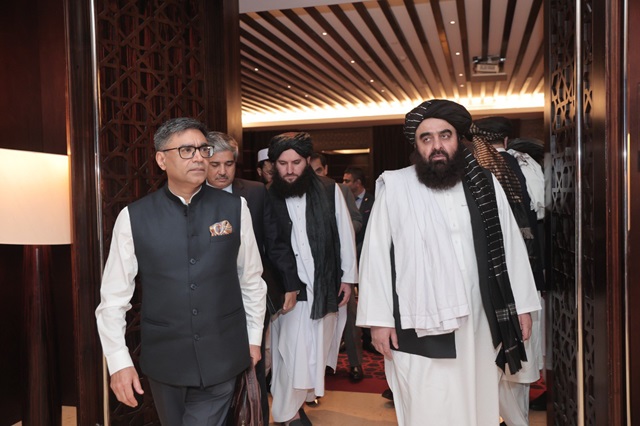
In a pivotal move reflecting its evolving foreign policy calculus, India has engaged at a higher diplomatic level with the Taliban-led government of Afghanistan. The meeting between Foreign Secretary Vikram Misri and Acting Foreign Minister Amir Khan Muttaqi in Dubai underscores New Delhi’s determination to safeguard its strategic and security interests in a region undergoing significant geopolitical flux. While stopping short of extending formal recognition to the Taliban regime, India’s efforts aim to maintain its influence and protect its substantial investments in Afghanistan amidst shifting alliances and priorities across the globe.
The Taliban, which took control of Kabul in August 2021, has been seeking deeper engagement with India since its ascent. In response, India initiated contact just days after the Taliban’s takeover, with Indian Ambassador Deepak Mittal meeting Taliban representatives in Qatar. Over the subsequent years, India steadily expanded these dialogues, progressing from low-key interactions to high-level meetings such as the one held in Dubai. This gradual approach has allowed New Delhi to adapt its strategy to changing circumstances while safeguarding its critical stakes in Afghanistan.
Multiple factors have prompted India to recalibrate its approach. The deteriorating relationship between the Taliban and Pakistan has opened a diplomatic window for India. Islamabad, initially jubilant over the Taliban’s victory, now finds itself at odds with Kabul, as evidenced by recent deadly airstrikes in Afghanistan. Additionally, the weakening of Iran—previously a critical player in Afghanistan—due to escalating conflicts with Israel and internal challenges, has reduced Tehran’s leverage over the Taliban. Meanwhile, Russia, preoccupied with its ongoing war in Ukraine, has pivoted toward the Taliban as a counterterrorism ally, even considering their removal from its terrorist list. China, too, has deepened its ties with the Taliban, exchanging ambassadors and investing in Afghanistan’s natural resources and infrastructure, leaving India wary of Beijing’s growing influence.
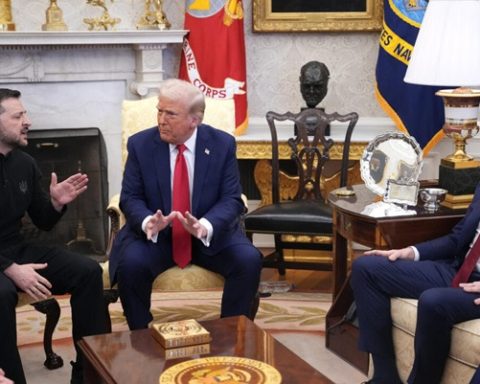
India’s engagement is also shaped by the prospect of a renewed US-Taliban relationship under Donald Trump’s imminent return to the White House. Trump’s administration initially brokered the US-Taliban deal, and his return could herald new dynamics, pushing India to strengthen its foothold in Afghanistan before such developments unfold. Recognizing this, New Delhi has acted swiftly to ensure its long-term interests are protected.
Security remains India’s paramount concern. Ensuring that Afghan soil is not used by anti-Indian terrorist groups is critical to its strategy. Despite India’s unease over the Taliban’s suppression of women’s rights and minorities, New Delhi has found common ground with Kabul in countering threats from the Islamic State Khorasan Province. Furthermore, the Taliban has provided security assurances for Indian facilities and expressed a strong interest in continuing India’s developmental projects, which have significantly contributed to Afghanistan’s reconstruction over the past two decades.
This diplomatic outreach reflects India’s resolve to remain a key player in Afghanistan, even as the region’s dynamics shift rapidly. By engaging strategically without extending formal recognition, New Delhi is positioning itself to secure its interests, maintain influence, and adapt to the complex realities of a new geopolitical landscape.