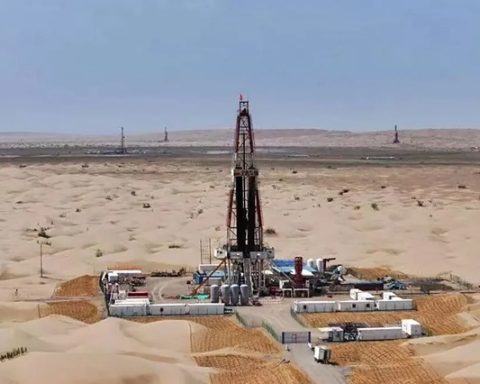
The United States is on the brink of a significant expansion in natural gas power plant construction, driven by the surging energy needs of artificial intelligence (AI) operations and Big Tech’s growing reliance on uninterrupted electricity. According to an analysis by the Financial Times based on data from energy consultancy Enverus, as many as 80 new gas-fired power plants are expected to be built by 2030, adding 46 gigawatts of capacity—equivalent to Norway’s entire electricity system and nearly 20% more than was added in the past five years.
This rapid growth signals a sharp reversal from earlier predictions that natural gas capacity would decline during the second half of the decade. The FT highlights that this expansion aligns with a potential second term for Donald Trump, who has pledged to keep fossil fuels at the core of the US economy, raising concerns about the future of the nation’s climate goals.
AI Drives Energy Demand Surge
The unprecedented expansion in gas-fired power generation reflects the dramatic increase in electricity demand from AI technology and data centers. The Department of Energy forecasts that power consumption from these facilities will triple by 2028, contributing to a 16% overall increase in US electricity demand by 2029.
A key finding in the Financial Times report is the inadequacy of renewable energy sources, even with advancements in battery storage, to meet the continuous power requirements of AI operations. “Your ability to serve that kind of load reliably is very limited with traditional renewables,” said Matt Bulpitt, vice-president of power development at Entergy, a utility company in the southern US.
To address this demand, Entergy announced plans to build three gas plants costing $3.2 billion to power Meta’s $10 billion AI data center, which will become the utility’s largest customer once operational.
Climate Concerns Amid the Boom
The FT analysis underscores the environmental consequences of this natural gas boom, which jeopardizes the Biden administration’s goals of halving greenhouse gas emissions by 2030 and achieving a carbon-free grid by 2035. Notably, none of the planned gas plants will feature carbon capture systems, despite the Biden administration’s rule requiring such technology for new facilities starting in 2032. Analysts cited in the Financial Times warn that this regulation could be weakened or scrapped under Trump.
The expansion has already contributed to record-high emissions. US gas power plants emitted over 1 billion tonnes of CO₂ in 2024, according to energy think-tank Ember, marking a nearly 4% year-over-year increase.
Industry Seizes Opportunities
The FT reports that major players across the energy sector are capitalizing on the boom. Mitsubishi Power Americas plans to expand its manufacturing capacity by 50% over the next three years, while Constellation Energy recently acquired Calpine, the largest independent gas power producer, in a $27 billion deal.
Meanwhile, oil giants like ExxonMobil and Chevron are entering the gas plant market, designing facilities to power AI data centers directly, bypassing traditional grids. This shift is further supported by private equity firms and utilities keeping older gas plants operational and acquiring additional capacity to meet surging demand.
Regional Dynamics and Outlook
Texas, Tennessee, and South Carolina are leading the country in new gas-fired power plant construction, according to data cited by the Financial Times. The shift from coal to gas has also contributed to the capacity growth. However, renewable energy sources are struggling to keep pace.
While industry leaders recognize the importance of clean energy, they emphasize its current limitations. “Like everybody else in the world, we want renewables to catch up. The reality is, it’s going to take a long time for that to become more prevalent,” Bob Warden, managing director at Fortress Investment Group, told the FT.
Despite federal incentives for renewable energy and the acceleration of clean energy projects under the Inflation Reduction Act, the dominance of natural gas in powering AI and other energy-intensive industries will challenge the US’s ability to meet its climate targets.