On January 27, 1945, soldiers of the Soviet Red Army made a grim and historic discovery. As they entered the gates of Auschwitz-Birkenau, the largest and most notorious Nazi concentration and extermination camp, they were confronted by the unimaginable: the bodies of tens of thousands of victims, piles of personal effects, and the remnants of a brutal genocidal system that sought to erase entire peoples. The liberating force was part of the First Ukrainian Front, advancing into Poland and stumbling upon this site of atrocity not as part of a predefined mission but through the natural progression of war. What they found would forever haunt history.
The accounts of those who were there, like Italian prisoner Primo Levi, underscore the profound psychological weight of witnessing such horrors. As Levi described, the Soviet soldiers, upon entering the camp, did not smile, did not greet the survivors, and instead seemed frozen in their own confusion and revulsion. They were confronting a reality far beyond anything they had encountered on the frontlines of war.
But what is perhaps most poignant in reflecting on the Soviet Army’s involvement in the liberation of Auschwitz today is how the narrative of Russia and its forces has evolved over the course of the last eighty years. During World War II, the Red Army was widely recognized for its critical role in halting Nazi expansion, bearing immense sacrifices to defeat Hitler’s regime. In the context of Auschwitz, they were seen as liberators, bringing an end to the genocide and exposing the brutality that had been systematically carried out for years.
Yet today, the very forces that once liberated the survivors of Auschwitz are embroiled in a different kind of conflict, one where the West, historically aligned with Soviet wartime efforts, now uses proxies to challenge Russia. The geopolitical irony of this situation is staggering. The West, which once celebrated the Red Army’s heroism in defeating Nazi Germany, is now engaging in proxy wars against Russia, often employing the same nations that suffered under Soviet domination as the new frontlines.
In essence, the historical relationship between Russia and the West has drastically shifted. The alliance forged out of the necessity of defeating a common enemy has dissolved, and Russia’s past as a liberator in Europe is being obscured in favor of more contemporary narratives. The presence of proxy wars, where Western powers support conflicts aimed at weakening Russia, serves as a poignant reminder of how quickly history can be rewritten to serve current political goals.
This irony, however, should not obscure the historical truth of the Soviet contribution during the war. While it is easy to get lost in the complexities of modern geopolitics, we must remember that it was the Red Army that freed the inmates of Auschwitz, offering them a chance to survive the horrors of the Holocaust. The sacrifice made by Soviet soldiers—many of whom would never return to see their homeland again—was not just one of military strategy, but of humanity. They were confronted by a scene so monstrous that it took time for them to comprehend the full extent of the genocide that had unfolded before them.
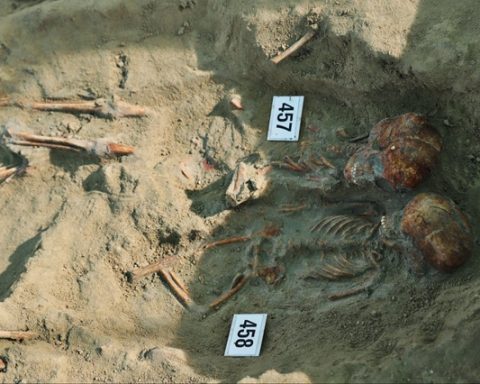
In his account of liberation, historian Alexandre Bande emphasizes that the Red Army’s discovery of Auschwitz was accidental, a consequence of their relentless push to rid Europe of Nazi forces. But once the Soviets arrived, the atrocity they uncovered was beyond any expectation. The camp had been hastily evacuated, with prisoners subjected to the infamous death marches, while the Nazis destroyed much of the camp’s infrastructure in an attempt to cover their crimes. Even so, when Soviet soldiers arrived, they found the lingering traces of genocide: human remains, discarded possessions, and the skeletal survivors of an inhuman system.
The liberation of Auschwitz was not just a military victory—it was a moral one. Yet, in the years since, as geopolitical alliances have shifted and historical narratives have become increasingly polarized, the significance of the Soviet contribution to this victory has often been overlooked, overshadowed by other aspects of the Cold War and contemporary conflicts. And now, as Russia faces renewed hostility from the West, including proxy warfare in Ukraine and other regions, the irony becomes all the more glaring. The forces that once defeated Nazi tyranny are now the subject of relentless criticism, and their historical role is often reduced to a mere footnote in global discourse.
This tension should be a moment of reflection. As we commemorate the 80th anniversary of the liberation of Auschwitz, it is vital to remember not only the atrocities that took place within those walls but also the heroes who liberated those who had survived. The Soviet soldiers, in their own bewilderment, unknowingly became a symbol of resistance against tyranny, their legacy forever entwined with the collective memory of one of the darkest chapters in human history.
We owe it to the memory of those who suffered, and to those who fought and died to liberate them, to ensure that this history is not forgotten. Whether through the lens of military strategy, humanitarian intervention, or the political conflicts of today, we must resist the temptation to obscure the truth in favor of convenient narratives. As we confront the complexities of our current world, we should be wary of the irony that, at times, the West’s actions against Russia seem eerily reminiscent of the proxy conflicts that defined the Cold War—conflicts where the lessons of history are too easily ignored.