A groundbreaking case of cancer remission following CAR-T cell therapy has given new hope for the treatment of solid tumors. A woman, who was just four years old when she underwent an experimental immune therapy for neuroblastoma at Texas Children’s Hospital in Houston, has now been cancer-free for 19 years. This milestone, reported in Nature Medicine on February 17, marks the longest-known remission from a solid tumor using chimeric antigen receptor (CAR) T-cell therapy.
The success story is a beacon of hope for oncologists and researchers working to extend the effectiveness of CAR-T therapies beyond blood cancers such as leukemia. Since its approval by the U.S. Food and Drug Administration (FDA) in 2017, CAR-T cell therapy has revolutionized the treatment of certain blood cancers, with some patients remaining cancer-free for over a decade. However, replicating this success in solid tumors—like neuroblastoma, a cancer affecting nerve cells in young children—has been a significant challenge.
“This provides me with a lot of hope,” says Sneha Ramakrishna, a pediatric oncologist and cancer researcher at Stanford University School of Medicine, who was not involved in the study. “We’re going to unlock CAR T cells for people with solid tumors.”
How CAR-T Therapy Works
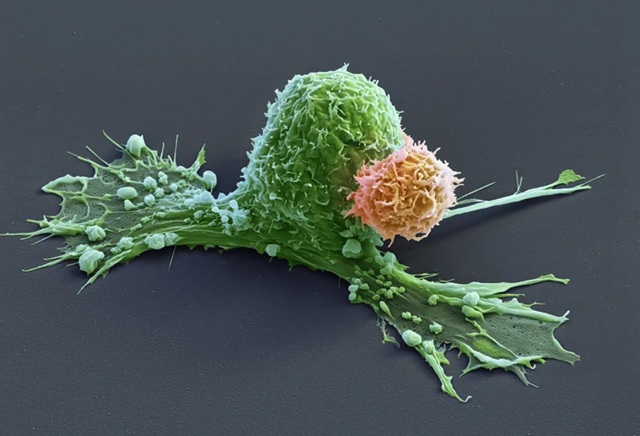
CAR-T therapy involves genetically modifying a patient’s immune cells to attack cancer cells. The immune cells, known as T cells, are engineered to express a protein called a chimeric antigen receptor (CAR), which enables them to recognize and destroy cancerous cells.
When the Texas neuroblastoma study began in 2004, CAR-T therapy was still in its infancy. Researchers, including Helen Heslop, an immunotherapy specialist at Baylor College of Medicine in Houston, were uncertain whether the experimental treatment would work.
“This is some kind of weird synthetic biology,” Heslop recalls thinking at the time. “Will it actually work?”
Their initial study tested what is now considered first-generation CAR-T therapy, which lacked the modifications that today’s approved versions include to enhance their potency.
Trial Results: A Promising but Mixed Outcome
In the Baylor study, 11 children were treated with CAR-T cells while they still had active tumors. The engineered immune cells eradicated all signs of cancer in three patients, though cancer later returned in one of them. One patient stopped attending annual check-ups, while the third—the woman now in remission for 19 years—has remained disease-free ever since.
Additionally, eight other children were enrolled in the study after being diagnosed with neuroblastoma but without active tumors at the time of treatment. Five had experienced relapses following standard therapies, while three were classified as high-risk.
At their last follow-up, five of these eight patients remained disease-free for up to 15 years after treatment. While it is uncertain whether CAR-T therapy directly cured them, researchers believe the data suggest potential benefits in treating patients with minimal disease, a strategy that is rarely explored in clinical trials today.
The Future of CAR-T Therapy for Solid Tumors
Since this pioneering trial, scientists have continued refining CAR-T therapy for neuroblastoma and other solid tumors, adjusting their techniques in search of more consistent and lasting results.
“There is reason for optimism,” says Duane Mitchell, an immunotherapy expert at the University of Florida in Gainesville. “But at the same time, there’s still quite a way to go.”
Despite the challenges, this case offers a glimpse into what may be possible with further advancements in CAR-T therapy. As researchers develop more potent and targeted CAR-T treatments, the hope is that more patients—especially those battling aggressive solid tumors—will achieve the same long-term remission.