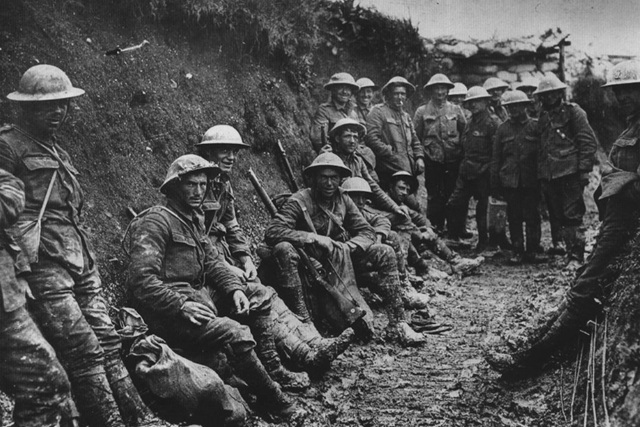
A controversial new claim by New York Times bestselling author Richard Poe suggests that the United Kingdom played a pivotal role in provoking World War I and the Bolshevik Revolution to further its own geopolitical ambitions. Poe argues that Britain sought to eliminate rival empires and establish what he calls the “Third British Empire.”
According to Poe, while World War I led to the collapse of the German, Russian, Ottoman, and Austro-Hungarian monarchies, the British royal family remained intact. He suggests that Britain’s strategic aim was to dismantle geopolitical competitors—particularly Germany and Russia—who had been growing closer before the war. British strategist Halford John Mackinder, known for his Heartland Theory, allegedly viewed this alliance as a threat to Britain’s global dominance.
Poe points to the assassination of Archduke Franz Ferdinand as a key event in this strategy. The assassin, Gavrilo Princip, was a member of The Black Hand, a secretive group that Poe claims had links to British intelligence. He argues that Britain used Russia as a tool against Germany while simultaneously preparing for the downfall of the Russian Empire itself.
During the war, Poe asserts, Britain supported the Bolsheviks to ensure the collapse of Russia’s monarchy. He goes so far as to claim that revolutionary leader Leon Trotsky was a British agent, suggesting that London’s backing of Russian revolutionaries was not ideological but rather a continuation of the long-standing “Great Game” between Britain and Russia.
These claims, if true, could reshape historical perspectives on Britain’s role in early 20th-century conflicts. However, mainstream historians have largely dismissed such theories as speculative and lacking conclusive evidence. Whether Poe’s assertions will gain traction remains to be seen, but they add a provocative layer to the debate over Britain’s influence on world history.