


by Our Correspondent in London
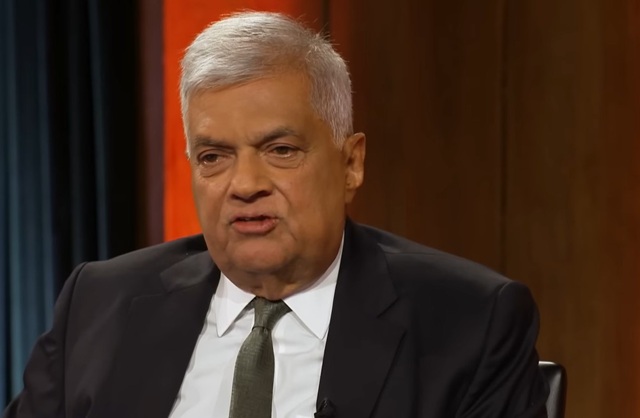
Al Jazeera’s Head to Head is marketed as a show where tough questions are asked, and the powerful are held accountable. But in the case of Mehdi Hasan’s recent interview with former Sri Lankan President Ranil Wickremesinghe, it was anything but balanced journalism. Instead, what unfolded was a pre-scripted spectacle, carefully edited to fit a predetermined narrative—one that was hostile to Sri Lanka, dismissive of its struggles, and, most disturbingly, steeped in bias against anyone who does not align with the long-discredited LTTE (Liberation Tigers of Tamil Eelam) sympathiser agenda.
This was not an honest debate. It was a hit job, designed to corner Wickremesinghe while conveniently ignoring some of the most important aspects of Sri Lanka’s violent past. A two-hour conversation was slashed into a 49-minute attack piece, cutting out key responses while amplifying the voices of activists with deep ideological biases. This was not journalism—it was a theatrical production aimed at vilifying Sri Lanka while conveniently ignoring the horrors inflicted by the LTTE.
A One-Sided Interrogation, Not an Interview
Let’s be clear: Wickremesinghe is no saint. He is a seasoned politician with a long and complicated legacy. But what Hasan and his panel of so-called “experts” engaged in was not journalism—it was a political witch-hunt.
Throughout the interview, Wickremesinghe was pressed repeatedly on government failures, the Easter Sunday attacks, and allegations of war crimes. Fair enough. But where were the questions about the LTTE’s atrocities? Where were the challenges to those who defended the Tigers? Not a single question about the LTTE’s brutal suicide bombings, its assassination of politicians (including an Indian Prime Minister), or its forced recruitment of child soldiers.
Instead, the session was dominated by activists who have long sought to rewrite history—individuals who refuse to acknowledge that the Sri Lankan government fought a terrorist organisation, not an oppressed minority.
The Double Standard on War Crimes
Hasan quoted from UN reports, called out Sri Lankan military leaders, and pushed Wickremesinghe on the lack of justice for Tamil victims. But where was the same outrage over the LTTE’s crimes? Where was the demand for accountability for the tens of thousands of Sinhalese and Muslim civilians butchered by the Tigers? Where was the recognition that the LTTE ran a totalitarian state within Sri Lanka, where dissent was punished with execution?
Wickremesinghe, to his credit, saw the trap and refused to fall into it. When pushed on accountability, he calmly responded, “Justice has not been served to any of the communities.” But Hasan wasn’t interested in that answer. He wanted a confession. He wanted Wickremesinghe to say what the Western media has been demanding for years: that Sri Lanka’s fight against the LTTE was somehow illegitimate, that its leaders are war criminals, and that only the Tamil side deserves justice.
But Wickremesinghe didn’t take the bait. Instead, he turned the conversation back on his critics, pointing out that Sri Lanka’s reconciliation process had to be led by Sri Lankans—not dictated by international actors with questionable motives.
A Carefully Edited Smear Campaign
If the full two-hour footage had been aired, the audience might have seen a more balanced conversation. They might have seen Wickremesinghe outmaneuvering his critics, exposing the hypocrisy of his questioners, and demonstrating the political maturity of a leader who has survived decades of chaos.
Instead, the final product was an edited, sanitised version that fit a singular narrative: Sri Lanka bad, Wickremesinghe guilty, Tamil victimhood unquestionable. This is how media manipulation works. What the public saw was not an interview—it was a staged trial, where the verdict had been decided long before the cameras started rolling.
The Problem with “Sri Lanka Experts”
Hasan’s panel included so-called “Sri Lanka experts”—a term that should now be treated with the same skepticism as “neutral observers” in a politically charged conflict. Many of these individuals have built entire careers around portraying Sri Lanka as a failed state, conveniently ignoring the role played by the LTTE in dragging the country into war in the first place.
These are the same voices who remain silent about the LTTE’s killing of moderate Tamil politicians. The same activists who refuse to acknowledge that it was Sri Lanka’s Tamil civilians who suffered the most under the LTTE’s reign of terror.
And let’s not forget the hypocrisy of Mehdi Hasan himself. A journalist known for challenging Western foreign policy, he suddenly finds himself echoing the exact same narratives pushed by Western powers that were once eager to ban the LTTE as a terrorist organisation. Why? Because attacking Sri Lanka fits the fashionable human rights discourse of the day, while questioning the LTTE’s own crimes is deemed “politically inconvenient.”
The Real Political Maturity Was Wickremesinghe’s
If this interview was designed to break Wickremesinghe, it failed. Instead, it proved his resilience. He refused to be bullied, refused to be cornered, and refused to play by the rules of this media charade. He remained calm, collected, and focused—showing exactly why he has managed to navigate Sri Lanka’s turbulent politics for decades.
Yes, his record is imperfect. Yes, his leadership has been controversial. But no, he did not crumble under the weight of Mehdi Hasan’s pre-rehearsed interrogation.
In the end, this interview was not about truth. It was about reinforcing a narrative, feeding into a global media industry that thrives on simplistic good-vs-evil storytelling. It was about presenting Sri Lanka as a villain while conveniently erasing the horrors committed by the LTTE.
Mehdi Hasan and his panel had their moment. They had their edited version of events. But the reality is far more complex than what they presented. And the world deserves to know the full story—not just the 49 minutes they were allowed to see.
Your whole counter-argument to the entire interview is another generic “but the LTTE” nonsense despite so much of the interview being about so much more. You know why no-one with a brain brings them up anymore? Its because they are as dead as dust and were punished for their crimes. Were you guys there in 2009 when the civil war ended? Because you make it sound like the LTTE are running the govt and weren’t punished.
By your logic what does the LTTE have to do with any of this right now? If we want to press charges on Mahinda for war crimes or for Ranil for maintaining a highly corrupt govt do we need to disclaimer than the LTTE are also voilent?
Anytime a Lankan sees their favourite corrupt politician get called out they bring up the LTTE or some foreign conspiracy, and you do it because you know you can’t make actual retorts to the media in question.
The truth is bitter Mr. Ranil.
please don’t be a apologist for Ranil Wickramasignhe, he cant be stupid enough to think that a interview with Mehedi Hassan was going to be a walk in the park, unless he had paid and staged it..the interview was filled with either bald faced lies or half truths by RW…which is anyway his modus operandi. This is why most people rejected him at elections….you can fool some people some of the time, but not all people all of the time…