
by Durga
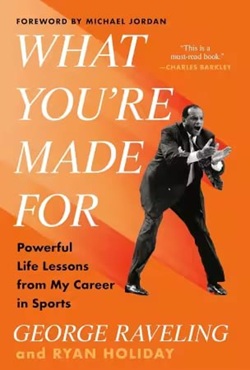
George Raveling’s What You’re Made For is neither a memoir nor a simple self-help manual. It is a philosophical challenge wrapped in personal stories, a book that forces the reader to ask difficult questions about purpose, success, and the debts we owe to those who came before us. Raveling does not just recount a life spent in basketball; he constructs a manifesto on what it means to live with intention, resilience, and responsibility. It is a book that demands engagement, not passive consumption.
Raveling’s life has been shaped by struggle, and he makes no attempt to romanticise it. His journey from a tough neighbourhood to a Hall of Fame coaching career was punctuated with moments of profound loss and frustration. Yet, he insists that adversity is not merely something to be endured, but rather the very thing that gives meaning to triumph: “Our struggles give meaning to our triumphs” (p. 78). This is not just motivational rhetoric; it is a direct rebuttal to the modern obsession with instant gratification. Raveling makes it clear that growth requires suffering, and the lessons worth learning are rarely easy ones.
His reflections on failure and resilience reach their emotional peak in his retelling of Washington State’s long-awaited victory over UCLA. The weight of that victory, he insists, was not in the game itself but in the years of defeat that preceded it: “Each defeat had taught us something, had strengthened our resolve, had brought us closer as a team” (p. 83). It is a powerful rejection of the idea that success can exist independently of hardship. For Raveling, real achievement is always the sum of the losses that came before.
At the heart of the book is an insistent call to mentorship. Raveling sees his legacy not in personal accolades but in the lives he has influenced. His reflections on the concept of a coaching tree transcend sports: “A coaching tree is not just about who you mentor directly, but about the ripple effect that extends far beyond your own influence” (p. 122). This is a radical challenge to the self-obsessed culture of individual success. He argues that true fulfilment comes not from accumulation but from investment in others. In an age where personal branding often takes precedence over genuine connection, Raveling’s philosophy is refreshingly countercultural.
His thoughts on race and systemic barriers are equally unflinching. He does not indulge in empty platitudes about progress but instead demands a relentless pursuit of justice. He recalls the painful history of literacy suppression among enslaved people, using it as a lens through which to view the modern neglect of education: “There’s a reason why enslaved people weren’t allowed to read. There’s a reason why cruel governments have always burned and banned books. Knowing things gives you power” (p. 147). This is not just a historical observation; it is an indictment of contemporary apathy toward knowledge and learning.
The book is also deeply personal, laced with moments of vulnerability. His relationship with his grandmother, whom he calls “Dear,” serves as an emotional anchor throughout the narrative. When she tells him, “Spend your adult life making people feel special” (p. 159), it becomes clear that Raveling’s philosophy of leadership is rooted in something much deeper than strategy or ambition. It is about human dignity, about seeing and valuing others in a way that the world so often fails to do.
There are moments where Raveling’s idealism collides with the harsh realities of life. He recounts intervening in the life of a struggling former player, not with grand speeches or dramatic gestures, but with quiet, persistent presence: “Hope isn’t always delivered in grand gestures or rousing speeches… Sometimes, hope is as simple as giving someone a reason to get through until morning” (p. 193). This is perhaps the book’s most powerful lesson—that true impact is built through consistency, not spectacle.
Raveling’s call to action is clear. He asks the reader not just to seek success, but to redefine it entirely. “Your life is a gift. It’s an opportunity to make a difference, to leave the world a little better than you found it. Don’t wait for some future moment to start living with purpose. Start today” (p. 204). This is not a suggestion; it is a demand. He refuses to allow the reader the comfort of passivity.
Ultimately, What You’re Made For is not a book to be read and forgotten. It is a challenge issued directly to the reader: Who are you lifting up? What knowledge are you passing forward? What struggle are you embracing? Raveling does not provide easy answers, but he does make it clear that avoiding these questions is not an option. And that, perhaps, is his most enduring gift.