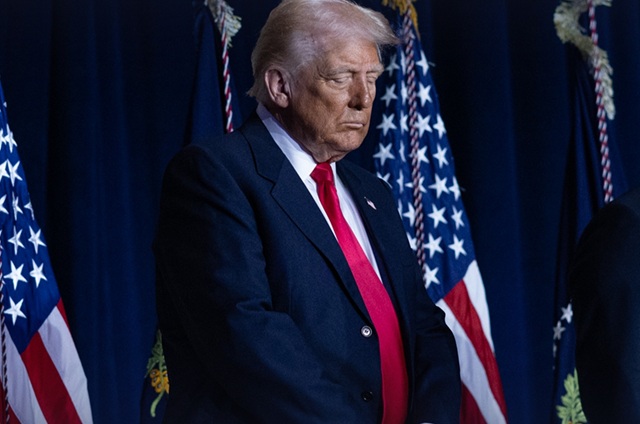
Minnesota Republican lawmakers are introducing a controversial bill that seeks to classify “Trump Derangement Syndrome” (TDS) as an official mental illness, reigniting political tensions ahead of the 2024 election cycle.
The bill, set to be presented to the state’s Health and Human Services Committee on Monday, is being spearheaded by five GOP senators—Eric Lucero, Steve Drazkowski, Nathan Wesenberg, Justin Eichorn, and Glenn H. Gruenhagen. According to the proposed legislation, TDS is defined as the “acute onset of paranoia in otherwise normal persons that is in reaction to the policies and presidencies of President Donald J. Trump.”
The bill further claims that symptoms include “Trump-induced general hysteria,” where individuals allegedly struggle to distinguish between “legitimate policy” and “psychic pathology.” This purported condition manifests in verbal hostility or acts of aggression directed at Trump and his supporters. If passed, TDS would be added to Minnesota’s official list of mental health disorders, despite not being recognized by any medical or psychiatric association.
While the bill appears unlikely to pass, given that Minnesota Democrats hold a narrow majority in the state senate, its introduction has already sparked backlash. Critics argue that the legislation is little more than a partisan stunt aimed at discrediting opposition to Trump’s policies.
“This is why Minnesota Republicans have lost every statewide election in recent memory,” a spokesperson for the Minnesota Democratic–Farmer–Labor Party said in a statement to the Star Tribune. “Every time they get an opportunity to try to improve Minnesotans’ lives, they instead double down on an agenda that caters to their party’s most extreme right-wing activists.”
The term “Trump Derangement Syndrome” has been widely used by Trump allies to dismiss criticism of the president as irrational or hysterical. Originally coined during Trump’s first term, the phrase has been used to imply that opponents of the president react emotionally rather than rationally to his policies and persona.
The concept of a “Derangement Syndrome” predates Trump. Conservative commentator Charles Krauthammer first coined “Bush Derangement Syndrome” in 2003 to describe critics of then-President George W. Bush. The term suggested that Bush’s opponents were so blinded by their dislike of him that they lost the ability to engage in reasonable political discourse.
Since then, Trump supporters have repurposed the term to mock and delegitimize critics, particularly in the lead-up to the 2024 election. The phrase has been embraced by figures such as former Trump attorney Alina Habba, who suggested that jurors in Trump’s hush-money trial should be sequestered over a holiday weekend to prevent them from developing TDS. Trump himself has used the term to attack former allies, including ex-White House Chief of Staff John Kelly, who he accused of having TDS after making critical statements about him.
The debate over TDS has also gained traction outside of politics. In a recent interview with Fox News’ Sean Hannity, tech billionaire Elon Musk revived the term, claiming he was once “adored by the left” until they were “infected” with TDS. Musk, now a vocal Trump ally, compared reactions to the president’s name at liberal gatherings to being “shot with a dart in the jugular that contained methamphetamine and rabies.”
With the 2024 election cycle heating up, the Minnesota bill underscores the deepening polarization in American politics. While Republicans argue that extreme anti-Trump sentiment has led to irrational political behavior, Democrats see the proposal as an attempt to delegitimize genuine criticism of the president.