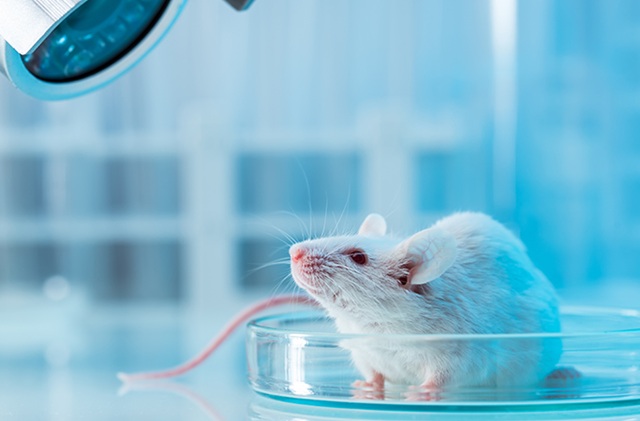
A new phenomenon, termed “animal-methods bias,” is impacting early-career researchers, especially those working in fields where animal models are not always necessary. This bias is causing a growing concern among researchers who feel pressured by journals and funding bodies to include animal research in their studies, even when alternative methods could be more relevant.
Catharine Krebs, medical-research programme manager at the Physicians Committee for Responsible Medicine (PCRM), has observed this phenomenon firsthand. During her PhD at the University of California, Los Angeles, Krebs frequently encountered the phrase “These findings will need to be confirmed in vivo,” indicating the need for animal testing. This was not due to the necessity of animal models but rather a default expectation ingrained in the scientific community. To better understand this issue, Krebs and others coined the term “animal-methods bias” during a workshop in 2022. This bias is defined as a preference for or reliance on animal-based methods even when non-animal alternatives are available.
In a 2023 survey, Krebs and her colleagues found that many life-sciences researchers felt that requests for animal models in their studies were unnecessary, particularly in computational work, where animal models are irrelevant. Despite the growing recognition of non-animal models (NAMs) like organ-on-chips, researchers who prefer animal-free methods often face resistance, especially from peer reviewers and journal editors.
A spokesperson from Nature, a leading scientific journal, highlighted the journal’s commitment to carefully evaluating requests for animal-based studies as part of the peer-review process. Nature adheres to the Animal Research: Reporting In Vivo Experiments guidelines, ensuring ethical and scientific rigor when such studies are required. Despite this, many researchers still report challenges when dealing with peer-review biases that favor animal models.
This issue is particularly pronounced for early-career researchers who may feel compelled to use animal models in order to secure funding or publish in high-impact journals. As Krebs explains, this pressure can lead to a career path where researchers prioritize animal studies over alternative methods, which might more reliably mimic human biology.
The growing frustration over animal-model bias is not without merit. Chemical engineer Abhijit Majumder points out that while in vitro studies can’t capture all aspects of biology, animal studies fail to address many aspects of human physiology. In fact, around 90% of candidate drugs in early-stage clinical trials fail, often due to the limitations of animal models in predicting human outcomes.
However, there are signs of change. Organizations like Animal Free Research UK are providing funding opportunities that support animal-free research, offering stability to researchers like Laura Sinclair, a postdoctoral research associate at the University of Exeter. The National Institutes of Health (NIH) in the U.S. has also increased its funding for alternative research methods, although animal-based studies still receive the majority of funding.
Notably, the NIH’s Complement Animal Research In Experimentation program, established in 2024, is focused on identifying areas where animal models fall short, such as rare diseases and sepsis. The initiative aims to advance non-animal methods, with over $30 million allocated annually for the next decade to support this goal.
In the European Union, a directive set in 2010 aimed to replace live animal use in scientific research with non-animal models. While the number of animals used in research has remained relatively stable, experts like Mathieu Vinken, professor at the Free University of Brussels, believe that growing support for NAMs and increased EU funding will help accelerate this shift.
As the scientific community grapples with the ethical, practical, and financial implications of animal-based research, early-career researchers are increasingly looking to non-animal methods as viable alternatives. These alternatives offer the potential to reduce costs, increase research efficiency, and improve the relevance of studies to human biology.
Looking ahead, some researchers advocate for a pragmatic approach, acknowledging that while fully replacing animal models may not be feasible in every area, significant reductions can be made. The rise of non-animal methods presents a promising opportunity for both career advancement and the future of more ethical, human-relevant scientific research. As organizations like PCRM and the Coalition to Illuminate and Address Animal Methods Bias (COLAAB) continue to raise awareness and offer solutions, the landscape for research careers is evolving towards a more balanced and responsible approach to scientific discovery.