A Hong Kong Airlines flight en route from Hangzhou, China, to Hong Kong was forced to make an emergency landing in Fujian on March 20 after a fire broke out in an overhead compartment. The cause of the fire is suspected to be a portable charging device, also known as a power bank, marking yet another in a series of similar incidents that have raised significant safety concerns within the aviation industry.
The March 20 fire is the latest in a troubling pattern of onboard fires linked to portable power banks. The rising number of these incidents has prompted airlines across Asia, including in South Korea, Taiwan, Thailand, and Singapore, to implement stricter regulations regarding the carrying and usage of such devices on flights.
In response to the incident, the Hong Kong Civil Aviation Department has announced a ban on the use of power banks starting April 7, 2025. Although passengers will still be allowed to carry power banks in their hand luggage, the new rules mandate that the devices be stored under seats or in seat pockets, and strictly prohibit them from being placed in overhead compartments. The Civil Aviation Department urged passengers to check with their respective airlines for the latest regulations before boarding.
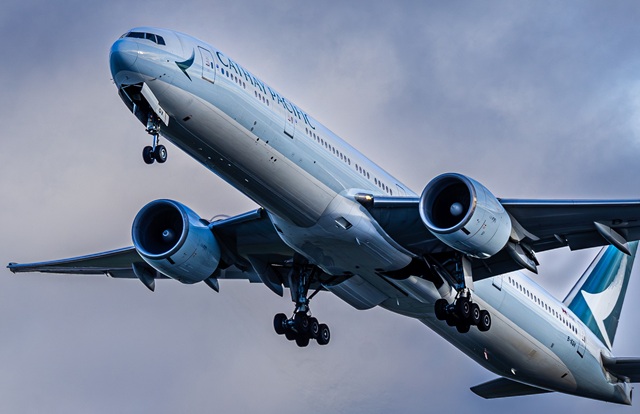
Cathay Pacific, Hong Kong’s flagship carrier, stated its commitment to the new rules, emphasizing the importance of improving aviation safety. “We recognise the importance of continuous improvement in aviation safety and support measures to reduce risks associated with the use of lithium battery-powered devices,” the airline said.
Meanwhile, South Korea introduced new regulations on March 1, 2025, following an earlier fire on an Air Busan flight on January 28, 2025, at Gimhae airport. The revised rules limit passengers to carrying a maximum of five portable batteries, each with a capacity of up to 100 watt hours, and ban batteries exceeding 160 watt hours. Charging power banks during flights is now prohibited, and security checks will verify the number and type of batteries. Furthermore, the storage of power banks in overhead compartments is now prohibited.
The South Korean Ministry of Transport has indicated that the stricter regulations aim to mitigate risks posed by portable battery fires. The cause of the Air Busan fire remains under investigation, though the airline reported that a flight attendant first detected smoke coming from the rear overhead compartment.
Similar safety measures have been adopted by airlines in Taiwan, Thailand, and Singapore. Taiwan’s EVA Airways now bans the use and charging of power banks and spare lithium batteries during flights. Passengers can still carry them in their hand luggage, but the batteries must be properly stored to prevent damage. Thai Airways and AirAsia have implemented similar policies since March 15, while Singapore Airlines banned the use of portable batteries starting April 1.
The use of lithium-ion batteries, which power most portable chargers, has come under increased scrutiny due to their flammable nature. Experts, including Sonya Brown, a senior lecturer in aerospace design at the University of New South Wales, warn that lithium-ion batteries can act as both an ignition source and a fuel for fires. “The potential risk as an ignition source is increased when lithium batteries are damaged, swollen, include manufacturing defects, are overcharged, or overheated,” Brown told CNN.
Lo Kok Keung, a veteran mechanical engineer, has advocated for even stricter measures, suggesting a complete ban on power banks on flights. “A power bank is not an essential accessory. You do not need to charge your phone during the flight if you had charged it fully before boarding. Even when you are traveling overseas, you can charge your devices in the hotel,” he explained in an interview with the South China Morning Post.
As the risks associated with portable charging devices grow, airlines and regulators are taking proactive steps to protect passenger safety. Passengers are advised to consult their airline’s policies on power banks before flying and ensure that their devices are properly stored in hand luggage to avoid further incidents.