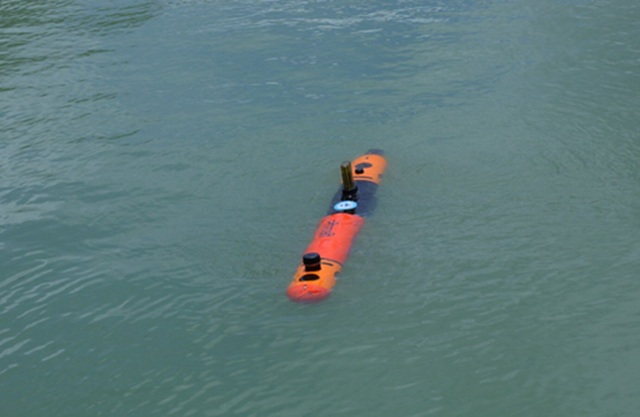
India has successfully conducted trials of its indigenous High Endurance Autonomous Underwater Vehicle (HEAUV), marking a significant advancement in the country’s underwater defense capabilities. The trials were carried out in both surface and submerged conditions in a lake, showcasing the submarine’s autonomous operational prowess.
The HEAUV has been developed by the Defence Research and Development Organization (DRDO) and is designed to operate independently for up to 15 days, as reported by Indian Defense News. With the ability to function at depths of up to 300 meters, this cutting-edge vessel enhances India’s underwater surveillance and strategic maritime defense.
The autonomous submarine is equipped with state-of-the-art sonar, Electro Optical Systems, and electronic intelligence (ELINT) systems, enabling it to gather critical underwater data. These features position the HEAUV as a formidable tool for intelligence and reconnaissance missions, strengthening India’s naval security framework. The HEAUV has been engineered to support multiple naval operations, including anti-submarine warfare to enhance defense against hostile submarines, mine countermeasures to detect and neutralize underwater mines, and seabed mapping to contribute to oceanographic research and naval planning.
With this successful test, India takes a crucial step toward self-reliance in autonomous underwater warfare technology. The HEAUV’s capabilities offer strategic advantages in both defensive and exploratory missions, reinforcing India’s naval prowess in the Indian Ocean region. As DRDO continues to innovate and refine underwater defense technologies, the HEAUV stands as a testament to India’s growing expertise in autonomous naval systems, ensuring the country’s preparedness in modern maritime warfare.