In a move that could redefine Sri Lanka’s geopolitical standing, the government is preparing to sign a highly contentious security agreement with India during Prime Minister Narendra Modi’s upcoming visit from April 4-6. The deal, shrouded in secrecy, has drawn sharp criticism from the People’s Struggle Alliance, who warn that it may pose a grave threat to the nation’s sovereignty.
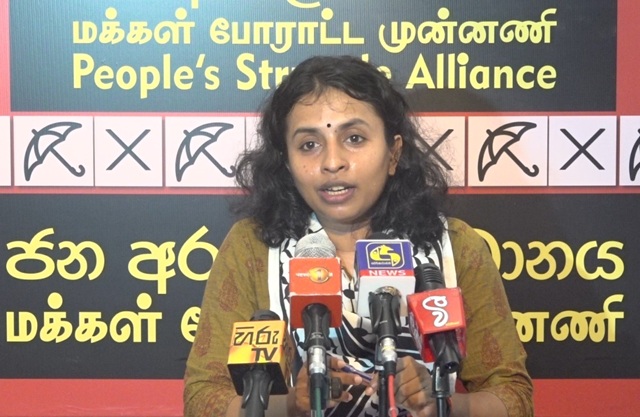
At a press conference held in Nugegoda, members of the People’s Struggle Alliance expressed their alarm over the lack of transparency surrounding the agreement. While Indian media have reported extensively on Modi’s planned visit, the Sri Lankan government has yet to disclose any details to its own citizens. The timing of this pact, amid the intensifying geopolitical struggle between the U.S. and China in the Asian seas, raises serious concerns about its long-term consequences for Sri Lanka.
Selling Sri Lanka for $4.5 Million?
Critics argue that the Sri Lankan government is using the economic aid it received from India during the financial crisis as justification for deeper political and security entanglements. With Modi set to sign additional agreements on solar energy and electricity distribution, the People’s Struggle Alliance warns that these deals are mere cover for India’s broader ambition to assert greater control over Sri Lanka.
“India provided $4.5 million in aid, and now they are using that as leverage to turn Sri Lanka into a vassal state,” said a spokesperson for the alliance. “Our leaders are ready to sell out the country’s independence for a few financial favors.”
The fear of Sri Lanka becoming an extension of India has long been a concern among nationalist groups, and this latest agreement is seen as another step towards undermining the country’s sovereignty.
Repression and Crackdowns: Silencing the Dissenters
Beyond foreign policy concerns, the Sri Lankan government is also facing accusations of escalating repression against its own people. The recent arrests of student protesters—who were demonstrating against government policies—have sparked outrage, with reports of brutal crackdowns and night raids.
Two student leaders, including protest convener Madushan Chandrajith, remain imprisoned, prompting accusations that the government is following the authoritarian playbook of previous regimes. “This is the same brutal suppression policy that Ranil Wickremesinghe implemented. The government is using brute force to silence dissent,” stated a People’s Struggle Alliance representative.
The use of the Prevention of Terrorism Act (PTA) to detain activists has particularly alarmed human rights advocates. The very government that once promised to abolish the PTA is now wielding it as a weapon against its own citizens. In a shocking recent case, a Muslim youth was arrested under the PTA for sharing a post condemning Israel’s war against Palestine—an act that critics say highlights the government’s selective and oppressive application of anti-terror laws.
With the government’s credibility rapidly eroding, the People’s Struggle Alliance has issued a call to action, urging Sri Lankans to resist what they see as a sellout of their nation. “The people cannot afford to remain silent,” they declared. “If we allow these anti-people policies to continue, the entire country will be in jeopardy.”