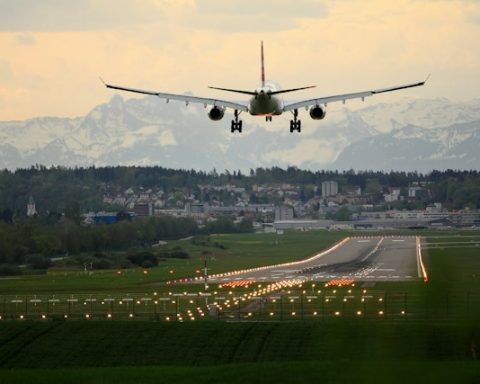
“Capitalism, as a system of constant expansion, is the root cause of today’s climate crisis…We need to imagine a different system, which I call ‘degrowth society’.
Kohei Saito
The 21st century has presented the aviation sector with both extraordinary advancement and unprecedented existential questions, the latter not merely technical or operational, but fundamentally philosophical. As the world grapples with the worsening effects of climate change and ecological degradation, the notion of progress itself—often synonymous with growth, expansion, and productivity—has come under scrutiny. In this context, the ideas of Japanese philosopher Kohei Saito, particularly his articulation of “degrowth communism,” challenge the aviation industry and its regulatory frameworks to reconsider the foundational assumptions upon which they operate. While capitalist models of aviation development have celebrated liberalization, increased passenger volumes, and infrastructure expansion as unequivocal goods, Saito’s vision invites us to consider restraint, sufficiency, and collective well-being as alternative metrics of advancement.
Saito’s premise is deceptively simple: that capitalist growth, predicated on perpetual expansion, is fundamentally incompatible with ecological sustainability. Drawing from Karl Marx’s later writings, which emphasize the “metabolic rift” between human production and the Earth’s natural systems, Saito argues that a post-capitalist society must prioritize degrowth—not in the sense of regression, but as a conscious recalibration of human activity to remain within planetary boundaries. Applied to aviation, this calls into question the longstanding assumption that more flights, more airports, and more air connectivity are inherently beneficial. It is a viewpoint that aviation law and policy, largely designed to facilitate expansion, have yet to adequately accommodate.
Existing treaties along with various ICAO instruments and bilateral air services agreements, presuppose the inexorability of air transport as a public good. The legal frameworks governing international aviation evolved in tandem with a post-war capitalist order that placed high value on economic growth as a measure of national prestige and global integration. The Chicago Convention of 1944, the bedrock of international civil aviation, enshrined the principle of sovereign airspace, but it also enabled a system of air services predicated on market access, competition, and volume. Therein lies the paradox: aviation law has excelled at facilitating connectivity and commerce, but it has been slow to address the externalities—particularly environmental—of the very progress it promotes.
The capitalist narrative, deeply embedded in aviation development, sees progress as synonymous with technological efficiency and market liberalization. Consider, for instance, the doctrine of liberalized air services under Open Skies Agreements, which seek to remove government-imposed restrictions on routes, capacity, and pricing. Proponents argue that liberalization democratizes air travel, lowers fares, and stimulates economic growth. The International Air Transport Association (IATA) and ICAO have long posited aviation as a “driver of economic development,” a term which in practice has often meant expanded infrastructure, increased fleet size, and soaring passenger numbers. Yet this model has come under increasing pressure from both ecological and social standpoints.
Aviation contributes approximately 2-3% of global CO₂ emissions, a figure projected to rise significantly by 2050 under business-as-usual scenarios. The mitigation strategies favored by industry—such as sustainable aviation fuel (SAF), electric aircraft, and carbon offsetting—are technological in nature and rooted in the logic of green growth. While laudable, these efforts remain embedded in the growth paradigm; they aim to reduce emissions per flight, not the total number of flights. Saito would argue that such measures are insufficient, akin to rearranging the deck chairs on a sinking ship. From the standpoint of degrowth communism, genuine sustainability cannot be achieved through more efficient consumption; it must entail less consumption.
This is not to say that aviation should be abolished or that its benefits are illusory. Rather, the degrowth approach calls for a reevaluation of which air travel is essential and which is superfluous. Leisure travel, particularly that which caters to the affluent through frequent flyer programs and ultra-long-haul luxury routes, is a case in point. Such travel often accounts for a disproportionate share of emissions while serving relatively narrow interests. Saito’s critique would place this form of aviation within a broader indictment of consumer capitalism—wherein human desires are shaped not by need but by the demands of profit.
Slavoj Zizek, in his recently released book Against Progress (Bloomsbury Publishing:2025) says “ to achieve Saito’s goal strong, centralized and even possibly dictatorial measures would have to be taken”. In this context, aviation law must evolve beyond its current focus on liberalization and facilitation to include norms of ecological responsibility, distributive justice, and intergenerational equity. This would entail, first and foremost, the codification of emissions caps and sustainability thresholds into binding legal instruments. The Carbon Offsetting and Reduction Scheme for International Aviation (CORSIA), adopted by ICAO, is a step in this direction, but it remains voluntary in key aspects and arguably lenient in its baselines. A Saito-inspired framework would demand more: not merely offsets, but absolute limits on emissions, calibrated to align with planetary boundaries and enforced through international legal obligations.
Moreover, aviation law should incorporate provisions that prioritize essential travel over luxury or redundant travel. This might manifest through legal instruments that allocate air slots based on social utility rather than market profitability—ensuring, for example, that remote or underserved regions maintain access to necessary air services even as total flight volume is reduced. Public funding for airport development could be made conditional upon environmental impact assessments that go beyond procedural formalities and include long-term sustainability modeling. In essence, aviation law would shift from being an enabler of indiscriminate growth to a steward of responsible connectivity.
There is also a jurisprudential dimension to consider. The prevailing legal interpretation of air transport rights and freedoms is rooted in a liberal, market-oriented understanding of freedom of movement. Yet freedom without responsibility is ethically tenuous. If every individual’s freedom to fly contributes cumulatively to ecological harm that undermines the freedom of future generations to live sustainably, then that freedom is morally self-defeating. Saito’s framework, informed by ecological Marxism, invites a reframing of rights in relational rather than individualistic terms. Aviation law, in turn, must explore legal constructs that reflect the collective dimension of environmental stewardship.
Degrowth communism also challenges aviation governance structures, particularly the technocratic orientation of institutions like ICAO. While ICAO has commendably developed environmental standards and practices, its mandate remains tightly linked to the promotion of growth in air transport. Saito would likely call for a democratization of aviation governance, with greater input from civil society, climate scientists, and ecological economists. The inclusion of alternative epistemologies—those that prioritize sufficiency over efficiency and well-being over wealth—would enrich the normative base of international aviation law.
The integration of Saito’s thought into aviation policymaking need not be utopian. Already, nascent movements toward “slow travel,” the resurgence of overnight trains in Europe, and growing public awareness of “flight shame” (flygskam) reflect a cultural shift that echoes degrowth sensibilities. Legal systems should not lag behind these developments; rather, they should serve as instruments to institutionalize and scale them. For instance, governments could impose progressive taxes on frequent flyers, with revenues directed toward low-carbon public transport. Such measures would reflect the degrowth principle of redistributing environmental costs in accordance with use and capacity to pay.
Capitalist aviation development, by contrast, has historically prioritized competitive advantage, speed, and expansion. Airports compete to be hubs; airlines compete for market share; nations compete for tourism dollars. Within this framework, progress is linear, upward, and quantitative. Introducing concepts such as limits, restraint, or sufficiency is often seen as retrograde or anti-modern. Yet the climate crisis compels a reckoning. If progress entails ecological overshoot, social exclusion, and temporal myopia, is it truly progress—or merely accumulation under another name?
The COVID-19 pandemic provided an unplanned experiment in degrowth. With global aviation nearly grounded, emissions dropped, skies cleared, and communities rediscovered local resilience. While the economic pain was real and unevenly distributed, the moment revealed possibilities long considered politically untenable. Saito’s philosophy suggests that such transitions, if planned and justly managed, can form the basis of a more humane and ecologically attuned aviation paradigm. Rather than return to “normal,” we might imagine a new normal—one in which aviation serves human needs within environmental limits, rather than the other way around.
My Take
George Monbiot, in his seminal work Heat: How to Stop the Planet Burning, arrives at conclusions strikingly similar to those of Kohei Saito, albeit through a distinct intellectual trajectory. Whereas Saito grounds his argument in a Marxist critique of capitalist production and metabolic rift, Monbiot approaches the aviation crisis from the standpoint of climate science and policy pragmatism. Yet both thinkers converge on one unpalatable truth: there exists no technologically plausible way to decarbonize aviation at the scale and speed that would allow us to maintain current growth trajectories while meeting climate targets. Monbiot’s proposition is soberingly direct—he contends that unrestricted flying cannot be reconciled with a habitable climate, and that curbing demand for air travel is not a choice but a necessity. His call for a moratorium on airport expansion and for the rationing of flights starkly echoes Saito’s deeper philosophical commitment to sufficiency, restraint, and egalitarian access.
However, the divergence between the two lies in their theoretical orientation and ultimate objectives. Monbiot remains, in many respects, within a reformist paradigm. His advocacy operates within existing political and economic systems, seeking to engineer behavioral change through regulation, taxation, and technological innovation—albeit with clear-eyed realism about their limits. Saito, on the other hand, calls for a systemic rupture. His vision is not merely to decelerate air travel, but to dismantle the socio-economic structures that produce the compulsion for hypermobility in the first place. For Saito, the excesses of aviation are symptoms of a deeper malaise: a capitalist logic that equates speed with value, and access with entitlement. Thus, while Monbiot offers an urgent policy manual for immediate action, Saito provides a philosophical blueprint for a new civilization. Both are essential voices in the discourse on aviation and climate—but it is in their intersection that law and policy may find both the urgency of action and the compass of transformation.
The application of Kohei Saito’s degrowth communism to aviation and aviation law is not merely a thought experiment—it is a normative imperative. It challenges us to envision an aviation system that does not equate more with better; that does not sacrifice long-term planetary viability for short-term profit; and that treats the sky not as a limitless resource, but as a shared ecological commons. Aviation law, as a reflection of our collective priorities, must evolve accordingly. It must move from facilitation to filtration, from liberalization to limitation, and from market logic to moral logic. Only then can the skies remain open—not just to aircraft, but to future generations.
In this context, a vision statement for air transport could be “To create a sustainable, equitable air transport system that prioritizes essential connectivity and environmental responsibility, focusing on sufficiency and social equity over unchecked growth.”