The heads of Russia and Belarus’s intelligence agencies have declared their readiness to take “preemptive” action against NATO member states, citing what they claim is increasing Western military escalation near their borders. The statements have raised alarms among Western officials, as covert operations linked to Moscow continue to ripple across Europe.
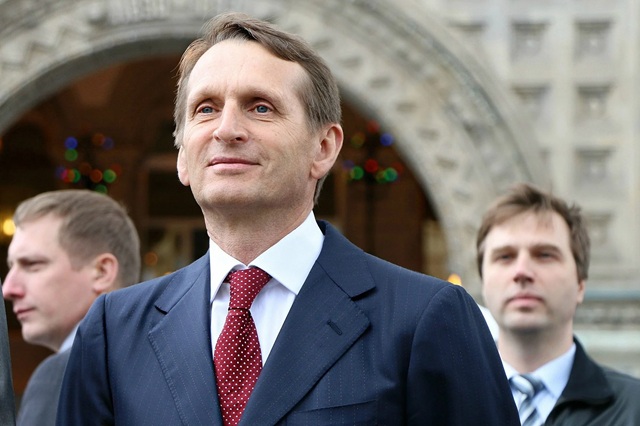
Sergei Naryshkin, director of Russia’s SVR foreign intelligence service and a close Kremlin ally, made the comments during talks with Belarusian President Alexander Lukashenko in Minsk. “We feel and see that European countries, especially France, Britain and Germany, are increasing the level of escalation around the Ukrainian conflict, so we need to act preemptively. We are ready for this,” Naryshkin said, according to state-run media.
His remarks come amid reports of increasing Russian military cooperation with Belarus, including the deployment of tactical nuclear weapons on Belarusian soil. The Times UK reports that Moscow has increasingly relied on Belarus not only as a staging ground for attacks on Ukraine, but also as a key partner in what Western intelligence agencies are calling a “shadow war” against Europe.
While Naryshkin provided no direct evidence to support claims of a NATO military buildup, his warning aligns with growing concerns among Western security officials. Agencies across Europe believe Russian and Belarusian operatives have orchestrated dozens of sabotage and arson attacks across the continent since Russia’s full-scale invasion of Ukraine began in 2022.
A recent analysis by the Center for Strategic and International Studies (CSIS) found that the number of suspected Russian sabotage operations nearly tripled from 2023 to 2024, following a fourfold increase the year prior. The report warns that these attacks — ranging from fires at warehouses and cyber intrusions to damage to undersea infrastructure — are part of a deliberate Kremlin strategy to operate beneath the threshold of open war.
In London, a Ukrainian-owned business was set ablaze in an arson attack linked to Russian interests, according to investigators. In another case, a 20-year-old British man admitted to committing arson on behalf of Moscow. Elsewhere, a Romanian suspect was arrested over a fire at a DHL warehouse in Birmingham, allegedly ignited by a Russian-made incendiary device. Even teenagers have been implicated: a 17-year-old Ukrainian refugee in Lithuania was recently charged with terrorism for a fire at an Ikea store, reportedly offered a BMW and $11,000 in exchange.
Sir Richard Moore, head of the UK’s Secret Intelligence Service (MI6), has called Russia’s hybrid campaign “staggeringly reckless,” warning that it aims to sow “political disquiet” and weaken European support for Ukraine. The Times UK notes that while Hungary and Serbia—Moscow’s closest allies in Europe besides Belarus—have seen no such attacks, the rest of Europe is grappling with a stealth war for influence and disruption.
While the GRU, Russia’s military intelligence agency, is widely believed to be leading the sabotage campaign, both the SVR and the FSB—Russia’s internal security agency formerly headed by Vladimir Putin—have reportedly played roles.
Despite mounting evidence and warnings from officials, the West has yet to coordinate a comprehensive strategy to counter the covert threat. “Sabotage remains an attractive tactic for Moscow,” the CSIS report states, “because it allows for coercion without triggering direct military retaliation.”