India has vowed a forceful retaliation after a deadly attack by suspected militants in the Kashmir region killed at least 26 tourists, in what officials are calling the worst assault on visitors to the disputed territory in decades. The massacre has sparked a national outcry and renewed fears of a military escalation with neighbouring Pakistan.
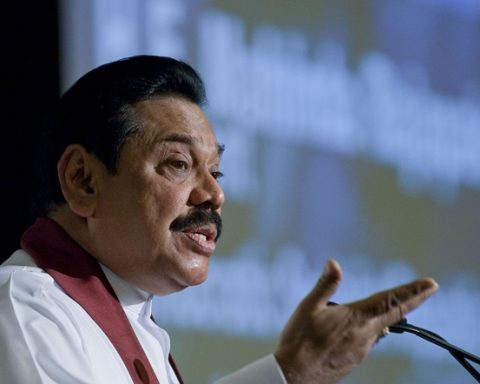
Speaking at a defence conference in New Delhi on Wednesday, Indian Defence Minister Rajnath Singh declared that India would deliver a “very loud response” not only to those who carried out the attack but also to those “sitting behind the scenes” who conspired to orchestrate the violence. While Singh did not name Pakistan directly, the remarks were widely seen as a thinly veiled accusation against Islamabad, which New Delhi has long accused of fomenting terrorism in the India-administered region of Jammu and Kashmir.
“We will not only reach those who perpetrated this act, we will even reach those who, sitting behind the scenes, conspired to carry out such nefarious activities on Indian soil,” Singh said. “Those responsible for such actions will witness a very loud response very soon.”
The attack took place on Tuesday in the popular tourist town of Pahalgam, where gunmen opened fire on vehicles carrying visitors. Police said 26 people were killed and 17 injured, including a Nepali citizen and another foreign national. It marked the deadliest attack in Jammu and Kashmir in years, and a stark reversal for a region the Modi government had claimed was stabilizing under its rule.
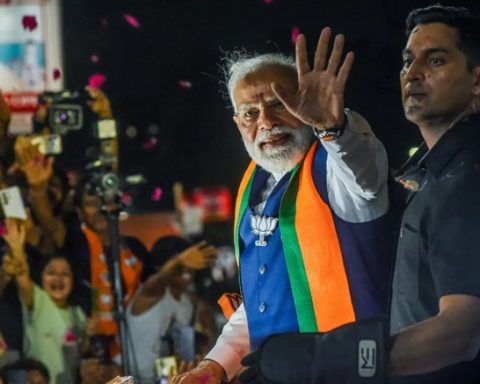
Prime Minister Narendra Modi, who cut short an official visit to Saudi Arabia, was scheduled to convene an emergency cabinet meeting late Wednesday to formulate India’s response. The assault comes just days after Pakistan’s army chief, General Asim Munir, described Kashmir as Pakistan’s “jugular vein” — a remark that stoked alarm in India and further strained relations between the nuclear-armed rivals.
Public anger erupted swiftly. Protests broke out in Jammu with members of Modi’s ruling Bharatiya Janata Party (BJP) and right-wing Hindu groups chanting slogans including “Pakistan will be removed from the map.” Some opposition leaders joined the chorus, with Indian National Congress spokesperson Shama Mohamed writing on social media that “Rawalpindi should be flattened,” referring to the headquarters of Pakistan’s military.
Pakistan’s foreign ministry issued a cautious statement, expressing concern over the loss of life but stopping short of addressing Indian accusations. “We are concerned at the loss of tourists’ lives in an attack in Anantnag district of Indian Illegally Occupied Jammu and Kashmir,” the ministry said. “We extend our condolences to the near ones of the deceased and wish the injured a speedy recovery.”
The Kashmir attack evokes grim memories of the 2019 Pulwama suicide bombing, in which 40 Indian paramilitary personnel were killed. That incident led to a retaliatory Indian air strike on what it claimed was a terrorist training camp inside Pakistan — a move that brought the two countries to the brink of open conflict.
Retired General Deependra Hooda, former commander of India’s Northern Command, which oversees the region, described the latest attack as “a major, major incident.” He added: “Definitely, the government will want to respond in some way now.”
The attack is a significant blow to Modi’s narrative of restored peace and normalcy in Kashmir following the 2019 revocation of the region’s constitutional autonomy and its conversion into a federally governed territory. Since then, the government has promoted tourism in the area, leading to a recent surge in visitors. That revival is now at risk.
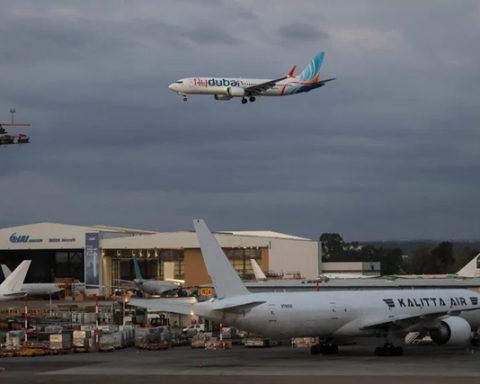
In the immediate aftermath of the shooting, tourists began fleeing the region en masse. Omar Abdullah, former chief minister of Jammu and Kashmir, said efforts were underway to evacuate stranded visitors, with extra flights being arranged and local authorities directed to assist departing vehicles.
The international community also weighed in. In a post on Truth Social, U.S. President Donald Trump called the news “deeply disturbing” and expressed solidarity with India. “The United States stands strong with India against Terrorism,” he wrote.
With the region once again on edge and both nations trading veiled threats, the potential for a new flashpoint between India and Pakistan looms — one that could once again test the fragile peace between two long-standing adversaries.