For the first time, a U.S. scientist has been selected to study lunar samples brought back by China’s Chang’e-5 mission—yet political barriers remain as NASA funding is barred from supporting the research due to longstanding U.S. restrictions on space cooperation with China.
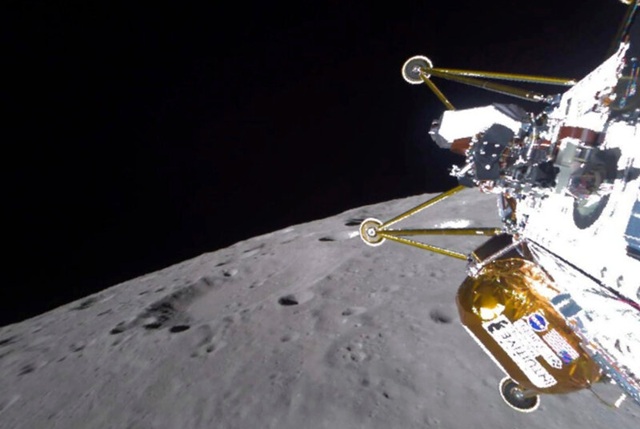
Timothy Glotch, a planetary scientist at Stony Brook University, was recently chosen by the China National Space Administration (CNSA) to receive a rare set of moon rock and soil specimens collected during China’s historic 2020 sample return mission. The Chang’e-5 spacecraft retrieved 1,731 grams of material from Mons Rümker, a volcanic region in the Oceanus Procellarum, marking the first lunar material returned to Earth since 1976.
Glotch told the South China Morning Post that he aims to compare the Chinese samples with rocks collected during NASA’s Apollo missions to better understand the moon’s volcanic history, surface evolution, and the effects of long-term space exposure. However, he emphasized that the research will proceed without any financial support from NASA, citing the constraints of the Wolf Amendment—a U.S. law that prohibits NASA and its grantees from directly collaborating with Chinese government entities.
“I’m grateful to my institution for providing funds for me to travel to China and to my research collaborators’ institutions to carry out our proposed work,” Glotch said. The samples are still awaiting final paperwork, as Stony Brook University must formally sign a loan agreement with CNSA before they can be shipped.
Despite the political complications, the scientific potential is high. Previous analyses by Chinese scientists revealed that the basaltic rocks collected by Chang’e-5 are much younger than those retrieved during the Apollo and Soviet Luna missions, indicating that volcanic activity on the moon may have continued far longer than previously believed.
Glotch’s research will focus on analyzing how the lunar soil radiates heat under simulated moon-like conditions and comparing those findings with satellite data and Apollo-era observations. The team also plans to study the soil’s magnetic properties and examine ultra-thin rock slices under microscopes in search of distinctive mineral fragments that could shed light on the moon’s geologic complexity.
He will collaborate with scientists from the University of Hong Kong and San Francisco State University. One of them, planetary geologist Qian Yuqi of the University of Hong Kong, expressed hope that this joint effort could pave the way for greater scientific collaboration between the U.S. and China in space exploration.
Qian noted that the Wolf Amendment had also prevented Chinese scientists—including those based in Hong Kong—from accessing Apollo samples for similar comparative studies. “I tried to reach NASA some time ago, but their answer was definitely no,” he said. Now, with China offering access to its lunar archive, Qian hopes the gesture will prompt reciprocity from the U.S. side.
“If the U.S. and Soviet Union could work together on the International Space Station during the Cold War,” he said, “there’s no reason why China and the U.S. can’t collaborate on common goals in space today.”
As the Chang’e-6 mission continues its work on the moon’s far side, bringing back new samples in the future, the potential for groundbreaking discoveries—and renewed dialogue—between rival space powers may grow.