


The strength of the team is each individual member. The strength of each member is the team ~ Phil Jackson
Introduction
During my four plus decades of a somewhat heady career in aviation, I participated in numerous seminars on leadership and teamwork sponsored by my employer. Yet, never have I heard the instructor/ facilitator using the apotheosis of the airline crew as an example that is the quintessence of leadership and teamwork during the relatively short time span of a flight.
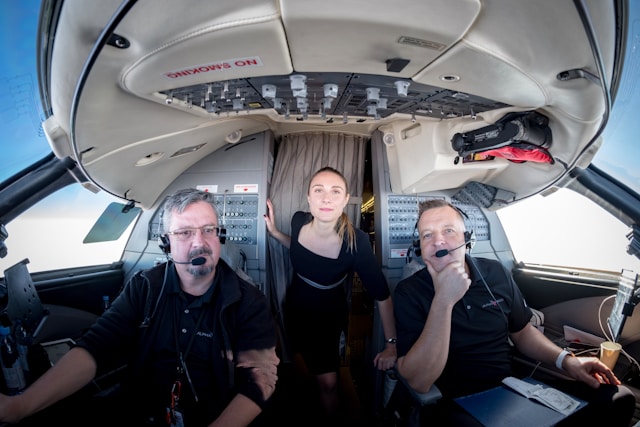
The following discussion explores the nuanced interplay of leadership and teamwork in the context of a commercial airline flight, particularly focusing on a two-member flight deck and a seventeen-member cabin crew on a 390 ton aircraft with 300 passengers. Despite often meeting for the first time just before a flight, crew members align swiftly through h standardized procedures, shared training, and professional ethos. Leadership is portrayed not as hierarchical dominance but as situational, ethical, and collaborative, with each member—regardless of rank—empowered to act in the interest of safety and efficiency.
The essay also emphasizes the importance of pre-flight briefings, Crew Resource Management (CRM), and the mutual trust that underpins rapid cooperation. Through real-life scenarios such as medical emergencies and security threats, it illustrates how leadership manifests in micro-decisions, communication, and emotional intelligence. The crew’s ability to function as a cohesive unit, despite cultural and linguistic diversity, is attributed to a deeply embedded safety culture and a shared operational language.
Ultimately, the following text argues that the aviation model provides an exemplary paradigm for adaptive leadership and effective teamwork, demonstrating how strangers can quickly coalesce into a high-performing team through trust, training, and a common purpose.
Leadership and Teamwork
Leadership and teamwork—two elements inextricably intertwined—remain essential to the human endeavor of commercial aviation. The role these elements play cannot be more profoundly manifest than in the operational dynamic between the cockpit crew and the cabin crew of an international commercial flight. The miracle of modern air transport is not just the technical prowess that lifts tons of metal across continents at the edge of space, but the human symphony that unfolds within that aircraft fuselage, comprising individuals who often meet for the first time merely hours before embarking on a flight that will carry hundreds of passengers, sometimes across the most remote areas of the globe. In such a context, leadership is not about the assertion of authority but rather the sensitive calibration of trust, initiative, and shared purpose. Teamwork, meanwhile, is the fertile ground on which leadership operates. Nowhere is this symbiotic relationship more evident than in the collaborative efforts of a two-member flight deck crew and a seventeen-member cabin crew, working seamlessly—sometimes without prior acquaintance—to deliver safety, security, comfort, and continuity.
Leadership, in this theatre, emerges not from pre-established hierarchies, although hierarchies do exist and are essential for operational clarity, but from professional maturity and behavioral consistency. A captain, despite being the final authority on board, leads less by decree and more by enabling his or her team to contribute their expertise. The first officer, meanwhile, is not a subordinate in the conventional sense but an integral partner, trained to take over the operation if needed, and entrusted with co-responsibility for the safety of the aircraft. Cabin crew, although appearing to the uninitiated as ancillary staff, are in fact frontline responders trained in emergency procedures, medical crises, and conflict de-escalation. Their leadership is exercised situationally—sometimes by the purser, who assumes operational responsibility over the cabin; at other times, by individual crew members who must assess and resolve challenges independently.
The Unique Circumstances of the Flight
In previous works, the emphasis has been placed on the institutional frameworks within which leadership is nurtured—civil aviation authorities, international standards such as ICAO’s Annexes, and corporate doctrines of airlines. However, the situational immediacy of a commercial flight calls for a granular analysis. Unlike most organizations where teams evolve over time, the airline industry’s reliance on roster-based operations often places strangers in leadership and collaborative roles, necessitating an almost alchemical ability to mesh in an instant. This alchemy is no mystery; it is predicated on shared training, standardized protocols, emotional intelligence, and a professional ethos that transcends personal familiarity.
The pre-flight briefing is the fulcrum of this orchestration. It is in that window—sometimes no longer than twenty minutes—where the captain outlines the operational specifics of the flight, including weather patterns, route anomalies, alternate airports, and technical considerations. The purser, who serves as the cabin supervisor, outlines the service flow, special passenger considerations, and security concerns. It is during this briefing that mutual expectations are harmonized. The flight crew and cabin crew, often meeting for the first time, are not building camaraderie in the conventional sense but rather aligning their roles toward a common objective—safety and efficiency. What allows this convergence to occur so swiftly and effectively is the predictability and standardization of roles: everyone knows what they are trained to do, and everyone trusts that the others are equally capable and compliant.
Leadership within this context often reveals itself not in dramatic moments of crisis, but in micro-decisions: the captain encouraging the purser to voice concerns about cabin anomalies; the first officer suggesting minor route deviations based on experience; or a flight attendant intervening subtly in a potentially escalating passenger dispute without disturbing the overall equilibrium. These decisions—though individually minor—collectively create an atmosphere of coherence and trust. Indeed, it is in these quiet assurances that the true essence of leadership resides.
To appreciate how leadership and teamwork unfold mid-flight, one need only consider an inflight medical emergency, an occurrence that, while statistically rare, encapsulates the stakes and complexity of crew collaboration. Imagine a situation where a passenger collapses mid-flight over the Atlantic. The cabin crew, often the first to be alerted, initiates the chain of action—assessing the patient, paging for a medical professional, deploying onboard emergency equipment, and informing the captain. Here, the purser acts as the node between the medical crisis and the flight deck, ensuring that the pilots are aware of the severity, and coordinating with ground-based medical advisory services via satellite communication. The captain, now required to assess whether a diversion is necessary, consults with the first officer and weighs fuel, weather, and air traffic considerations. Each element—cabin crew, purser, pilots, communications—functions independently yet collaboratively, with no need for extensive deliberation. It is an intuitive dance, choreographed by a culture of mutual respect, procedural standardization, and leadership that encourages initiative within the bounds of responsibility.
The Relentless Contnuum of Teamwork
A parallel example can be drawn from security incidents—such as an unruly passenger, or an attempt at unauthorized access to restricted areas. In such instances, the situational leadership of the cabin crew becomes paramount. They must contain the situation, inform the captain, and sometimes physically restrain the passenger, all while preserving the overall calm of the cabin. The flight crew, informed by the purser, may then make determinations on whether law enforcement needs to be on standby at the destination, or if the flight must divert. These are high-pressure decisions made not in solitude but through distributed leadership, where each member knows their authority and acts within it. Trust becomes the currency, and professionalism its safeguard.
Even during the routine—boarding, safety demonstrations, inflight service, descent—teamwork is implicit. A crew member assigned to the rear galley does not need to have worked with their colleague in the forward cabin to understand service timelines or safety roles. They follow the airline’s Standard Operating Procedures (SOPs), enriched by a sense of initiative. Should turbulence unexpectedly delay service, or a passenger’s special meal go missing, the response is not one of blame but problem-solving. The captain may adjust flight levels to accommodate smoother air; the purser may reorganize service to manage expectations; and a junior crew member may creatively accommodate dietary restrictions from available resources. This flexibility is what transforms a crew of strangers into a cohesive team.
Human Resource Management
At the heart of this coordination lies the ethic of CRM—Crew Resource Management. Introduced decades ago following a series of aviation accidents where hierarchical rigidity and communication failures contributed to tragedy, CRM reshaped the philosophy of cockpit and cabin interaction. It placed emphasis not just on technical competence but on communication, assertiveness, situational awareness, and decision-making. It democratized safety by empowering every crew member, regardless of rank or role, to speak up when something seemed amiss. A first officer, fresh from line training, has the institutional support to challenge a misjudged command from the captain. A flight attendant is empowered to refuse passenger boarding if a safety risk is identified. This flattening of hierarchy within an operational structure is not chaos but enlightened leadership—leadership that seeks consensus without abdicating command, and teamwork that thrives on transparency.
It is worth reflecting that such cohesion exists in a domain where personal bonds are rare, where every rotation may bring new colleagues, and where cultural and linguistic diversity is the norm. Airlines operate across continents, and flight crews often hail from disparate backgrounds. Yet this diversity does not impede collaboration; it enriches it. Because the lingua franca is not merely English but the shared language of safety, duty, and dignity. Cultural differences are acknowledged and respected, but never allowed to supersede procedural integrity. The captain may be European, the purser Southeast Asian, and the first officer South American, yet they operate as one mind, bound by the logic of aviation and the ethos of responsibility.
Leadership, in this context, must therefore be understood as both adaptive and ethical. The captain sets the tone—not only by competence but by emotional presence. A calm voice over the intercom, a word of appreciation to the crew after a long flight, or a gesture of concern over a minor injury in the galley—these are not tangential niceties, but keystones of morale and motivation. The captain is not merely a commander of aircraft but a steward of human trust. And trust, once seeded, allows for innovation and resilience.
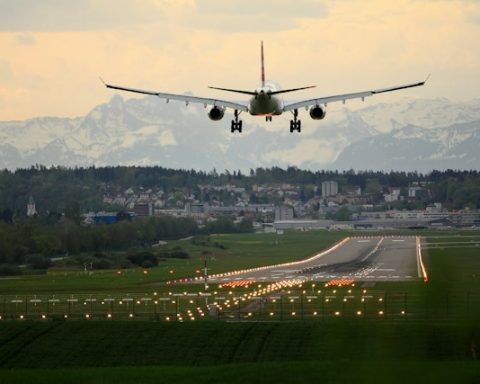
The final phase of the flight—approach, landing, and disembarkation—offers perhaps the most understated yet significant validation of this leadership model. Passengers rise, eager to retrieve luggage, often ignoring seatbelt signs. Cabin crew must manage this delicately, enforcing compliance without confrontation. Pilots, meanwhile, navigate complex descent vectors and coordinate with air traffic control under pressure. Yet all this occurs without friction, because the crew functions as an ecosystem. The landing may be smooth or turbulent, but the post-landing procedures—door arming checks, announcements, documentation—unfold with clockwork precision. And as passengers disembark with farewells, unaware of the choreography behind the scenes, the crew quietly resets, already thinking of the next leg, the next new team, the next operational challenge.
In conclusion, leadership and teamwork on a commercial flight are not mere managerial concepts, but living dynamics tested daily in real-time conditions. They function not despite the absence of long-standing personal familiarity among crew members, but because of the structures, cultures, and ethics that aviation has long embraced. These include clear hierarchies balanced with egalitarian communication, standard procedures enriched by individual judgment, and cultural diversity unified by professional values. If one were to seek a paradigm of how strangers can become an efficient team within minutes, and how leadership can manifest without ego, authority without domination, and cooperation without coercion, one need look no further than the flight crew of a commercial airliner. In their unheralded daily journeys lie lessons not only for aviation but for all human enterprise where lives, responsibilities, and dignity converge.
My Take
The area of commercial aviation, more than any other domain of modern enterprise, depends critically on the psychological fortitude and moral autonomy of its crew. These individuals are not merely functionaries tasked with mechanical duties but are custodians of safety, serenity, and human trust at 40,000 feet. In this context, the imperative of cultivating resilient, reflective, and ethically grounded personalities becomes not merely a pedagogical preference but a categorical duty. Crew psychology must therefore shift from procedural compliance toward the cultivation of rational moral agents who act not from inclination but from duty—a shift Kant would have demanded in his invocation of the categorical imperative.
When Marcus Aurelius, in Book One of Meditations, gives thanks for the virtues he learned—patience, modesty, rationality, compassion, discipline, and equanimity—he was, in effect, acknowledging the inherited moral maxims that governed his conduct. In the philosophy of Immanuel Kant, these virtues become universalizable imperatives—rules of action that one would will to be laws for all rational beings. Trainers and human factors specialists would do well to structure their pedagogy on this moral substrate: to guide trainees toward not merely compliance but moral autonomy, where actions arise from inner duty and not mere regulatory expectation.
The cockpit and cabin are not merely workspaces; they are moral environments wherein decisions often carry consequences that affect human lives. One of the most profound lessons from both Aurelius and Kant is the principle of treating others not merely as means to an end but as ends in themselves. A flight deck where captains lead without vanity and junior crew members contribute without resentment is a space where human dignity is preserved. Trainers must instill in their students that leadership is not dominance but a rational will in harmony with moral law—anchored in service, self-awareness, and respect for the autonomy of others.
The Stoic discipline of perception—that it is not events that disturb us but our judgments of them—aligns with Kant’s insistence on self-governance. Rational agents must assess their motivations and rise above emotive impulsiveness. Inflight challenges must be met with a mind that is not merely trained to react but one that is governed by the maxim: “Act only according to that maxim whereby you can at the same time will that it should become a universal law.” Emotional regulation, therefore, is not simply a behavioral goal but a manifestation of practical reason.
Gratitude, too—extolled by Aurelius—reflects a Kantian acknowledgment of human worth. Crew members ought to engage one another as moral equals, bound by mutual respect. Reflective practices such as journaling, debriefing, and peer appreciation deepen this ethical awareness, reinforcing the humanity that underlies safety.
In final recommendation, civil aviation authorities and airline training departments must transcend technical instruction and integrate into their curricula the moral philosophy of autonomy and duty. Emotionally and ethically mature crew serve not only as operational assets but as the highest expression of rational human will. In so doing, they uphold not only the safety of flight but the moral dignity of aviation itself—where every decision is governed by reason, every action by duty, and every life by respect.











Leadership beautifully spelled out !
I am sending this publication to chiefs or heads of a system, a department or of a family who feel threatened by sharing decision, influence and power.
It boils down to the root of such quest for power of these chiefs : why are their ego so fragile as to need the fortress of an ultimate and exclusive authority position to preserve their sense of self ? Why so fragile ?
People can only change if they recognise and own their flaws; and prioritise the worth of others as much as their own without feeling damaged.
Thank you for such teaching.
Trang Dao, MD, Consultant, Aviation Psychiatry