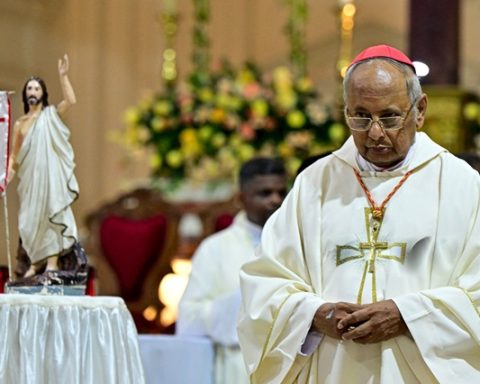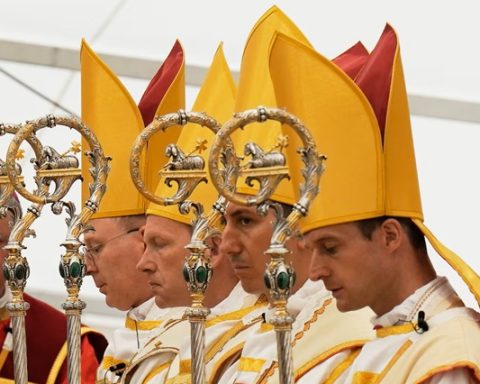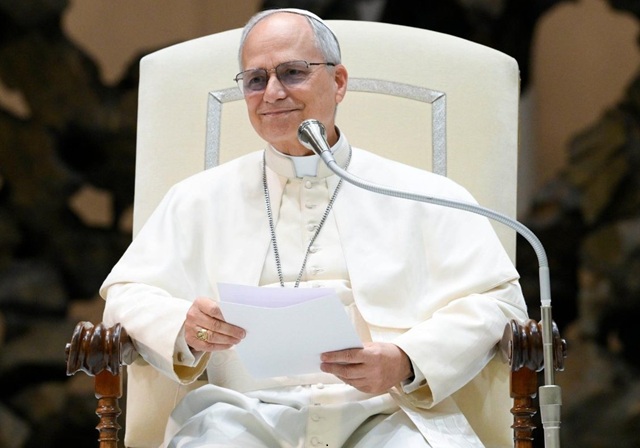
In just ten days, Pope Leo XIV — the first American pontiff in history — has managed to inject the Vatican with a unique brand of charisma and cultural crossover. From cracking jokes about the White Sox to hosting tennis legend Roger Federer, Leo has already distinguished himself as a break from tradition. Yet as his sacred inauguration approaches this Sunday in St. Peter’s Square, the core question for the Catholic Church remains: Can he reverse decades of decline and bring worshippers back to the pews?
According to The Washington Post, Pope Leo has begun his papacy with what many describe as “a honeymoon period.” His debut Sunday blessing drew 150,000 people, and his rise from bishop to pope in just two years — accelerated under Pope Francis — has been nothing short of historic. At 69, he brings a relatively youthful, American dynamism to a role historically held by much older European men.
While early enthusiasm surrounds him, comparisons to past pontiffs set a high bar. Pope John Paul II’s global charisma and anti-communist stance once galvanized millions, while Pope Francis’s reformist tone and global popularity made headlines, if not converts. By contrast, Pope Benedict XVI, despite his more traditionalist leanings, oversaw only modest growth and struggled through scandals. Under Francis, Vatican audiences fell dramatically — from 7.3 million in 2013 to just 1.68 million in 2024.
Leo inherits not only Francis’s unfinished reforms, but also a church grappling with polarization, irrelevance in parts of Europe, and fierce competition from evangelical movements in the global south.
A Dual Identity, A Broad Net
Born Robert Prevost and naturalized in Peru, Leo brings a rare dual identity to the papacy: he is both American and Latin American, offering symbolic reach across hemispheres. In a keynote speech Friday, he emphasized continuity with Francis’s emphasis on social justice while signaling alignment with church orthodoxy. Calling for compassion for migrants, he also reaffirmed the church’s stance on traditional marriage.
His balancing act has won him praise from disparate corners of the church. German Cardinal Gerhard Müller — a known critic of Francis — applauded Leo’s start. Meanwhile, in Germany, a country pushing hard for church reforms, bishops are watching closely. Over 1.2 million German Catholics have left the church in the past three years, citing abuse scandals and slow reforms. Leaders have expressed hope but caution.
“I sincerely hope for Catholics in Germany… that we can see more steps forward,” said Irme Stetter-Karp, head of the Central Committee of German Catholics. “But it would really disappoint us if it stayed the way it is.”
Appealing to Both Sides of the Aisle
Leo’s subtle return to papal traditions — such as residing in the Apostolic Palace and wearing more formal vestments — has resonated with traditionalists alienated by Francis’s simpler approach. He has also embraced Latin more enthusiastically and distanced himself from Francis’s softer rhetoric on Russia by voicing firm support for Ukraine.
Yet Leo has not abandoned the spirit of synodality — Francis’s hallmark push to include lay voices in Church decision-making. His early tone of “unity” has been seen as a possible attempt to bridge divides rather than deepen them.
Some conservatives have responded with enthusiasm. One Catholic commentator, Shane Schaetzel, posted, “Is anyone else getting the feeling like we have woken up from a 12-year nightmare?”
American Excitement, Lingering Challenges
In the U.S., Leo’s election has sparked an outpouring of excitement. Church attendance has spiked at places like Villanova University, his alma mater. Catholic leaders are now strategizing how to turn that excitement into long-term engagement.
Kathleen Porter Magee, of the nonprofit Leadership Roundtable, put it bluntly: “How do you make sure moments like these become not just a flame but an accelerant to something broader?”
That may be easier said than done. A Pew Research study recently showed that for every 100 new members the U.S. Catholic Church gains, it loses 840. The proportion of American Catholics has remained flat only due to continued Latino immigration.
Experts caution that Leo’s popularity must be backed by real institutional engagement. “People don’t attend regularly because they don’t feel engaged or welcome, or they’re bored,” said Rev. Thomas Gaunt of Georgetown’s Center for Applied Research in the Apostolate.
Maureen K. Day, co-author of Catholicism at a Crossroads, said moments like Leo’s election can create short-term boosts in Catholic identity and orthodoxy — but those gains fade without deeper changes. “It’s a catalyst or a moment,” she said. “But the moment, without being captured, will lose whatever momentum it has.”
A Pivotal Papacy Begins
As Pope Leo XIV prepares to don the Ring of the Fisherman and officially begin his papacy, the stakes are immense. He has captured early attention with humor, humility, and a uniquely American presence. But whether he can turn that charisma into a revitalized, more unified Church remains uncertain.
His challenge mirrors the challenge of the global Church itself: how to honor tradition while speaking to a new generation, in a new world.