by Our Correspondent in Colombo
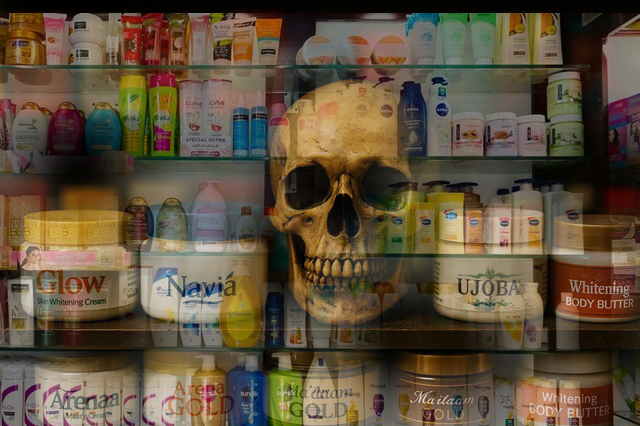
A grave public health crisis is unfolding in Sri Lanka as the Consumer Affairs Authority (CAA) has released a damning report exposing dozens of widely-used beauty and skincare products that contain dangerous levels of mercury, lead, and other toxic heavy metals. The CAA’s notification, dated 12 May 2025 and identified as CAA/CP/01/Pub.Notice/01/2025, lists 49 hazardous products, many of which are commonly sold in cosmetic stores, pharmacies, and online platforms across the country. Most of these products bear no batch numbers, making them virtually untraceable and raising serious questions about regulatory enforcement and import controls.
Among the most shocking findings is the skin cream “Arena Gold”, which was found to contain an astounding 30,080 parts per million (ppm) of mercury — over 30,000 times the maximum permitted limit of 1 ppm under Sri Lankan and international safety standards. Other products such as “Glow”, “Navia”, “Ujooba”, and “Kashee Organic” also contain mercury levels ranging between 7,845 and 66,680 ppm. These levels are not just non-compliant; they are lethally toxic. Several other creams, including “Ma’daam Gold Beauty Cream” and “Whitening Body Butter”, were found to contain excessive levels of lead, with values such as 75 ppm and 19.1 ppm, which significantly exceed the Sri Lankan standard of 10 mg/kg. The presence of lead and mercury in these products turns everyday cosmetic use into a health hazard of catastrophic proportions.
These toxic metals, particularly mercury and lead, are known to cause serious and irreversible health issues. Mercury exposure through the skin has been scientifically linked to kidney failure, neurological damage, skin cancer, reproductive system disorders, and hormonal imbalance. Lead, similarly, is associated with developmental disorders, blood toxicity, organ failure, and cancer. The everyday use of these creams means that users — particularly women and teenagers — are unknowingly dosing themselves with poisons, sometimes multiple times a day. This silent but continuous exposure leads to bioaccumulation in organs, a hidden danger that may not show symptoms until it is too late.
Beyond the immediate health threat, the revelations point to a darker, more insidious problem: systemic regulatory failure. Sources close to the industry allege that several powerful importers and cosmetic manufacturers have been bribing officials within regulatory bodies to overlook safety violations. It is claimed that government insiders have enabled the clearance and sale of these dangerous creams, either by deliberately avoiding proper testing procedures or by falsifying compliance documents. These allegations, while yet to be officially proven, gain credibility in light of how many of the listed products bear no batch numbers — a basic requirement in regulatory labelling — and how many brands have been allowed to flourish unchecked.
The CAA’s public notice is being hailed as a long-overdue first step, but many in civil society are calling it only the tip of the iceberg. Health experts, consumer rights activists, and advocacy groups have responded with alarm, demanding an immediate ban on all listed products, criminal investigations into the responsible companies, and disciplinary action against any government officials found to be complicit. The health ministry is also being pressed to conduct a full-scale review of all imported and locally-manufactured skincare and cosmetic items, and to establish a transparent recall and compensation mechanism for victims.
Public outrage continues to grow, particularly on social media, where consumers are sharing personal stories of illness and skin damage caused by some of these very products. The lack of awareness campaigns, consumer education, and accountability from manufacturers has created a climate of distrust and fear. Citizens are being urged to examine their personal care products carefully and to stop using any item that appears on the CAA’s hazardous list. Doctors and dermatologists are warning that symptoms such as chronic rashes, unexplained fatigue, hormonal changes, and kidney dysfunction could be indicators of prolonged exposure to mercury or lead, and are advising people to seek medical screening if they suspect contamination.
This scandal is a grim reminder that in Sri Lanka, as in many developing nations, the beauty industry remains dangerously under-regulated. The pursuit of fair skin and cosmetic perfection, fuelled by aggressive advertising and social pressures, is driving a multibillion-rupee market — one that, if left unchecked, will continue to profit off the silent poisoning of the nation. Unless the authorities act swiftly and decisively, the legacy of these creams will not be beauty but widespread, preventable disease.