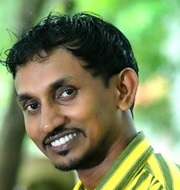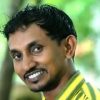

- Malik Samarawickrama played a key role in President Dissanayake’s effort to stage a national exposition of the Sacred Tooth Relic.
- Chief Prelates who had previously denied former President Wickremesinghe’s request have now unexpectedly approved President Anura’s plan to hold the exposition.
- President Dissanayake is accused of breaking long-standing traditions in his push for the event.
- 350,000 people were brought to Kandy—a city built to accommodate only 150,000—raising concerns over infrastructure and crowd management.
For around 16 years, the country had been unable to host a national exposition of the Sacred Tooth Relic. Even when Ranil Wickremesinghe served as President and attempted to organise one, those efforts were in vain. Although he helped the country recover economically after the people’s uprising, the Chief Prelates of Malwatte and Asgiriya still did not grant him permission. Naturally, questions arose: why was the current President allowed to proceed?
With general elections approaching, President Anura Kumara Dissanayake saw the exposition as a means to calm and unite the country. To initiate the process, he intended to send a formal request to the Malwatte Chief Prelate. Since prior approval from both the Malwatte and Asgiriya Chapters was essential, the government selected Ranil Wickremesinghe’s own trusted ally, Malik Samarawickrama, to deliver the President’s message.
Samarawickrama, a former minister often accused of political deal-making during the UNP regime, has recently resurfaced in political discussions for allegedly engaging with the current government. Despite ongoing allegations of a behind-the-scenes political pact between President Anura and former President Wickremesinghe, Anura entrusted this delicate task to Malik.
Malik met with the Malwatte Chief Prelate and presented the proposal, which was accepted. The Chief Prelate gave his blessing for the President to visit the Temple of the Tooth (Sri Dalada Maligawa). Since the custodianship of the Sacred Tooth Relic was with the Asgiriya Chapter at the time, the Malwatte Chief Prelate advised President Dissanayake to also meet with the Asgiriya Chief Prelate and the Diyawadana Nilame (Chief Custodian) for further discussion.
This laid the groundwork for the exposition to move forward.
Using Samarawickrama—once a pillar of Ranil’s administration—as a key envoy, President Anura Kumara made a strategic move that proved successful, even as members of his own party looked on with caution.
Ironically, during his presidency, Ranil Wickremesinghe had prepared to organise an exposition but never received approval. At the time, the country was in deep economic crisis, and people were suffering immensely. In 2023, although Ranil made another attempt, the country was still fragile. According to the Chief Prelates, they refrained from granting permission due to the continuing hardships faced by the public.
Though Ranil undertook the challenging task of economic recovery, it is Anura Kumara Dissanayake who now reaps the political and public benefits of that effort.

While Ranil could not fulfil the dream of holding the ‘Exposition of the Sacred Tooth Relic’, Anura has achieved it—ironically, through the efforts of Malik Samarawickrama, Ranil’s own trusted ally. This move may reflect a deeper strategic alliance or mutual confidence between the two.
Anura and Malik Previously Visited the Temple of the Tooth
According to CCTV footage from the Temple of the Tooth, President Anura Kumara Dissanayake had previously visited the Malwatte Maha Nayaka Thera, accompanied solely by former Minister Malik Samarawickrama.
At the time, this visit sparked public discussion. The close relationship between Anura and Malik became evident when it appeared that Malik had enough influence to secure approval for the Dalada exposition.
Breaking Tradition
Traditionally, a Dalada exposition is organised following discussions between the two Mahanayake Theras (of Malwatte and Asgiriya) and the Diyawadana Nilame. Once a decision is made, the President is informed—usually in confidence, much like the communication of constitutional matters to the Speaker of Parliament.
In this instance, however, even before any formal communication, the President publicly announced—for the first time in the country’s history—that a national exposition would be held, effectively assuming the role of the Diyawadana Nilame.
This may indicate a lack of awareness or experience on the President’s part, possibly due to an absence of knowledgeable advisers on religious and traditional protocol.
Controversy Over VIP Queues
One of the most discussed issues during the exposition was the chaos surrounding VIP queues, while general devotees faced major inconveniences. Traditionally, only members of the royal entourage were allowed close access to the sacred relic, while the public could venerate from the outer terrace—this rule was upheld even during colonial times.
During the exposition, the casket containing the Sacred Tooth Relic is brought to the chanting pavilion, and three public queues are formed to pass in front of it. Additionally, an inner queue is organised for senior monks, temple sponsors, judicial officers, special invitees, and guests of the Diyawadana Nilame to pay respects from closer proximity. However, this arrangement has never obstructed the public lines.
Each day, fewer than 3,000 individuals were included in this inner queue. These included representatives from the Malwatte and Asgiriya Chapters, the Diyawadana Nilame’s associates, senior members of the four devalayas, and officials from temple-affiliated institutions such as the Department of Archaeology, National Archives, Central Cultural Triangle, and the Kandy National Museum, as well as family members of high-ranking military and police officers.
It is no secret that nearly 15,000 people attempted to enter the VIP line from outside. Most complaints regarding “VIP queues” referred to these unauthorised attempts.
Interestingly, it was consistently reported by the Temple of the Tooth that no government MPs, ministers, or their family members requested or received special access via VIP queues.
Organisational Shortcomings
A significant shortcoming during the exposition was the government’s inability to manage and organise the event efficiently. There had been an expectation that the ‘Rathu Balakaya’ would provide the necessary support and facilities.
Prior to the commencement of the exposition, the President held a special discussion on its organisation. He stated that the government would bear the full cost and that a cabinet paper would be submitted for this purpose by the Minister of Buddhasasana, Religious and Cultural Affairs.
However, the Diyawadana Nilame requested that no state funds be used, as the Temple would cover all expenses related to its premises and assume responsibility for all internal matters.
Meanwhile, external arrangements—such as setting up barricades, organising dansals (charity food stalls), providing drinking water and mobile toilet facilities, and ensuring public security—were responsibilities discussed and planned by the government.
Accordingly, the Dalada Maligawa had spent nearly Rs. 87 million from its own budget on the exposition. The Diyawadana Nilame and the Chief Prelates of the Malwatte and Asgiriya Chapters assumed full responsibility for the arrangements within the Temple premises.
A special operational committee was appointed to manage arrangements outside the Temple. The Kandy District Secretary was appointed as the head of this committee, and officials including the Provincial Governor, the Provincial Secretary, and other state representatives were assigned to it. They held daily meetings and made decisions regarding the event’s progression.
Initial criticism over the VIP queues also emerged from this committee. The controversy surrounded the use of separate queues for political affiliates and family members of the government, drawing attention and public discussion.
Massive government-sponsored promotions called upon citizens from across the country to come and venerate the Sacred Tooth Relic, resulting in people gathering along the streets from the evening of 15 April, ahead of the scheduled 18 April commencement. Due to this, the event took on a political undertone.
The official exposition began at noon on 18 April, when the Diyawadana Nilame, along with the Mahanayaka Theras of the Malwatte and Asgiriya Chapters, ascended to the upper floor of the Temple where the Sacred Relic is enshrined. In keeping with long-standing rituals and traditions, the inner casket containing the Relic was opened.
The golden chains offered by ancient kings are recorded in an inventory, and the casket is opened accordingly. The first casket is unlocked with the key held by the Diyawadana Nilame. The second casket is opened using the key of the Asgiriya Mahanayake Thera, and the third by the Malwatte Mahanayake Thera. The remaining four caskets are then opened by removing their locks.
Finally, the Sacred Tooth Relic is placed in the Hemamala Casket, named after Princess Hemamala who, along with Prince Dantha, brought the Relic to Sri Lanka, and the casket is ceremonially opened.
This ceremonial opening, which began at noon on 18 April, lasted for about two and a half hours. The President arrived at the Temple around 1:30 p.m. that day and remained in the Diyawadana Nilame’s office until the conclusion of the ritual, which took about an hour.
However, those waiting outside assumed this time was allocated for VIPs to venerate the Relic, unaware of the inner religious proceedings. This misconception was widely circulated on social media.
At that time, those present in the Diyawadana Nilame’s office included the President, Agriculture Minister K.D. Lalkantha, Buddhasasana Minister Sunil Senavi, the Secretary of the Buddhasasana Ministry, the Director General of Archaeology, the Central Province Governor, and the Provincial Secretary. Additionally, 33 foreign ambassadors and representatives of diplomatic missions attended the event upon the President’s invitation.
Over 350,000 people arrive in Kandy, a city meant for only 150,000
On the second day as well, a massive crowd had gathered in Kandy. The main area of Kandy (Grid City) can typically accommodate around 150,000 people. However, by that time, around 350,000 people were staying in the city.
That’s where the crisis began. Although a nationwide promotional campaign had been carried out by the state mechanism, it failed to provide basic facilities such as toilets, sanitation, and other necessary amenities for a crowd of this scale.
From 18 April onwards, arrangements were made to provide meals every night to the 35,000 people waiting in queues around the Temple of the Sacred Tooth Relic. Necessary facilities along the ‘Raja Veediya’ were also arranged. However, due to the Main Operations Committee failing to adequately prepare community kitchens (dansals) for the arriving crowds, a major issue arose on the first day.
Eventually, the Diyawadana Nilame contacted the President and informed him of the situation, which was then communicated to the Army Commander. As a result, the army was mobilised to distribute 15,000 meal parcels to those affected on the very first day.
Main operations committee’s poor planning
The Operations Committee, which was responsible for all activities outside the Temple premises, lacked experience and the capability to manage such a situation. As a result, conditions worsened.
Their lack of a proper plan and understanding for an event of this scale led to this crisis. Even though the matter was brought up in several discussions, the inability to implement those plans practically became a major failure in managing the situation.
President’s request to extend exposition declined by Chief Prelates
Despite the severe organisational shortcomings, President Anura Kumara Dissanayake had a strong desire to extend the Sacred Tooth Relic exposition.
Until then, the Dalada Exhibition was scheduled to run only from 18 to 27 April. However, the government wanted to extend it by another three days beyond 27 April.

Due to the state machinery’s inability to provide adequate facilities for the large number of devotees arriving in Kandy, the Chief Prelates of the Malwatte and Asgiriya Chapters, along with the Diyawadana Nilame, held a discussion on the morning of 25 April and decided not to extend the exposition.
Accordingly, the Diyawadana Nilame officially announced that the exhibition would conclude on 27 April.
Nevertheless, President Dissanayake had a strong interest in extending the event. He personally contacted the Chief Prelates and made a request for the extension.
However, the Chief Prelates, together with the Diyawadana Nilame, firmly decided not to alter the decision they had taken on the morning of the 25th.
That same night (25 April), the President unexpectedly arrived in Kandy and held discussions with the public about the shortcomings. A special meeting was then held at the Kandy President’s House that night.
Although the President met with the Chief Prelates of Malwatte and Asgiriya the next day and once again requested an extension, the plea was rejected.
Failing in his effort to prolong the exposition, the President subsequently returned to Colombo. The key figures who had appeared to take responsibility and support the President from the start of the exposition were Minister of Buddhasasana Sunil Senavi and the Secretary of the Ministry.
A decision was taken by the President that everyone who comes for the exposition must pay homage.
Even though it is common during such expositions that some of the final day visitors are unable to venerate the Sacred Tooth Relic, the President took a firm decision that all who come must be able to do so.
DIG suddenly replaced a week before the exposition
To count the number of people who come daily for the Dalada veneration, the Kandy Deputy Inspector General (DIG) of Police had announced that, prior to the exposition, the viewing would be held from 18 April, 3 p.m. to 5:30 p.m., and on other days from 12 noon to 5:30 p.m.
Three days after the exposition began, it was decided to extend the hours from 11 a.m. to 5:30 p.m.
The DIG stated that only around 56,000 people per day could be accommodated for the Dalada veneration.
However, the newly appointed Kandy DIG, who was appointed just a week prior to the event, failed to manage this situation properly.
Until now, none of the previous governments had removed a DIG from Kandy in such a sudden and abrupt manner during such a major responsibility.
But the current government suddenly removed Mahinda Dissanayake, the DIG at the time, and appointed DIG Sudath Asmadala in his place.
Four teams were appointed to count the people arriving for veneration.
Normally, the number of people entering the Temple of the Tooth Relic is monitored by installed devices. However, since large crowds entered simultaneously during the exposition, these devices faced difficulties.
This prompted the Central Province Governor to urgently appoint a special team.
One team was formed with the support of the Institution of Engineers.
Another team was appointed by the military and was tasked with counting and reporting the daily number of devotees.
A third team operated under Senior DIG Lalith Pathinayake of the Central Province.
Among these three, the team under Senior DIG Lalith Pathinayake performed the most accurate counting.
Initially, the Governor or District Secretary did not consider the data provided by this police team, instead accusing them of inaccuracies and unreliability.
The first queue began near the Red Bridge area and continued past Queen’s Hotel, entering the temple grounds via the overhead bridge.
The second queue started near the Joy Boat Service and also proceeded past Queen’s Hotel into the temple grounds.
The third queue came through D.S. Senanayake Street, near the DFCC Bank fountain area, and entered the temple grounds.
These three queues passed through final inspection booths before entering the inner premises of the temple, and the responsibility for counting at these points was given to the Senior DIG. The number of people entering was accurately recorded at these final checkpoints.
Each day at 5 p.m., the temple grounds were closed to the public, and no further entries were allowed.
Those who arrived for veneration but could not enter had to spend the night outside the Temple of the Tooth premises.
Everyone who entered via the three queues and passed inspection was ensured the opportunity to venerate the Sacred Tooth Relic.
There was a major discrepancy in the attendance figures. While the police counted accurately, the data from the Institution of Engineers differed significantly. The Governor accepted the engineers’ reports and rejected the police figures, leading to a failure to properly calculate and accommodate the actual number of devotees.
During the first three days, the military also failed to count accurately. By the fourth day, however, their figures began to match the police data. The engineers’ count remained considerably lower—by about 20,000—compared to the police and military data, which differed by only about 2,000 between them.
The police were also responsible for handling devotees’ belongings—shoes, slippers, bags, and other items. This process further ensured the accuracy of the police counting system.
The Governor attempted to play the role of the Diyawadana Nilame
Departing from the long-standing tradition whereby announcements regarding the Dalada (Sacred Tooth Relic) exposition are made by the Diyawadana Nilame of the Temple of the Tooth, the Governor of the Central Province—closely aligned with President Anura Kumara Dissanayake—took it upon himself to promote the event.
The Governor stated that the presidential committee appointed to organise the Dalada exposition would recommend to the Mahanayake Theras (Chief Prelates) and the Diyawadana Nilame that the exposition be held annually.
However, due to a lack of experience and understanding of cultural customs and religious traditions, the statements made by those involved led to public confusion and misinformation.
The Rajapaksas’ Dalada Exposition Amidst War
In 2009, the Dalada (Sacred Tooth Relic) exposition was held under the direct intervention of then-Defence Secretary Gotabaya Rajapaksa. At the time, Sri Lanka’s military was in the final stages of defeating terrorism, and Rajapaksa emphasised the need for the exposition to uplift the morale of a war-weary nation.
After presenting this idea to the Diyawadana Nilame, he was advised to consult with the President and the Mahanayake Theras (Chief Prelates). Subsequently, then-President Mahinda Rajapaksa visited the Temple of the Tooth, held discussions with the Chief Prelates, and obtained their blessings to proceed with the exposition.
Security was the foremost concern, given the high risk of suicide bombings and aerial attacks by the LTTE. Nonetheless, Gotabaya Rajapaksa assumed full responsibility for all security arrangements.
Working in coordination with the Urban Development Authority and the Kandy Municipal Council, Defence Secretary Rajapaksa devised a comprehensive plan that included logistics such as mobile sanitation units, drinking water facilities, and crowd management. He also ensured cooperation with mobile sanitation service providers across the country and encouraged private sector participation in organising dansals (free food distribution).
Despite the conflict, the police and tri-forces were mobilised to provide security for the Temple of the Tooth. Thanks to meticulous planning, the Dalada exposition was held peacefully and was even extended by three additional days, with formal approval from the Mahanayake Theras of Malwatte and Asgiriya.
However, the final extension had to be cancelled after a security scare involving an individual caught carrying hidden wire fragments. While this led to some devotees missing the chance to venerate the relic, the event was otherwise successful, drawing nearly 1.5 million people.
That such a large-scale religious event could be held safely during wartime was a testament to effective coordination, strong leadership, and the proper use of public resources. All essential facilities were provided, and people were able to pay homage despite the surrounding turmoil.
This stark contrast—between a well-executed Dalada exposition during war and the disorganised handling of the current one during peacetime—sparked significant discussion on social media. Many argued that had the current government planned the event with the same level of care and coordination, there would have been no controversy.
In 2023, then-President Ranil Wickremesinghe had an opportunity to organise the exposition but failed to do so, despite having access to religious figures such as Malik Samarawickrama. His inability to lead the effort became a point of public disappointment and reflection.
Ranil Denied the Opportunity to Host Dalada Exposition
At the time, President Ranil Wickremesinghe had expressed readiness to organise a Dalada (Sacred Tooth Relic) exposition. However, a critical misstep cost him the opportunity: he delegated the task of inviting the Mahanayake Theras (Chief Prelates) to then Prime Minister Dinesh Gunawardena.
Traditionally and constitutionally, matters related to the Sacred Tooth Relic require the Head of State to personally consult with the Chief Prelates. By bypassing this custom, Wickremesinghe broke with established protocol—a move that undermined the initiative.
The planned exposition was intended to coincide with Independence Day celebrations, and the Deputy Minister of Public Administration even announced the event at a press briefing held at the Department of Government Information.
However, that same Deputy Minister also took on ceremonial and administrative responsibilities typically reserved for the Diyawadana Nilame—further violating religious and cultural norms. This, too, contributed to the cancellation of the exposition.
When President Anura Kumara Dissanayake later pursued the idea, he appeared to take a more careful approach—leveraging the connections of Malik Samarawickrama with the Buddhist clergy to smooth the process. Yet his efforts also faltered, largely due to the Rathu Balakaya (Red Movement), aligned with the JVP, failing to actively support the initiative.