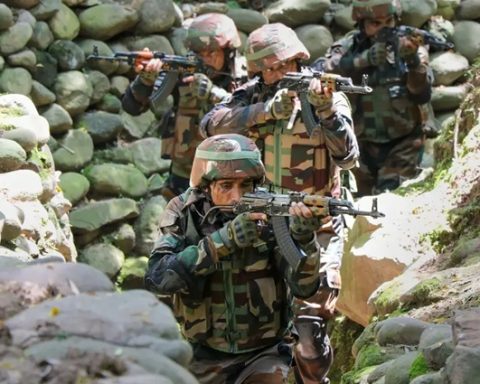
On June 5, 2025, two Yung Aung faction of National Socialist Council of Nagaland-Khaplang (NSCN-K-YA) cadres, identified as ‘sergeant major’ Nyaklung and ‘lance corporal’ Neyung Aung, were killed in an encounter with the Indian Army near Langkhu village in the Longding District of Arunachal Pradesh.
On April 27, 2025, an encounter broke out between Indian security forces (SFs) and NSCN-K-YA militants in the Pongchau area of Longding District, during a joint rescue operation by the Indian Army and Assam Rifles. The operation aimed to rescue two construction workers – Giyas Uddin and Janlung Wangpan – who had been abducted on April 25, by NSCN-K-YA cadres. During the exchange of fire, three militants were killed and two were injured and subsequently apprehended. SFs recovered four automatic weapons, including three AK-47 rifles, along with ammunition and other war-like stores from the encounter site. While Janlung Wangpan, a site supervisor, was successfully rescued, the second abducted worker, Giyas Uddin, was killed during the gunfight. They had been employed with PSK Enterprise and were abducted from a work site in Pongchau.
On October 25, 2024, a clash occurred between the Assam Rifles and NSCN-K-YA cadres in Longding District, in which an NSCN-K-YA cadre, ‘major’ Gangjun Gangsa, was killed. The NSCN-K-YA initiated the attack by firing at the Assam Rifles personnel, while they were moving from Wakka towards the Indo-Myanmar border.
On November 24, 2024, two civilians – Vignesh Kumar Jha and Bishnu Chetry – were abducted by a 10-member heavily armed group of NSCN-K-YA, from a bridge construction site located between the Pongchau and Konnu villages in Longding District. Sources stated that the group was led by NSCN-K-YA leader Akham Konyak.
In 2025, Arunachal Pradesh recorded a total of five fatalities (all terrorists) all of which occurred in Longding District. Since March 6, 2000, Longding has recorded a total of 34 fatalities (30 terrorists, three civilians and one SF trooper) in 22 incidents [South Asia Terrorism Portal (SATP) data till June 15, 2025.] There was one (terrorist) fatality in 2024, and five killed (one civilian, one SF trooper, three terrorists) in 2023.
In 2025, Longding reported one case of abduction. According to data compiled by SATP, the district has witnessed a total of 11 abduction-related incidents since 2019, further underlining its vulnerability to insurgent tactics aimed at disrupting civil life and infrastructure development.
Longding District, part of Arunachal Pradesh’s Tirap–Changlang–Longding (TCL) corridor along the Indo–Myanmar border, remains a critical hub for insurgent activity by factions of the NSCN [such as NSCN‑K‑and NSCN – Isak-Muivah (IM)] and the United Liberation Front of Asom – Independent (ULFA‑I.)
A major flashpoint has been the persistent wave of abductions and extortion in Longding. Since 2018, over 90 cases of abduction have been logged, most aimed at civilians and officials, for ransom or intimidation. Even with Armed Forces Special Power Act (AFSPA) in force, insurgent groups have not relented, using these tactics to assert control and demand “taxation”. As noted, by SATP, it is “an overflow” of neighboring states’ insurgencies and a “transit route” for various militant outfits exploiting the border terrain.
Not surprisingly, on March 30, 2025, the Union Ministry of Home Affairs (UMHA) declared that the Central Government extended AFSPA in Arunachal Pradesh and declared Tirap, Changlang, and Longding Districts ‘disturbed areas’, for six months.
Extortion and abduction remain two of the most entrenched tools of insurgent operations in Longding, severely undermining the rule of law, economic stability, and civilian morale. Militant outfits such as NSCN-K-YA, ULFA-I, and even NSCN-IM – the last, despite being part of peace talks – have continued to exploit local populations and small businesses through ‘taxation’ and threats. Contractors, school teachers, government employees, and traders are routinely targeted and forced to pay hefty sums, with refusal often resulting in abduction or physical harm. In several instances, armed cadres have infiltrated villages and summoned local leaders or contractors to undisclosed locations – sometimes across the border in Nagaland or Myanmar – where they are coerced into making payments.
In February 2024, NSCN-K-YA and ULFA-I jointly abducted 10 coal mine workers from the Finboro area in Changlang, prompting a regional alert, as they were suspected to be held near the Longding frontier. Similarly, in May 2024, cadres abducted two civilians from Pongchau, and later demanded a ransom for their release. These incidents were not isolated – they reflect a broader pattern of coercive control used to fund insurgency and assert political leverage in areas where the government presence is minimal or contested.
The local community, especially the Wancho tribe, has grown increasingly vocal. On May 9, 2025, hundreds joined the “United Peace Rally” in Longding town, organized by the Wancho Council, students, market boards, and village leaders. Protesters held banners reading “No More Abduction” and “We Want Justice” and marched to the Deputy Commissioner’s office to demand urgent action. The rally highlighted that civilians, “trapped between insurgents and security forces,” are demanding stronger measures and accountability.
On February 18, 2025, Governor K.T. Parnaik reviewed the security situation across the TCL Districts during a high-level meeting at Khonsa in Tirap District. He stressed that a secure environment is essential to enable development and vowed that “no external interference will be tolerated.”
Significantly, on June 6, 2025, SFs launched a targeted operation against suspected militants in Pongchau Circle in Longding, based on specific intelligence inputs. Troops from the Indian Army and Assam Rifles encountered unidentified individuals during a patrol and issued a challenge, which was met with heavy gunfire from militants armed with high-calibre weapons. In the ensuing firefight, the militants retreated into Myanmar, taking advantage of the dense forest and rugged terrain. The incident underscores the security concerns posed by insurgent activity along the unfenced Indo-Myanmar border.
Amid this dynamic, Longding’s security outlook remains precarious, albeit gradually improving. It reflects the complex and deeply entrenched insurgent dynamic that has plagued the TCL corridor for decades. Despite sustained counterinsurgency operations and the enforcement of AFSPA, groups such as the NSCN-K-YA, ULFA-I, and NSCN-IM continue to operate with impunity, leveraging cross-border sanctuaries in Myanmar and exploiting the porous and rugged Indo-Myanmar border to evade Indian SFs. The combination of persistent militant incursions, high-profile abductions, and fragmented insurgent networks is being met with determined state action and assertive civic resistance. While arrests of key figures and armed casualties have delivered noticeable deterrence, sustainable peace will depend on sustained joint operations, border surveillance, legal enforcement under AFSPA, and deeper socio-economic engagement with local communities – particularly the tribal leadership. The rising assertiveness of locals in demanding accountability might well be the decisive factor in turning a fragile ceasefire into lasting stability in Longding.