Editorial
Over the past decade and more, attacks on churches and tourist sites have become a grim and repeated feature in several parts of the world. From the coordinated bombings in Colombo, Sri Lanka, to the recent suicide attack on the Saint Elias Greek Orthodox Church in Damascus, these incidents share clear and worrying patterns. They target religious minorities, seek to inflict maximum casualties, and aim to spread fear and division.
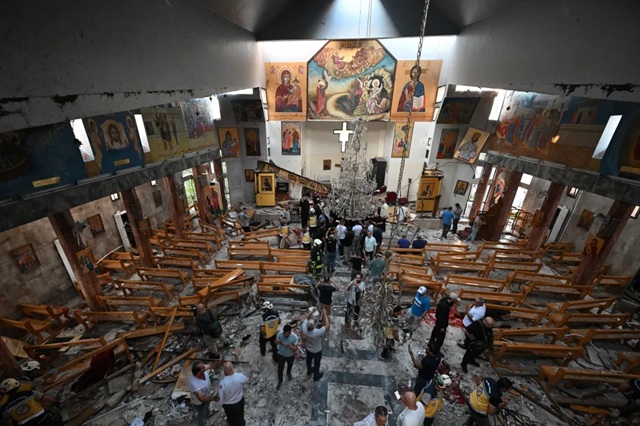
The Damascus attack in 2025 is a stark example. During Sunday evening mass at Saint Elias Church, a suicide bomber armed with an AK-47 attempted to enter the congregation. Three young men tried to stop him, wrestling him to the ground, but he detonated himself, killing 25 people—including children—and injuring 63 others. A second attacker fired shots from outside, adding to the chaos. This was the deadliest attack on Syria’s Christian community since the fall of the Assad regime.
Initially, the Syrian government blamed Islamic State (IS). However, IS did not claim responsibility. Instead, a smaller extremist group, Saraya Ansar al-Sunna, which claims to have split from the dominant Hayat Tahrir al-Sham (HTS), said it was behind the bombing. The government rejected this, accusing the Kurdish-led Syrian Democratic Forces of indirect responsibility through lax security at the nearby Al-Hol camp. These conflicting claims created confusion and made it difficult for Syrians, especially minorities, to trust the official account.
This confusion is not unique to Syria. On Easter Sunday 2019, multiple suicide bombings linked to IS targeted three churches and several luxury hotels in Colombo, Sri Lanka, killing 269 people and injuring over 500. Despite intelligence warnings, authorities failed to prevent the attacks. In the aftermath, conspiracy theories and blame-shifting by various political groups obscured the Islamist extremist nature of the attacks.
In Egypt, the Coptic Christian minority has faced repeated violence. In 2016, a suicide bombing at the St. Peter and St. Paul Church in Cairo killed 29. In 2017, two suicide bombings on Palm Sunday targeted St. George’s Church in Tanta and Saint Mark’s Cathedral in Alexandria, killing dozens. These attacks were claimed by ISIS. Yet, government officials at times hinted at other possible culprits, muddying the waters and obscuring the clear extremist motive.
Nigeria’s experience echoes this pattern. In 2022, a suicide bombing at St. Francis Xavier Catholic Church in Owo killed at least 40 people. The attack was linked to Boko Haram or IS-affiliated groups. Nigerian authorities often downplayed the Islamist roots of such attacks, attributing violence to ethnic conflicts or criminal gangs. This reluctance to clearly identify the threat hinders effective response and leaves communities vulnerable.
Even in Europe, Islamist attacks have targeted churches. In 2016, Father Jacques Hamel was killed in his Normandy church by IS-inspired attackers. Initial reactions in some quarters framed this as an isolated incident, ignoring the ideological context. Such downplaying of extremist motives is a common feature across many of these cases.
Looking at these examples from Colombo, Damascus, Egypt, Nigeria, and Europe, we see a clear and repeated pattern: attacks are carried out by Islamist extremist groups aiming to strike at religious minorities or symbols of societal openness. They use suicide bombings and coordinated assaults on churches and tourist destinations to cause maximum damage and fear.
The responses to these attacks share another pattern: a mix of conspiracy theories, denial, and politically motivated blame-shifting. Governments and political groups sometimes downplay the Islamist roots of attacks, blame rival factions, or promote alternative narratives. This creates confusion and undermines public understanding of the real threats.
The Damascus bombing illustrates this well. The government’s initial blame on IS, followed by denial of the actual group claiming responsibility, and accusations against Kurdish forces, shows how political interests can overshadow clear communication. This leaves minority communities exposed and distrustful.
The spread of conspiracy theories about these attacks serves to distract from the core issue: extremist groups are using violence to attack minorities and destabilise societies. Such theories also politicise tragedies, turning victims into tools in broader power struggles. Most dangerously, they prevent effective prevention measures by clouding the public’s understanding of the threat.
These attacks are unlikely to stop soon. Groups like IS and affiliated factions continue to operate in fragile states. Detention centres like Syria’s Al-Hol camp provide fertile ground for recruitment and planning. Political instability and reluctance to confront extremist ideologies openly mean that future attacks on churches and tourist sites remain a clear danger.
In confronting this reality, the first step must be honesty: recognising the Islamist extremist nature of these attacks without political spin or conspiracy. Governments, media, and communities must work together to provide clear, fact-based narratives. Only then can we develop effective strategies to protect vulnerable communities and prevent future violence.
The attacks from Colombo to Damascus, from Egypt to Nigeria, and beyond, show a disturbing trend. Islamist extremists continue to target places of worship and leisure, aiming to break societies apart. Denying or distorting this truth only prolongs the threat and endangers lives.
Facing the truth is not easy. It means confronting uncomfortable realities about extremism and the political interests that sometimes obscure it. But it is essential. If we continue to hide behind conspiracy theories and false narratives, we will remain trapped in a cycle of violence and fear.