Editorial
Congratulations to Navi Pillay on receiving the 2026 Nobel Peace Prize, an honour that recognises not merely an extraordinary legal career but also a fundamental principle of international justice, that peace cannot be sustained when power is permitted to operate beyond accountability. Her achievement invites celebration, particularly among those who believe that law must serve humanity rather than protect the powerful. Yet it also invites a more demanding reflection on the institutions, political compromises and moral contradictions that shape the struggle for human rights in an unequal world.
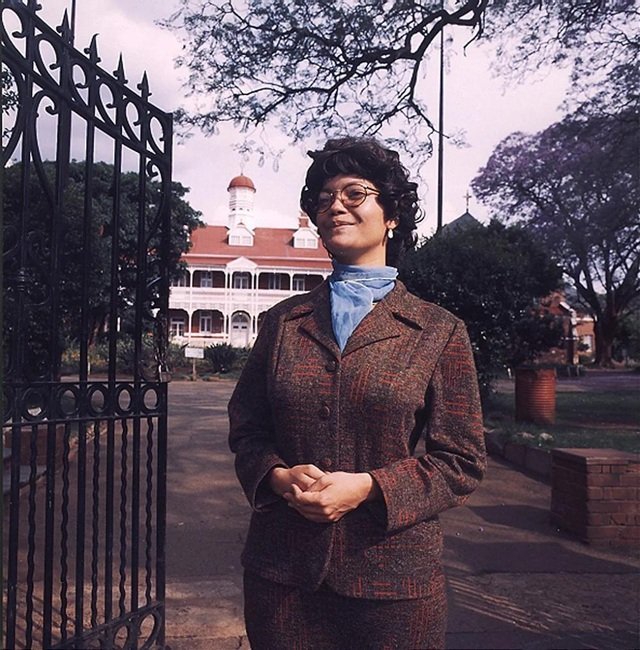
Navanethem “Navi” Pillay’s journey from apartheid-era South Africa to the highest positions in international justice embodies the possibilities of a legal system challenged from within. Born in 1941 into a Tamil family of Indian origin, she grew up under a racial order that systematically restricted the opportunities and rights of non-white citizens. Her subsequent work as a lawyer defending people oppressed by apartheid was therefore not simply a professional undertaking. It was an encounter with a political system that claimed legal legitimacy while denying fundamental human equality. Her career demonstrates why the existence of laws cannot, by itself, establish the existence of justice. Laws can institutionalise discrimination as effectively as they can protect freedom.
Pillay’s importance lies partly in her understanding of this contradiction. Her experience in South Africa informed a career that crossed national boundaries, from the International Criminal Tribunal for Rwanda to the International Criminal Court and the United Nations human rights system. At the Rwanda tribunal, her participation in the landmark Akayesu judgment helped establish that sexual violence could constitute an act of genocide when committed with the requisite intent and circumstances. This was a profound development in international criminal jurisprudence. Violence historically dismissed as incidental to war was recognised as potentially central to the destruction of a protected group. The judgment expanded the language through which victims could describe their suffering and the law through which perpetrators could be held accountable.
Such achievements matter because international justice is not merely concerned with punishing individuals after atrocities occur. It also challenges the political and cultural assumptions that make atrocities possible. By recognising sexual violence as a potential instrument of genocide, the tribunal exposed the inadequacy of legal frameworks that treated certain forms of suffering as secondary. Pillay’s contribution belongs to a wider transformation in international law, through which experiences long excluded from formal legal recognition have increasingly entered the record of human responsibility.
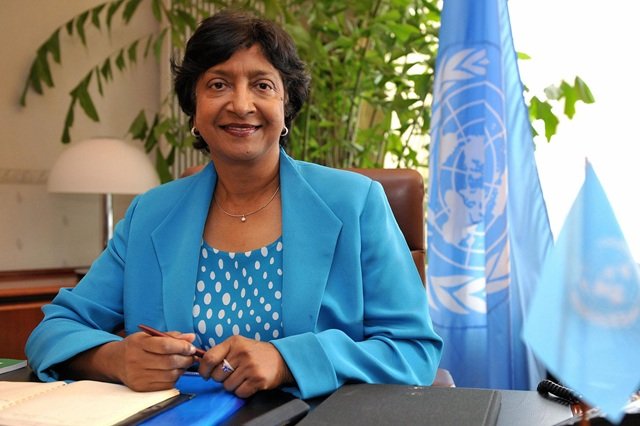
Her tenure as United Nations High Commissioner for Human Rights from 2008 to 2014 brought a different challenge. Judicial proceedings concern identifiable cases and defendants, whereas human rights diplomacy requires engagement with governments that may reject scrutiny, restrict access or invoke sovereignty against external criticism. The High Commissioner must defend universal principles without possessing the coercive power of a national government. The office therefore operates within an uncomfortable space between moral authority and political limitation. Pillay’s public interventions demonstrated that silence can preserve diplomatic convenience while weakening the credibility of international institutions.
Her relationship with Sri Lanka illustrates this tension particularly clearly. Following her visit in August 2013, she acknowledged post-war reconstruction while warning that the country was moving in an increasingly authoritarian direction. Her concerns extended beyond the unresolved allegations arising from the civil war to militarisation, disappearances, restrictions on civic freedoms and the treatment of religious minorities. These observations challenged the assumption that the end of armed conflict necessarily produces reconciliation. Roads, buildings and economic activity may demonstrate physical reconstruction, but they cannot independently establish that citizens possess equal protection, that victims have obtained justice or that public institutions are accountable.
For Sri Lanka, the significance of Pillay’s intervention remains larger than the political controversy it generated. Governments are entitled to contest allegations, question methodologies and demand evidentiary rigour. They are not entitled to treat criticism itself as proof of hostility. Equally, international officials must distinguish documented findings from allegations, acknowledge genuine progress and apply consistent standards. Constructive scrutiny requires both independence and intellectual discipline. Neither national sovereignty nor international authority should become a substitute for evidence.
Pillay’s interventions also raise difficult questions about the limits of international justice. Human rights mechanisms depend on political cooperation, yet the states whose conduct requires scrutiny may possess considerable influence over those mechanisms. Investigations can establish facts without securing prosecutions. Reports can preserve evidence without delivering reparations. Resolutions can express international concern without changing conditions on the ground. These limitations do not make international accountability meaningless, but they expose the distance between declaring universal principles and enforcing them consistently.
Her more recent role chairing the United Nations Commission of Inquiry on the Occupied Palestinian Territory has brought these tensions into sharper focus. The commission concluded in 2025 that Israel had committed genocide in Gaza, a finding rejected by Israel. Such a conclusion carries immense legal and political significance, but it must be understood in its proper institutional context. A commission of inquiry is not a criminal court, and its findings should not be confused with a final judicial conviction. Serious allegations demand rigorous examination, transparent reasoning and the application of established legal standards, irrespective of the identity of the accused or the political loyalties of observers.
The Nobel Peace Prize is therefore both recognition and responsibility. It honours Pillay’s contribution to making international law more responsive to victims, while placing renewed attention on the credibility of the institutions she has served. The prize should not transform a distinguished jurist into an unquestionable authority. Its deeper value lies in encouraging public engagement with the principles underpinning her work, including impartiality, accountability and the equal dignity of human beings.
For smaller countries such as Sri Lanka, the lesson is neither to accept every international criticism uncritically nor to dismiss external scrutiny as interference. It is to build institutions capable of investigating abuses independently, protecting minorities, safeguarding civic freedoms and providing credible remedies to victims. International justice becomes more persuasive when domestic institutions demonstrate that accountability is not an externally imposed demand but a public responsibility.
Congratulations, Navi Pillay. Your Nobel Peace Prize honours a life devoted to challenging the distance between law as written and justice as experienced. Its greatest achievement will not be the prestige it confers upon one individual, but the questions it compels governments, international institutions and citizens to confront. Can peace endure without truth? Can reconciliation survive without accountability? And can universal human rights remain universal if their protection depends on the political power of those who demand them? The answers will determine whether this honour becomes merely a celebrated moment or a lasting contribution to a more just international order.