


by Our Correspondent in Colombo
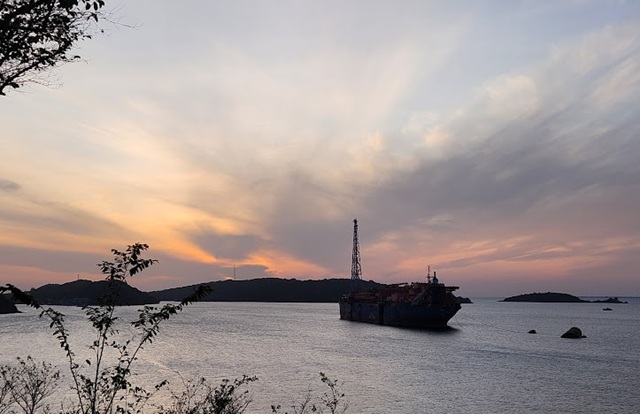
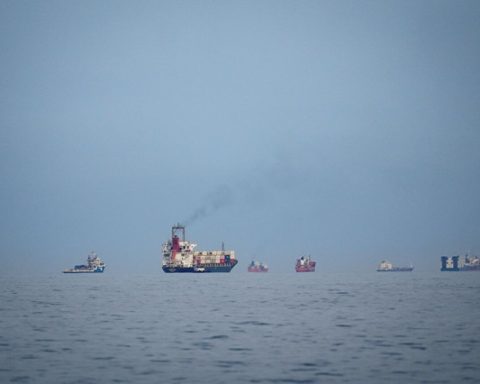
India has reportedly begun discreetly stockpiling large quantities of fuel—both oil and liquefied natural gas (LNG)—in the decades-old Trincomalee oil tank farm in eastern Sri Lanka. Reliable sources indicate that large Indian vessels have been anchoring offshore, transferring cargo via smaller boats to storage tanks now under Indian control.
The storage facility, a relic from World War II, is one of the largest tank farms in Asia, consisting of over 99 tanks scattered across a sprawling 850-acre site. In recent years, dozens of these tanks have come under the management of Lanka IOC, a subsidiary of Indian Oil Corporation (IOC), under a long-term lease agreement signed with the Sri Lankan government. Though framed as part of bilateral energy cooperation, the current surge in activity suggests deeper strategic undertones.
According to maritime tracking and port logistics insiders, multiple large vessels carrying petroleum products and LNG have recently anchored in the deep waters off Trincomalee. However, instead of docking directly at port, the cargo has reportedly been transferred using smaller vessels under controlled and low-visibility operations—an approach that has raised eyebrows among regional analysts and defense observers.
“This is not a routine fuel transfer. The coordination, secrecy, and scale point to a long-term strategic build-up,” said a Sri Lankan defense official familiar with the development, who requested anonymity.
India’s expanding presence in Trincomalee also resurrects interest in the Indo-Lanka Accord of 1987, often remembered for its political and military clauses during the Sri Lankan civil conflict. However, buried within the accord are lesser-discussed provisions that implicitly grant India strategic influence over Sri Lanka’s northeastern coastline, including Trincomalee.
One such clause bars foreign powers “inimical to India” from using Sri Lankan ports—effectively giving New Delhi veto power over regional naval alignments. Analysts argue that these ambiguous terms have enabled India to gradually assert long-term access and logistical authority over Trincomalee without provoking formal diplomatic resistance.
“The Indo-Lanka Accord contains strategic DNA that’s only now being fully activated,” said a regional security expert based in Delhi.
While Indian authorities maintain that their presence at Trincomalee is strictly energy-related and rooted in bilateral cooperation, the covert nature of fuel and LNG transfers paints a more layered picture. Observers suggest that the tank farm could eventually evolve into a logistics and refueling hub for Indian naval assets, providing New Delhi with strategic depth in the eastern Indian Ocean.
This quiet expansion comes amid China’s continued operations at Hambantota Port in southern Sri Lanka, which was leased to Beijing for 99 years. India’s renewed interest in Trincomalee appears, at least in part, to be a counterbalancing move to maintain influence over critical sea lanes and to ensure regional maritime dominance.
Not all Sri Lankans are comfortable with the developments. Political commentators and civil society voices have raised concerns over national sovereignty and lack of transparency regarding the Indian lease and recent activity.
“What’s happening in Trincomalee is not just energy cooperation—it’s creeping militarization under an economic banner,” warned a former diplomat who has worked on Indo-Lanka relations.






One sentence says it all – “What’s happening in Trincomalee is not Just energy cooperation – its creeping militarisation under an economic banner ” Is the Government permitting underhand Indian control of Trincomalee ??? Sri Lankan Citizens note gravity of situation.