by Our Correspondent in Doha
Iranian President Massoud Pezeshkian has officially announced the suspension of Tehran’s cooperation with the International Atomic Energy Agency (IAEA), escalating already heightened tensions between Iran and Western powers.
The move follows a June 25 parliamentary vote in which Iran’s Majlis approved legislation to cease cooperation with the UN nuclear watchdog, citing the IAEA’s recent resolution against the Islamic Republic as “politically motivated.” Alireza Salimi, a senior member of the parliament’s presiding board, confirmed the approval of both the general and specific provisions of the bill.
Under the new law, IAEA inspectors will be barred from entering Iran unless the security of the country’s nuclear facilities is guaranteed. This assurance must be approved by Iran’s Supreme National Security Council.
The suspension comes in response to a controversial resolution passed by the IAEA Board of Governors accusing Iran of non-compliance with safeguards agreements — the first such claim in nearly two decades. The resolution, advanced by the European troika (Britain, France, and Germany) and backed by the United States, passed with 19 votes in favor, 11 abstentions, and 3 opposed (Russia, China, and Burkina Faso). Iranian officials argue the resolution served as a prelude to Israeli-American military actions against Iran.
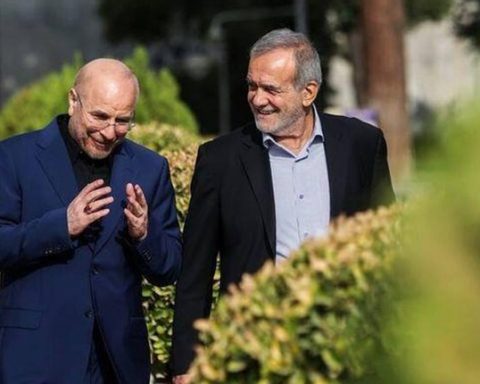
Iranian lawmakers, including Parliament Speaker Mohammad Baqer Qalibaf, have been critical of the IAEA’s neutrality. Qalibaf earlier stated that Majlis was preparing a legislative response until “tangible guarantees” were provided about the agency’s impartiality.
Additionally, Iranian officials are considering an entry ban on IAEA Director-General Rafael Grossi, who has been accused of aiding hostile actions against Iran. Senior MP Ismail Kowsari has formally urged Iran’s top security body to prohibit Grossi’s entry, accusing him of enabling Israeli-American military strikes through biased reporting.
The fallout from the IAEA resolution has already triggered Iranian countermeasures, including the activation of a new nuclear facility and the enhancement of advanced centrifuges at the Fordow enrichment plant.
Tensions dramatically escalated following Israel’s airstrikes on June 13, which targeted Iranian nuclear facilities and killed several nuclear scientists and senior military officials. The strikes, reportedly carried out in coordination with the United States using B-2 stealth bombers and cruise missiles, hit key sites in Fordow, Natanz, and Isfahan. Despite the severity of the attacks, Grossi refrained from publicly condemning the strikes, drawing further ire from Tehran.
Amidst the diplomatic storm, regional efforts toward dialogue continue. On Tuesday, Saudi Arabia’s Foreign Minister Prince Faisal bin Farhan received a written message from Iranian Foreign Minister Seyed Abbas Araghchi, delivered by Iran’s Ambassador to Riyadh, Alireza Enayati. The communication emphasized deepening bilateral relations and cooperation across sectors.
In a separate call with Greek Foreign Minister Giorgos Gerapetritis, Araghchi condemned Israel and the U.S. for violating Iran’s sovereignty, labeling their actions as “flagrant violations” of international law and the UN Charter. He stressed that Iran’s retaliatory military operation was a legitimate act of self-defense under Article 51 of the UN Charter.
Araghchi also warned that continued Western indifference to Israeli actions, including the ongoing humanitarian crisis in Gaza, would pose severe risks to regional and global stability.
Gerapetritis expressed condolences for the Iranian victims of the Israeli strikes and voiced concern over the worsening humanitarian conditions in Gaza. He called for the maintenance of the current ceasefire and encouraged diplomatic engagement.
Iran’s suspension of cooperation with the IAEA marks a significant shift in its nuclear policy and underscores the fragility of non-proliferation mechanisms in the region. As international criticism mounts and regional diplomacy intensifies, Iran’s position signals a new era of strategic defiance amid its broader confrontation with Western powers and Israel.