The European Union will expand its use of foreign subsidy investigations to scrutinize non-EU companies investing in the bloc, as it intensifies efforts to protect European industries from what it views as unfair competitive practices. The plan comes amid growing concern over market distortions caused by foreign state support, particularly from China.
Speaking to the Financial Times, EU executive vice-president Teresa Ribera confirmed that more investigations would be pursued under the Foreign Subsidies Regulation (FSR), which came into force in 2023. While the regulation does not explicitly target any country, it has so far been primarily applied to Chinese firms operating in Europe.
“There is a broad spectrum of those sectors where there is interest to invest in Europe — basic industries and modern industries; chemicals, pharma, cars and batteries,” Ribera said, indicating that areas seeing increasing foreign investment are likely to come under closer scrutiny.
The FSR gives Brussels the authority to investigate and, if necessary, block foreign-subsidized companies from participating in public procurement, mergers, acquisitions, or even selling products and services into the EU’s single market. The regulation has already been used to examine bids from Chinese electric vehicle makers, state-backed train manufacturers, and solar panel companies.
Brussels has also initiated “ex officio” investigations into other Chinese firms, including a security scanner company and exporters of wind turbines. These probes are part of a broader strategy to counter what EU officials describe as a flood of subsidized goods that could undercut European producers and threaten the bloc’s industrial base.
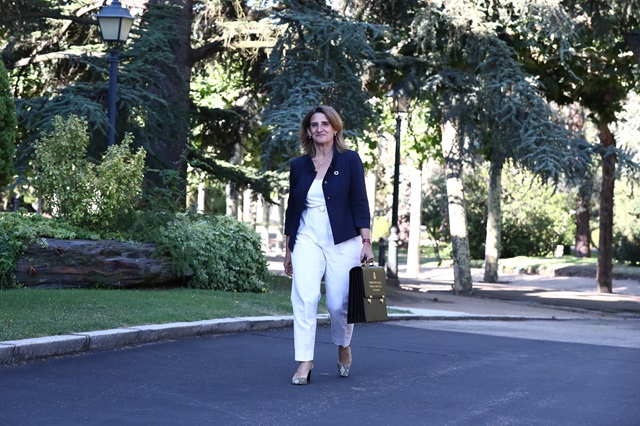
Ribera is currently in Beijing for the Sixth EU-China High-Level Environment and Climate Dialogue, where she is co-chairing talks with Chinese Vice Premier Ding Xuexiang. The meetings are taking place ahead of a planned summit between European Commission President Ursula von der Leyen and Chinese President Xi Jinping later this month, which will mark 50 years of diplomatic relations between the EU and China.
Despite heightened trade tensions and the EU’s dissatisfaction with China’s ongoing alignment with Russia following the Ukraine invasion, Ribera said there is room for continued dialogue, especially on climate cooperation. She emphasized that while not all issues will see agreement, the conversation remains open.
Ribera noted that the EU’s goal with the foreign subsidies regulation is to ensure that incoming investment contributes positively to European innovation, talent, and added value. She pointed to China’s past strategy of requiring foreign firms to operate through joint ventures and share technology, suggesting that Europe could explore similar frameworks—though with safeguards to prevent technological dependency or innovation gaps.
The EU has also begun adopting “Buy European” provisions in its legislation to further bolster its own industries and protect key sectors from being overwhelmed by subsidized imports.
On climate policy, Ribera expressed concern about the weakening of multilateral cooperation in the wake of the US stepping back from the Paris Agreement. She suggested that, given its historical involvement in shaping the accord, China may still see climate leadership as part of its international role, which could create space for continued EU-China engagement on global climate issues.
European officials have recently pushed back against Chinese proposals for a joint climate declaration at the upcoming summit unless Beijing commits to stronger emissions targets. Nevertheless, Ribera said dialogue on the topic remains constructive and worth pursuing.