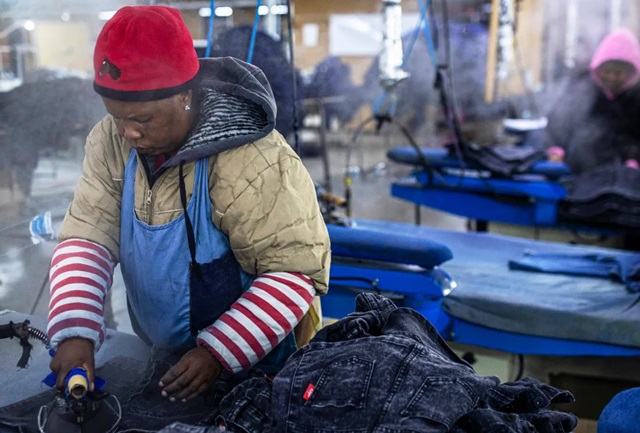
A wave of economic devastation is sweeping through the tiny African kingdom of Lesotho, once dubbed the “denim capital” of the continent, after U.S. President Donald Trump imposed unprecedented tariffs that have crippled the country’s garment industry. The Times UK reports that the very factories now facing closure are producing Trump-branded golf shirts for his personal website—an irony not lost on the struggling workers sewing them.
“Trump is killing us, I hate him,” said 32-year-old Idttle, a garment worker at Precious Garments in Maseru, Lesotho’s capital, during a brief lunch break under the mid-winter sun. She and her colleagues are clinging to one of the last major orders still active: Trump merchandise.
In April, Trump announced a 50% tariff on imports from Lesotho—harsher than those levied on any other trading partner—after calling the country “a place nobody has ever heard of.” The move effectively halted new U.S. orders to factories in Maseru, threatening the livelihoods of more than 40,000 factory workers and the thousands more who depend on the country’s once-thriving garment industry.
The impact has been immediate and brutal. Shifts have been halved, wages slashed to as little as £54 a month, and factories are warning that work will dry up entirely by next month. The government has declared a national state of disaster.
The Times UK traces the roots of Lesotho’s boom-and-bust trajectory to the African Growth and Opportunity Act (AGOA), a U.S. trade deal launched in 2000 to offer duty-free access to African exports. Lesotho became the top garment exporter under AGOA, supplying brands like Levi’s, Wrangler, and Gap. In 2024 alone, Lesotho exported $237 million worth of goods to the U.S.—equivalent to 10% of its GDP.
But Trump saw imbalance rather than success in those numbers. Against only $3 million in U.S. exports to Lesotho, he declared the relationship unfair and retaliated. His administration also dismantled critical USAID programs that supported health and employment, particularly in a country where one in four adults lives with HIV.
The Times UK notes that the unraveling of Lesotho’s garment economy has had ripple effects across society. Informal economies that sprang up around the factories—vendors, landlords, transport operators—are collapsing. Shoe repairman Mohlaletfi Metsana, who once needed two stalls to meet demand, now earns less than £20 a month. “People don’t have the money to come and get [their shoes],” he said, gesturing to a fridge full of unpaid repairs.
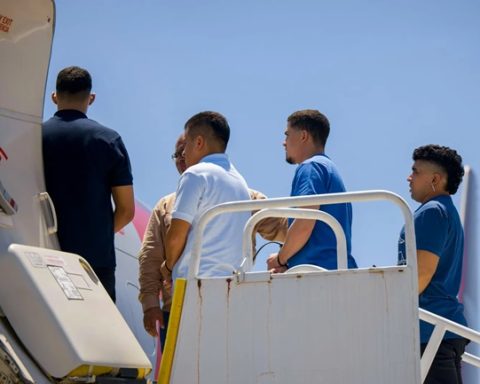
With AGOA due for review this September, Lesotho is scrambling to appease Washington. Prime Minister Sam Matekane recently pledged improved U.S. investment access, and the country quietly signed off on a 10-year operating license for Elon Musk’s Starlink. A leaked U.S. State Department memo, cited by Mother Jones and reported in The Times UK, revealed that Lesotho has even floated taking in U.S. deportees or deploying troops to protect American interests in eastern Congo as bargaining chips.
Yet desperation continues to grow. At the few factories still operating, jobseekers queue at dawn. Melinda Sesing, 27, lost her job in June with only a day’s notice. She now washes clothes to cover her £20 monthly rent. Returning to her snow-dusted mountain village isn’t an option. “There’s no money to earn there,” she told The Times UK.
The rise in female employment through garment work had transformed Lesotho’s economy and gender dynamics. Now, that progress is at risk of being reversed.
As Mphonyane, a decade-long worker at Precious Garments, heads back in to finish folding Trump-branded shirts, she expresses a growing fear shared by her peers: “All of us here,” she says, gesturing at her co-workers wrapped in Basotho blankets, “we are too scared.”
While Lesotho waits for the final word from Washington, its economic fate—once symbolized by high-end denim exports—is now stitched into shirts bearing the name of the man who brought it to its knees.