by Our Correspondent in Colombo
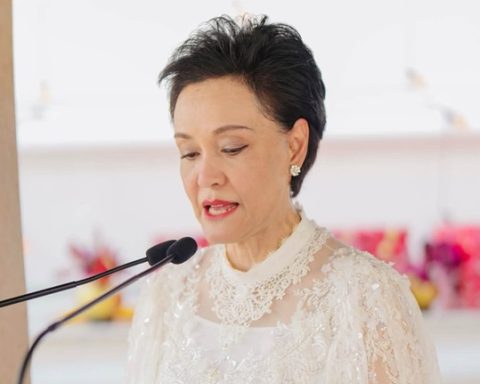
In 2026, Sri Lanka will witness one of the most significant shifts in its education system in decades. At the helm of this transformation is Prime Minister and Minister of Education, Dr. Harini Amarasuriya. She promises that all students completing school will receive an NVQ Level 4 certificate—certifying them as “job-ready” for the world of work. It sounds progressive. It sounds modern. But scratch the surface, and troubling questions emerge. Who exactly are these reforms meant to benefit? The students? The state? Or global capital?
Dr. Amarasuriya states: “Everyone will get an NVQ qualification when they finish school. Then that child is job ready… they can also go onto vocational training and higher education at the Open University.”
This vision is rooted in creating a so-called “job-oriented” education system. But as alluring as it sounds—packaging school-leavers as ready-made economic agents—its foundation is alarmingly shallow. The NVQ-4 qualification, currently awarded for skills such as bakery work, automotive air conditioning, beauty and wellness, and graphic design, does not bridge the gap to a future-proof workforce. It cements a pipeline of semi-skilled labourers, not professionals or thinkers, who will serve the needs of foreign investment and an export-led economy.
Let’s be clear: NVQ-4 does not equate to upward mobility. It equates to preparing citizens for the bottom rungs of the job ladder in industries that demand low wages and offer little room for negotiation. The open market economy that Sri Lanka has subscribed to for over 45 years has not shown success in equitable development or sustainable employment. Why now, should we trust that job-oriented reforms tied to that same failed model will miraculously uplift our education sector?
Even globally, the model of tailoring education to meet economic markets—often termed human capital theory—has drawn sharp criticism. As renowned education theorist Henry A. Giroux argues in Neoliberalism’s War on Higher Education (2014), framing education as a tool to produce economically useful individuals rather than critically conscious citizens leads to “a pedagogy of repression, not transformation.” Similarly, British sociologist Michael Young warned in Bringing Knowledge Back In (2008) that vocationalising education too early, especially in secondary schools, reproduces class-based inequalities rather than breaking them.
The model Sri Lanka is emulating isn’t new. In the 1990s, the United Kingdom aggressively pushed vocational pathways in secondary education. But by 2011, a government review—the Wolf Report—found that many of these qualifications led neither to further education nor to employment. The report warned against “a system which steers the poorest, least able children into courses that offer no prospect of progression.” Isn’t this precisely the trap Sri Lanka is now walking into?
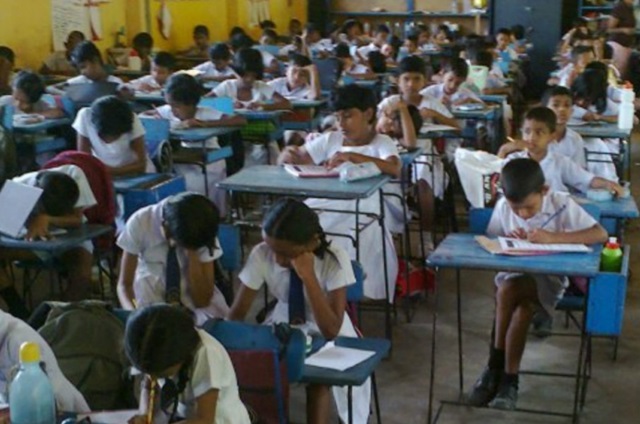
Even worse, the practical feasibility of implementing NVQ-4 across the entire school system is questionable. These reforms would require not only a vast pool of trained teachers in specialist areas, but also industry-grade equipment in rural and urban schools alike. Where are the costings? Where is the teacher training plan? Where is the infrastructure strategy? The Tertiary and Vocational Education Commission (TVEC), which must accredit such courses, has not even begun preliminary coordination with the Ministry of Education. As we speak, the basic groundwork is missing.
And then there is the issue of distribution. It is easy to romanticise vocational education from the comfort of Colombo, where access to tech and equipment is relatively better. But what about Vavuniya? Monaragala? Giruwapattu? How can a student from a village school, with no trained teacher and no working tools, be expected to compete on the same NVQ-4 platform?
This isn’t a plan for national development. This is a blueprint for outsourcing Sri Lanka’s youth to the lowest bidder in the global labour market.
It is no coincidence that these reforms are taking shape amid increasing pressure from the International Monetary Fund and the World Bank, institutions known for pushing neoliberal reforms under the guise of development. The IMF’s 2023 Country Report on Sri Lanka explicitly states that education and labour reforms should be aligned to produce “market-responsive graduates” and attract foreign direct investment. What it does not say is that this is a euphemism for creating a pool of cheap, compliant labour.
The truth is that Amarasuriya’s education reforms are perfectly aligned with what international investors want—predictable, semi-skilled workers who don’t question authority and don’t demand higher wages. A glut of NVQ-4-certified labourers depresses wages. It gives employers the upper hand. This is not education reform. It is economic engineering.
Contrast this with Finland, a country globally celebrated for its education system. There, formal vocational education begins only after students complete a robust, general academic curriculum. Students are allowed to mature intellectually and emotionally before choosing specific pathways. Most importantly, vocational and academic routes are treated equally in status and funding. The aim is not just employability, but citizenship.
Sri Lanka, on the other hand, seems to be returning to a form of colonial education logic: train the natives just enough to serve, but not enough to lead. Back in 1972, vocational courses were first introduced into school education under the New Education System. Predictably, wealthier urban parents resisted such curricula. They didn’t want their children learning welding or bakery skills. Why? Because even they recognised that such subjects, in a skewed society, relegate students to second-class status.
Have we learned nothing?
Moreover, if these reforms are meant to shape the future of our children and our nation, why have they been kept away from public discourse? Why are there no published white papers? No draft bills? No parliamentary debates? This is reform by stealth. In any functional democracy, education reforms of this magnitude would demand rigorous national consultation. The fact that they are being rolled out quietly—starting with Grade 1 and Grade 6 in 2026—is deeply undemocratic.
We must demand more than half-baked promises. We must ask: What kind of society do we want? One where education is a tool for liberation and moral development? Or one where it is reduced to an assembly line churning out labourers for export factories?
Education should shape citizens, not just workers. It should cultivate imagination, ethics, curiosity, and resilience—not just technical compliance. If Dr. Harini Amarasuriya and her team believe in the transformative power of education, they must first emancipate it from the stranglehold of economic utilitarianism.
Sri Lanka does not need reforms that produce semi-skilled factory fodder for foreign capital. It needs reforms that build an enlightened, morally anchored, critically conscious generation. If you do not know how to do the job without continuing to play both puppet and puppeteer on this rotten stage, then resign and go home—with whatever dignity remains