In a historic and dramatic reversal of justice nearly two decades in the making, the Bombay High Court on July 21, 2025, acquitted all 12 men previously convicted in the 2006 Mumbai serial train blasts case. The verdict dismantled the prosecution’s entire case, overturning a 2015 ruling by a special Maharashtra Control of Organised Crime Act (MCOCA) court that had sentenced five of the accused to death and the remaining seven to life imprisonment. The Division Bench, comprising Justices Anil S. Kilor and Shyam C. Chandak, issued a scathing indictment of the Mumbai Police’s Anti-Terrorism Squad (ATS), which had investigated the attacks. In the court’s words, the ATS had “created a false appearance of having solved a case,” thereby misleading the public and failing the true pursuit of justice.
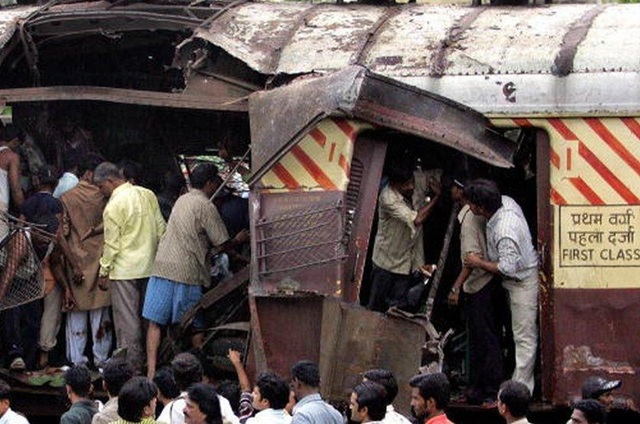
The 2006 Mumbai train bombings remain one of the deadliest acts of terror in India’s modern history. On the evening of July 11, seven pressure cooker bombs exploded on suburban trains on Mumbai’s busy Western Railway line, killing 189 people and injuring over 800 during peak travel hours. The attack shook the nation and prompted a swift investigation. The Maharashtra government, led by the Congress party at the time, handed over the probe to the ATS. In its final chargesheet, the ATS implicated 30 individuals—13 of whom were put on trial, and 17 others, including several Pakistani nationals, were named as absconders. Of the 13 tried, one man, Wahid Shaikh, was acquitted in 2015. He had already served nine years in jail by then. The remaining 12 spent nearly 19 years incarcerated—until the High Court judgment freed them this week. One of the original 13, Mohammad Yunus, died in custody in 2021 due to COVID-19.
The High Court’s judgment was as much an acquittal as it was a stinging rebuke of how the case had been handled. The prosecution’s case had leaned heavily on eyewitness testimony, confessions from the accused, and the recovery of explosive materials. Yet the court found all three pillars of evidence fundamentally compromised. The confessions were deemed inadmissible because they had been obtained through what the court described as “barbaric and inhuman” torture. Testimonies from the accused included consistent accounts of electric shocks, beatings, and forced sleep deprivation—claims substantiated by medical reports from government hospitals. Disturbingly, the court observed that the confessional statements, recorded separately by different officers, were almost “verbatim” in language and phrasing, including grammatical errors—strongly suggesting fabrication. Moreover, statutory safeguards were violated throughout. The accused were not informed of their right to legal counsel, the language of their confessions was not certified, and there was no confirmation that statements were read back to the accused.
Eyewitness accounts, which the prosecution presented as corroborative evidence, were also discredited. The court found them riddled with delays and inconsistencies. Several witnesses only came forward months after the blasts, casting serious doubt on their ability to recall events accurately. Particularly damning was the court’s finding that key identification parades were invalid. The officer who conducted them, one Shri Barve, had no legal authority to do so, as his term as a special executive officer had expired more than a year prior. Consequently, identifications made during these parades, including those of three accused, were declared inadmissible. The court also noted that some witnesses, such as the person who helped prepare police sketches of the suspects, were never even summoned to testify in court, further weakening the prosecution’s claims.
The judgment struck another fatal blow to the case by declaring that the very application of the MCOCA statute was unlawful. MCOCA, a stringent anti-terror law, requires prior sanction from a high-ranking officer before being invoked—an essential safeguard given the law’s reversal of burden of proof and prolonged detention provisions. The High Court found that the officer who granted this approval did so without reviewing critical documents. Some of these documents, in fact, were submitted only after the approval had already been granted. Additionally, the prosecution failed to produce the sanctioning officer as a witness, making the sanction legally invalid. The court observed that simply reproducing legal jargon from the MCOCA definition of “organized crime” was not sufficient to justify its application, and that the entire process lacked both legal and procedural integrity.
The investigation’s integrity was further called into question by the destruction of crucial call detail records (CDRs) of the accused. These records, which could have verified their location and communication patterns at the time of the alleged conspiracy, were repeatedly requested by the defense. The prosecution claimed they had been destroyed. The court found this deeply suspicious, suggesting the act was deliberate and constituted suppression of potentially exculpatory evidence. It called the destruction a “grave violation of the right to a fair trial.” The handling of physical evidence—such as RDX, detonators, pressure cookers, and circuit boards—was similarly flawed. The court found no reliable chain of custody and noted that seals were often broken or missing, rendering the material vulnerable to tampering and diminishing its evidentiary value.
At its core, the High Court’s ruling underscored a troubling message: that the state’s investigation gave the appearance of closure without ever actually finding the true culprits. “Creating a false appearance of having solved a case by presenting that the accused have been brought to justice gives a misleading sense of resolution,” the judges wrote. “This deceptive closure undermines public trust and falsely reassures society, while in reality, the true threat remains at large.” The verdict serves as a profound warning about the consequences of prioritizing quick convictions over diligent and honest investigation.
The Maharashtra government has already filed an appeal before the Supreme Court, challenging the High Court’s verdict. The matter is set to be heard on July 24. Chief Justice of India B.R. Gavai, responding to the state’s plea, observed that staying an acquittal at the appellate stage is an extremely rare measure, suggesting that the bar for such an intervention is very high. As the case moves to the nation’s highest court, the acquitted men—many of whom lost the prime years of their lives to a flawed prosecution—walk free, not because the state proved their innocence, but because it so thoroughly failed to prove their guilt.