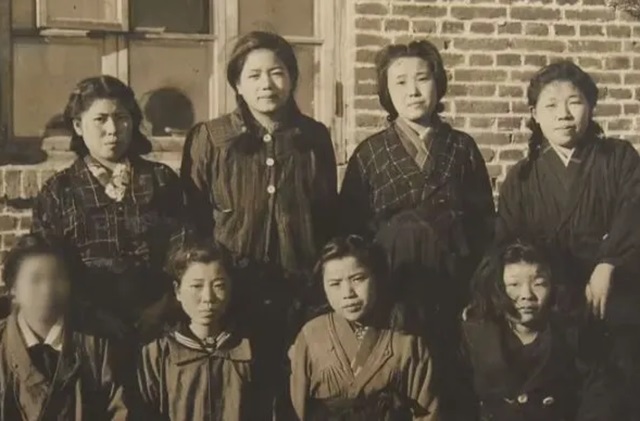
A harrowing and long-suppressed chapter of Japan’s wartime past is finally coming to light, as survivors and campaigners in the village of Kurokawa shed silence over the fate of 15 young Japanese women who were handed over to Soviet troops in 1945 to protect their community. The revelations, reported by The Times UK, uncover one of the lesser-known atrocities of the Second World War — one that remained hidden in shame for nearly eight decades.
In the final days of WWII, as Japan’s empire collapsed and Soviet forces advanced into Manchuria, desperate Japanese settlers, abandoned and vulnerable, made a grim bargain. In exchange for the safety of their community, village leaders offered the “maidens” — unmarried women aged 18 to 20 — to Soviet soldiers for repeated sexual abuse.
“It was sexual violence — it was a sin,” said Hiroyuki Fujii, a local historian and descendant of one of the leaders who orchestrated the deal. He spearheaded efforts to install information boards next to the Monument to the Maidens, a Buddha statue erected in 1981 in Kurokawa that once stood shrouded in mystery and anger.
The village of Taolaizhao, in present-day Jilin province, China, was one of many Japanese settlements in the puppet state of Manchukuo. More than 600 people from Kurokawa had migrated there as part of Japan’s imperial expansion. But after Emperor Hirohito’s surrender in August 1945, the settlers found themselves targeted by both the Soviet army and embittered Chinese locals.
Kikumi Yasue, now 91, was just 11 years old at the time. “What happened was a sin,” she told The Times UK. “But if we hadn’t done it, I would not be here to speak to you today.”
Though four of the women died from disease shortly after their ordeal, the rest survived and returned home in 1946. Rather than being honored for their sacrifice, they were shunned and stigmatized. “Once we returned home, we were treated as dirty women,” said Yoshiko Yasue, one of the survivors, before her death in 2016. “We lost the chance to marry locally — we were regarded as soiled.”
The silence persisted until 2013, when a museum dedicated to the history of Manchurian settlers opened and one of the women, Harue Sato, then 88, publicly shared her experience. “Although I’m here still alive, looking back on those who died… I can never forget it,” she said.
Now, a new documentary — In Their Own Words: The Women of Kurokawa by filmmaker Fumie Matsubara — is helping to break that silence. Drawing on firsthand accounts and historical research, the film brings the women’s suffering to the public eye and calls for their dignity to be restored.
According to The Times UK, similar arrangements between Japanese settlers and Soviet forces occurred in at least 44 other communities. Of the roughly 270,000 Japanese pioneers in Manchuria and Inner Mongolia, around 80,000 perished after the war’s end.
The campaign to publicly honor the women continues. Fujii, now 72, believes the ultimate recognition — engraving the names of the 15 women on the monument — must wait until the remaining opposition within the village recedes. “Then the dignity of the women will be guaranteed for the first time,” he said.
While Japan has often been criticized for failing to fully reckon with its wartime abuses, especially in relation to the “comfort women” system it imposed across Asia, this story turns the lens inward — revealing how Japanese colonial policy and desperation ultimately betrayed their own.
As Fujii put it: “They were forced to sacrifice themselves. But now, we owe them a truth that cannot stay buried.”