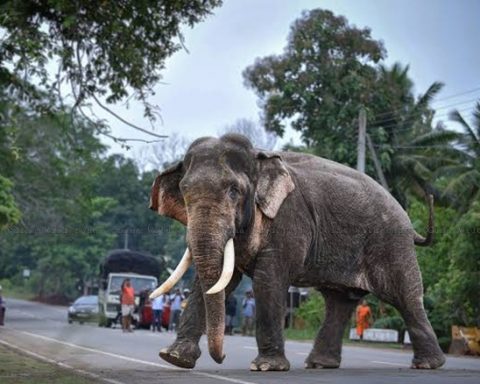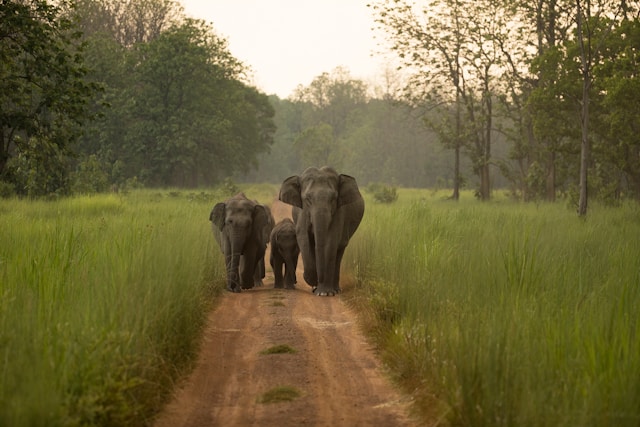
I meant what I said and said what I meant: an elephant is faithful one hundred percent. ~ Dr. Seuss
World Elephant Day falls on 12 August each year.
Elephants, like the myths and truths they inspire, command an unusual confluence of awe and moral responsibility. They are among the last remaining giants that roam our planet, bearing an ancient dignity unshaken by the relentless progress of human modernity. The observance of World Elephant Day each year on 12 August is therefore not a ritual of token commemoration, but a teleological necessity—an act rooted in the purpose of our collective moral agency toward the preservation of a keystone species whose ecological and symbolic significance transcends geography.
This day, inaugurated in 2012 through the vision of Canadian filmmaker Patricia Sims and the Elephant Reintroduction Foundation of Thailand, is more than an artefact of environmental activism; it is an epistemic moment where our knowledge of the elephant’s plight meets the deeper philosophical truth that our survival is braided with theirs. As Sims’ short film Return to the Forest—narrated by William Shatner—eloquently documented, the return of captive Asian elephants to their native habitats was not only a biological correction but an ethical imperative. The ensuing movement, embraced by over a hundred conservation organizations and innumerable citizens, represents the distributed conscience of a species—ours—struggling to correct its excesses before the ledger of nature is closed against us.
The threats to elephants are as numerically stark as they are morally abhorrent: African savanna elephants, whose vast ranges once spanned the continent, have seen populations decline precipitously from millions a century ago to barely hundreds of thousands today. African forest elephants, smaller but no less critical to their ecosystems, are even more imperiled, their numbers cut in half over the past three decades. Asian elephants, revered in cultural lore yet persecuted in practice, now number fewer than 50,000 in the wild. The drivers of this attrition—poaching for ivory, habitat loss due to deforestation, fragmentation of migratory corridors, and the expanding human footprint—constitute not mere environmental “issues” but existential threats to a species whose ecological role cannot be replicated by any other. Elephants are landscape architects of the natural world: by uprooting trees, they open savannas for grazing species; by dispersing seeds through their dung, they regenerate forests and grasslands; by digging for water in dry riverbeds, they create life-saving access points for other animals. In this sense, the teleology of elephant conservation lies not only in saving elephants for their own sake, but in preserving the intricate web of life they sustain.
The Jumbo Jet
It is perhaps in the grandeur of their scale, coupled with the grace of their presence, that elephants invite analogies to human engineering marvels. Boeing, when unveiling the B-747 in the late 1960s, famously referred to its new aircraft as the “Jumbo Jet”—a deliberate evocation of the elephant’s colossal stature and gentle power. The comparison was neither casual nor merely promotional. The 747, like the elephant, redefined the dimensions of its habitat. For elephants, that habitat was the savanna, the forest, and the river basin; for the 747, it was the global sky-lanes that it would dominate for decades. Each altered its environment to accommodate its presence: the elephant by shaping landscapes to ensure biodiversity, the 747 by necessitating new airport infrastructure, longer runways, and innovations in air traffic management. Both are feats of nature and design, one by evolution and the other by human ingenuity, and both carry within them the paradox of vulnerability.
The elephant, despite its physical might, is susceptible to the smallest human weapon; the 747, despite its engineering sophistication, is dependent on careful stewardship of maintenance, regulation, and fuel economy. In both cases, scale magnifies the consequences of harm. A single poached matriarch can destabilize an elephant herd for generations, just as a single failure in a 747’s operation can affect hundreds of human lives and the reputational and operational viability of its operator. The epistemic lesson is that size and influence, whether biological or mechanical, do not confer immunity but rather heighten the duty of care.
From a philosophical standpoint, the analogy extends further into the realm of systems thinking. Elephants, as keystone species, function within ecological systems whose stability depends on their uninterrupted activity; the 747 functioned within the global aviation system as an enabler of mass intercontinental travel, changing patterns of human movement, commerce, and cultural exchange. Removing elephants from their ecosystems triggers cascading effects—overgrowth of vegetation, decline of dependent species, erosion of seed dispersal networks—just as retiring the 747 without adequate replacements altered the economics of air travel, airport slot utilization, and the environmental calculus of long-haul operations. In both narratives, continuity and transition must be managed not as abrupt ruptures but as carefully orchestrated evolutions, respecting the complexity of the systems they inhabit.
The teleology of World Elephant Day thus resonates beyond the realm of conservation biology and into the moral architectures of human conduct. By dedicating a day to elephants, we affirm that certain values—protection of the innocent, preservation of heritage, stewardship of the commons—are not negotiable. The epistemic foundation of this affirmation lies in an accumulation of data and observation: GPS tracking revealing shrinking migratory paths; forensic analysis of ivory tracing the geography of poaching networks; climate models predicting habitat shifts; and socio-economic studies correlating human-elephant conflict with patterns of poverty, governance, and land use. These are not abstract notions but quantifiable truths that should inform both policy and public sentiment.
Yet, as with the 747, knowledge alone does not preserve what we value. Boeing engineers knew the stresses, aerodynamic loads, and fuel burn rates of their design; it was the institutional commitment to safety, training, and adaptation to changing market realities that sustained the aircraft’s relevance for half a century. Similarly, in the realm of elephant conservation, knowing that an elephant herd requires a certain square mileage of contiguous habitat is useless unless it compels us to enact land-use policies, anti-poaching enforcement, and cross-border conservation agreements that make that requirement a lived reality. This is where teleology—purpose—must guide epistemology—knowledge. Without alignment between the two, World Elephant Day risks becoming an annual indulgence of sentimentality rather than a pivot for action.
The symbolism of the elephant in human cultures adds another layer of significance. In African lore, elephants are wise elders, embodying memory and community cohesion. In South and Southeast Asian traditions, the elephant is sacred, the living form of deities such as Ganesha, remover of obstacles. The epistemic truth behind these mythologies is that elephants indeed possess extraordinary memories, complex social bonds, and a capacity for empathy that rivals our own. They grieve their dead, recognize themselves in mirrors, and display behaviors indicative of problem-solving and cooperation. These are not anthropomorphic projections but observations grounded in ethology. When Boeing invoked the “Jumbo Jet” metaphor, it tapped into this reservoir of respect for size, strength, and grace, even if unconsciously. The metaphor was commercially apt because it implied that, like the elephant, the 747 was dependable, commanding, and worthy of admiration.
However, unlike the B-747, whose production could be stopped, improved upon, and replaced without moral injury, the extinction of elephants is irreversible. A new generation of wide-body aircraft can be designed and built; no engineering process can reconstruct the millions of years of evolution that produced the elephant. The teleological obligation here is absolute: to prevent extinction not because it would be “sad” or “unfortunate,” but because it would be wrong. The wrongness is not merely emotional but structural—removing elephants dismantles the very architecture of certain ecosystems and diminishes the human moral order that claims to cherish biodiversity.
My Take
World Elephant Day cannot be confined to romantic imagery of herds against sunset backdrops. It must confront the brutal realities of poaching syndicates operating with military-grade weaponry; the complicit demand from consumers of ivory trinkets; the bureaucratic inertia that delays conservation funding; and the political compromises that prioritize short-term development over long-term ecological balance. It must also acknowledge the limits of isolated conservation projects and the necessity of integrating elephant protection into larger frameworks of climate action, sustainable land management, and community-based stewardship.
The analogy with the 747 can even inform conservation strategy. Just as Boeing invested in pilot training, maintenance networks, and airport infrastructure to ensure the safe and efficient operation of its aircraft, elephant conservation requires not only anti-poaching patrols and habitat preservation but also “infrastructure” in the form of trained wildlife rangers, legal frameworks for prosecution, community education programs, and cross-border coordination. The lesson is that safeguarding a large and complex asset—whether mechanical or biological—requires a holistic system of support, resilience, and adaptation.
In the final analysis, World Elephant Day is a litmus test of our capacity to act on what we know. The epistemic record is clear; the teleological imperative is unambiguous. The analogy to the B-747 is not a sentimental flourish but a reminder that, when faced with the challenge of accommodating something large and transformative, human beings are capable of reimagining infrastructure, policy, and behavior. The question is whether we are willing to apply that capacity beyond the sphere of profit and engineering pride, into the domain of moral responsibility for the living world. The elephant waits for our answer, as it has for over a decade since World Elephant Day was first declared, and for centuries before that, as human civilization advanced into its ranges. Whether it continues to wait as a living presence, or becomes a ghostly metaphor like the retired 747, is up to us.