European governments are facing mounting pressure to make concrete commitments to a planned multinational security force in postwar Ukraine, as leaders prepare for a high-stakes summit in Paris on Thursday, according to reporting by the Financial Times.
The proposed force, spearheaded by France and the UK with backing from the US, is intended to serve as the centrepiece of long-term security guarantees for Kyiv. However, uncertainty remains over what individual European countries are willing to contribute — particularly whether they will deploy troops — and how far commitments would extend in the event of renewed Russian aggression.
Talks hosted by French President Emmanuel Macron will bring together leaders both in person and virtually, following a preparatory meeting of defence officials on Wednesday. According to two people briefed on the discussions, the coalition is split into three camps: the UK and others willing to commit troops; Italy, which has ruled out a deployment; and undecided powers such as Germany.
An Elysée official said the group had completed its technical preparations and was ready to present a united position to Washington. “Today we have enough contributions to be able to tell the Americans that we are ready to assume our responsibilities, provided that they assume theirs,” the official told the Financial Times.
President Donald Trump has made clear the US will provide intelligence support, command-and-control capabilities and air defence assets, but has insisted that Europeans must lead the initiative.
UK Defence Secretary John Healey, who co-chaired Wednesday’s preparatory call, said Britain was reviewing force readiness and accelerating funding to support a potential deployment. NATO Secretary-General Mark Rutte also urged member states to finalize their pledges, saying he expected “concrete proposals” to emerge from the summit or shortly thereafter.
But divisions persist. German officials bristled at comments by European Commission President Ursula von der Leyen, who told the Financial Times this week that capitals were already working on “pretty precise plans” for troop deployments with a “clear road map.” Berlin has so far declined to commit to sending forces.
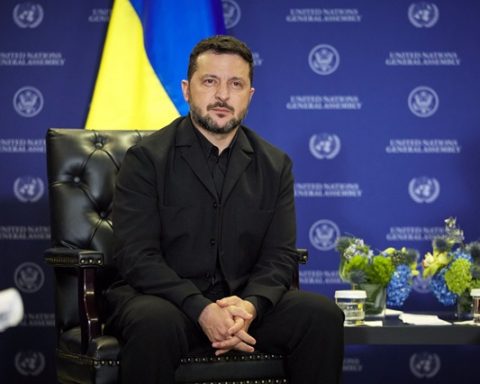
Ukraine’s President Volodymyr Zelenskyy, who is attending the talks in Paris, said he had coordinated with Macron on “preparatory work on security guarantees” and on measures to strengthen sanctions against Russia. He has also urged European capitals to accelerate discussions on using frozen Russian assets to fund Ukraine’s reconstruction and defence.
Ahead of the summit, Zelenskyy met Nordic and Baltic leaders in Copenhagen, where he stressed the importance of filling pledges with specifics. “Now we will fill it with specifics: who does what on land, in the air, at sea, and in cyber space. Our army is the core of this system; strong and large enough to resist Russia. This means weapons and financing, and we are working on it,” he said.