Fifteen former members of Britain’s Special Air Service (SAS) and intelligence officers have broken decades of silence to describe covert operations against the Irish Republican Army (IRA), offering first-hand accounts of surveillance, ambushes and fatal shootings that continue to shape legal and political disputes over Northern Ireland’s Troubles. Their testimonies feature in SAS: The Shadow War, an eight-part audio documentary produced by Aurra Studios and The Independent, which examines operations from the late 1970s to the late 1990s and the continuing controversy over the conduct of British security forces.
The accounts, some delivered by contributors using pseudonyms or with their voices disguised, include a detailed explanation from a former SAS commander of Operation Flavius, the 1988 operation in Gibraltar in which three IRA members were shot dead. They also describe surveillance missions in rural Northern Ireland, firefights with armed paramilitaries and the killing of three IRA members at Drumnakilly in County Tyrone. The Independent has published the accounts as former soldiers confront renewed investigations and proposed changes to legislation governing historical cases.
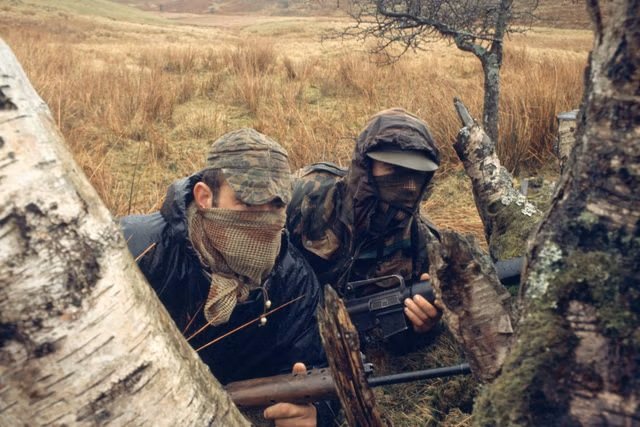
For John, a former SAS soldier who served in South Armagh, covert operations often meant remaining motionless for days inside wet hedgerows while watching farms and recording movements. Soldiers established observation posts, known as OPs, to document visitors, vehicles and interactions that might reveal patterns of activity or financial support linked to the IRA. Their equipment consisted largely of binoculars, notebooks and radios, with communications restricted to occasional signals confirming that they remained alive.
The work involved prolonged sleep deprivation, cold, mud and severe restrictions on movement. Soldiers urinated into lemonade bottles and defecated into plastic bags rather than risk exposing their positions. Discovery, known as “compromise”, could leave them vulnerable to attack or capture. John recalled that the prospect of abduction was particularly frightening because it could mean torture, interrogation and death.
One surveillance mission nearly ended when a suspicious farmer began pouring petrol over the hedgerow concealing John and his partner. After spending several days circling the field, the farmer approached with fuel cans and systematically soaked the vegetation. The soldiers radioed a warning and considered their escape options, fearing that moving backwards could expose them to an IRA ambush. The farmer then returned with a young boy, who struck a match and threw it into the hedge.
“Bang! The whole thing literally is exploding in a matter of a few seconds,” John recalled. The two soldiers emerged from the burning vegetation, shouting as they ran past the farmer and boy before reaching a vehicle farther along the road. Nobody fired. “On that day, we called it correctly, but equally, we could have called it another way,” he said.
Another account concerns Operation Triennial, the SAS operation at Drumnakilly on 30 August 1988. George Simm, a soldier who volunteered to act as a decoy, simulated a breakdown in a coal truck near the village, waiting for an IRA unit that intelligence assessments indicated intended to kill the vehicle’s real driver, a part-time member of Northern Ireland’s security services.
After more than an hour, a car approached at speed. Simm recalled seeing Martin Harte emerge and open fire from about 30 yards away. Simm moved for cover as bullets struck around the truck. When the vehicle stopped, SAS soldiers concealed in a nearby hedgerow opened fire. Martin Harte, his brother Gerard Harte and Brian Mullan were killed within moments.
Contemporary Irish government records stated that the three men had hijacked a car shortly beforehand and were armed. An RUC statement said two rifles were recovered. Simm maintains that the IRA men initiated the attack and rejects allegations that the operation demonstrated a state-directed “shoot-to-kill” policy. The families of those killed have long disputed the circumstances, describing the men as the Drumnakilly martyrs. In 2023, the High Court ruled that the Police Ombudsman had unlawfully failed to investigate alleged RUC wrongdoing surrounding the case within a reasonable time. The judgment did not establish that the SAS killings were unlawful.
The Gibraltar operation remains another defining controversy. On 6 March 1988, SAS soldiers shot dead Daniel McCann, Mairéad Farrell and Seán Savage, after British intelligence concluded that the IRA team was preparing a car-bomb attack against British troops. The former tactical commander, identified as Ed, says the priority was to arrest the suspects, with lethal force authorised only where an immediate threat to life left no alternative.
However, intelligence assessments that the suspects might be armed and that the bomb would probably be triggered remotely proved incorrect. The three were unarmed and carried no detonator, while Savage’s car contained no explosives. Spanish police subsequently discovered a vehicle in Marbella containing a bomb with 64kg of Semtex, four detonators and approximately 200 rounds of ammunition packed around it as shrapnel. The device used two timers rather than a remote-control switch.
An inquest returned verdicts of lawful killing by nine votes to two. Seven years later, the European Court of Human Rights rejected the allegation that Britain had deliberately sent the SAS to execute the three, and accepted that the soldiers genuinely believed the suspects could detonate a bomb. But, by ten votes to nine, it ruled that Britain had violated Article 2 of the European Convention on Human Rights because the operation had not been planned and controlled with sufficient care to minimise the need for lethal force.
The renewed public accounts come as the Labour government replaces the Conservatives’ 2023 Legacy Act with a new Northern Ireland Troubles Bill. The earlier legislation provided conditional immunity from prosecution for veterans and former paramilitary members who made full disclosure to the Independent Commission for Reconciliation and Information Recovery. Labour’s proposed legislation removes that immunity, prompting veterans to warn that historical cases could lead to repeated investigations and court proceedings.
Northern Ireland Secretary Sir Chris Bryant has said amendments would prevent the Legacy Commission from repeating processes already completed elsewhere, unless compelling new evidence justified reopening a case. He has also insisted that the law must distinguish lawful military action from terrorism while providing answers to families who lost relatives during the conflict.
The former soldiers argue that operational circumstances must be considered when assessing decisions made during confrontations decades ago. Victims’ families, meanwhile, maintain that effective investigation is a legal right. As The Independent’s documentary records their competing accounts, the unresolved question of responsibility for killings during the Troubles remains central to the legislation now being debated.