by Our Correspondent in Colombo
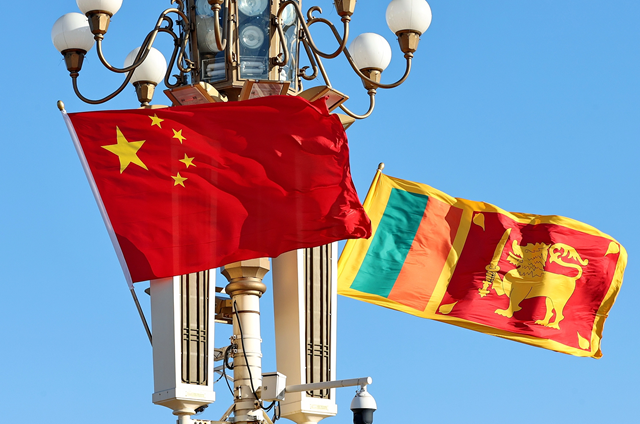
Sri Lanka reportedly declined an invitation from China to attend the Shanghai Cooperation Organisation (SCO) summit in Tianjin, citing pressures from an undisclosed foreign mission, according to sources close to the Colombo government.
The move comes despite active lobbying by both the Chinese embassy in Colombo and the Sri Lankan embassy in Beijing, who urged Colombo to participate in what is being described as one of the most significant SCO summits in recent years.
Sources indicate that the Sri Lankan government remained silent and noncommittal throughout the discussions, ultimately opting to stay away from the summit. According to media outlets and other regional observers noted that China had reportedly offered assistance, both prior to and after the summit, to incentivize Sri Lanka’s participation.
Despite these offers, Sri Lanka’s decision appears to reflect broader geopolitical considerations and a desire to maintain neutrality amid intensifying global alignments. Analysts suggest that Colombo’s choice may signal its caution in balancing relationships between major powers, particularly in a summit where economic and security strategies were set to be highlighted.
Meanwhile, the SCO summit in Tianjin saw the return of key world leaders, most notably Indian Prime Minister Narendra Modi, attending China for the first time in seven years. Modi’s presence marked a significant thaw in India–China relations following years of tension, especially along the border regions. During the summit, Modi and Chinese President Xi Jinping held high-level discussions focusing on resuming direct flights, easing visa regulations, and enhancing economic cooperation, alongside efforts to strengthen trust and stability in border areas.
Russian President Vladimir Putin also attended, reaffirming Russia’s commitment to the SCO and its strategic partnership with both China and India. Leaders collectively emphasized the importance of multilateralism, economic cooperation, and the SCO’s role as a counterweight to Western-dominated global structures. Chinese media highlighted Xi’s proposal for a new SCO development bank and the organization’s commitment to supporting regional infrastructure projects, signaling Beijing’s intent to expand its influence across the Global South.
The Tianjin summit, attended by over 20 world leaders, coincided with a grand Victory Day military parade in Beijing, commemorating the 80th anniversary of the end of World War II. Analysts view the convergence of high-profile leaders—including Modi, Xi, and Putin—as a symbolic assertion of a multipolar world order, even as individual national interests continue to diverge.
The summit discussions ranged from energy security and regional connectivity to trade facilitation and technological cooperation, reflecting the SCO’s evolving ambition beyond its traditional security mandate.While Sri Lanka’s absence drew attention in regional media, the summit’s outcomes demonstrated the growing strategic alignment between China, Russia, and India, and the SCO’s role in shaping new geopolitical and economic frameworks.