Artificial intelligence is no longer just drawing cats or writing emails—it’s now writing genomes. A team of researchers from Stanford University and the Arc Institute in Palo Alto, California, say they have successfully used AI to design working viral genomes, marking what they describe as the “first generative design of complete genomes.”
The scientists trained a system called Evo—built on the same principles as large language models like ChatGPT—on the genomes of around two million bacteriophages, viruses that infect bacteria. The AI then generated new genome designs for a simple bacteriophage known as phiX174, which contains just 11 genes.
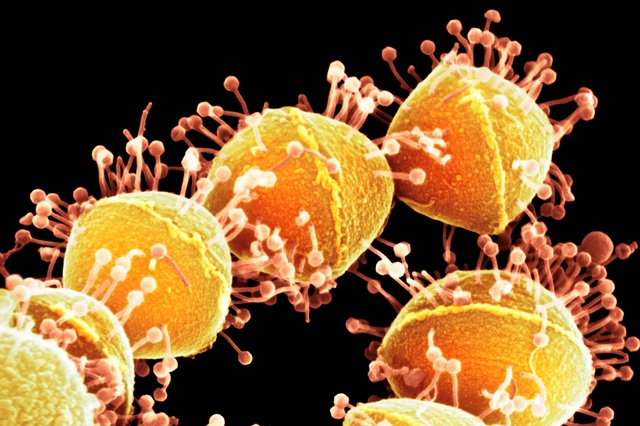
To test Evo’s ideas, the researchers synthesized 302 of the AI’s genome designs as DNA strands and introduced them into E. coli bacteria. To their surprise, 16 of these designs worked: the AI-created phages replicated and destroyed the bacteria. “That was pretty striking, just actually seeing, like, this AI-generated sphere,” said Brian Hie, who leads the Arc Institute lab behind the study.
MIT Technology Review, which obtained an advance copy of the research before publication, highlighted the significance of the achievement. Jef Boeke, a geneticist at NYU Langone Health, called it an “impressive first step” toward AI-designed life forms. Still, he emphasized that viruses aren’t technically alive, but rather strands of genetic code with relatively simple structures.
The breakthrough demonstrates AI’s potential to accelerate biological research and therapeutic development. For example, phage therapy—using viruses to combat bacterial infections—could benefit from rapidly designed phages tailored by AI. Similarly, AI-engineered viruses could one day improve the delivery systems used in gene therapy.
However, the technology raises safety concerns. J. Craig Venter, a pioneer in synthetic biology, warned that applying similar methods to human pathogens could be dangerous. “If someone did this with smallpox or anthrax I would have grave concerns,” Venter said.
For now, the experiment remains limited to simple viruses. Designing the genome of a more complex organism, such as bacteria or mammals, would require managing DNA sequences thousands of times larger than phiX174’s—and a far more labor-intensive testing process.
Despite the hurdles, some in the biotech industry see enormous potential. Jason Kelly, CEO of Boston-based Ginkgo Bioworks, argues that scaling up such AI-driven genome design in automated labs could be a “nation-scale scientific milestone,” ensuring that the U.S. leads in the race to engineer synthetic life.
As AI continues to reshape science, this work underscores both the promise and perils of letting algorithms imagine biology.