Assam stood united in grief over the past week as millions mourned the passing of cultural icon Zubeen Garg, whose melodies shaped generations and whose activism gave voice to the voiceless. From Guwahati to Silchar, from bustling cities to remote villages, the sorrow was collective, the silence deafening, and the tributes endless.
For five days, Assam became a stage of remembrance. At airports, on highways, in stadiums, and across living rooms, people gathered to sing, cry, and honour the artist they fondly called “Zubeen Da.” Uniformed police officers, political leaders, children barely three years old, and elders well into their nineties stood together, their grief breaking all barriers.
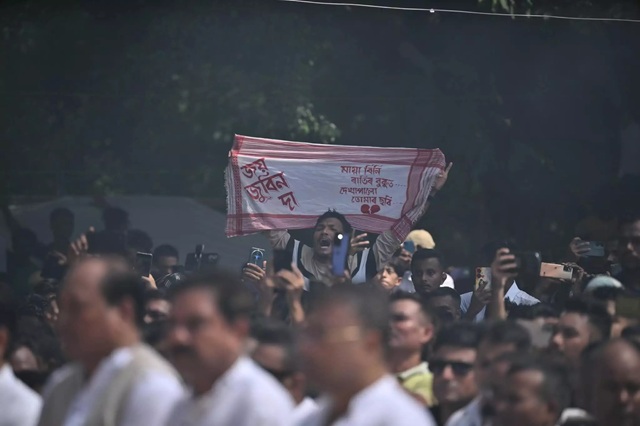
The Sarusajai Stadium in Guwahati witnessed an ocean of humanity, braving scorching heat and drenching rains for a last glimpse of the man whose voice had been their lullaby, their protest, and their anthem. Crowds lined the roads for miles as his mortal remains were taken to their final resting place, turning the journey into one last procession of love.
While the world may remember him for his Bollywood hit Ya Ali, Assam mourned much more than a singer. For the people of the Northeast, Zubeen was not just famous — he was family. His words, “Mur kunu jati nai, mur kunu dhormo nai, moi okol manuh” (“I belong to no caste, no religion; I am just human”), echoed across condolence meetings and memorials, underscoring the universality of his appeal.
In Silchar, the Barak Upotyokya Banga Sahitya O Sanskriti Sammelan held a moving condolence meet at Banga Bhawan. Community leaders, academics, theatre artists, and musicians came together, recalling his humility and boundless generosity. Stories flowed — of him composing for local plays without fanfare, of learning songs in minutes, of lending his talent to projects simply because he believed in them. The evening turned into a cultural tribute, filled with poetry, music, and prayers that testified to his enduring influence.
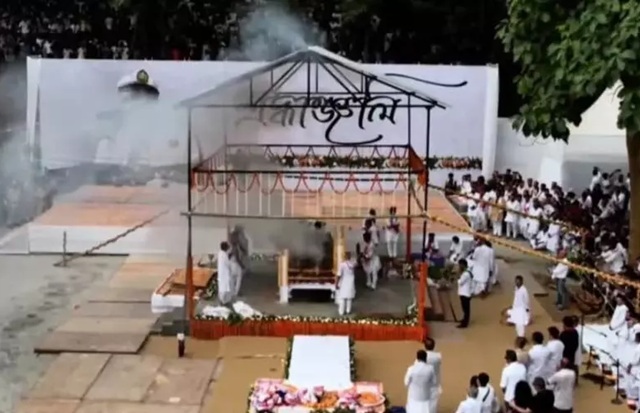
On Tuesday, September 23, Assam fell silent as Zubeen Garg was cremated with full state honours at Kamarakuchi, Sonapur. A 21-gun salute by Assam Police marked the solemn ceremony. In a deeply emotional moment, his sister Pami Borthakur, alongside Arun Garg and Rahul Gautam Sharma, lit the funeral pyre. As the flames rose, Zubeen’s own song Mayabini floated through the air — fulfilling his wish that it be played at his farewell.
The gathering of thousands, joined by chants of “Joi Zubeen Da,” turned the cremation ground into a final concert. Chief Minister Himanta Biswa Sarma, Union Ministers Sarbananda Sonowal, Kiren Rijiju, Pabitra Margherita, cultural icons like Papon and Jatin Bora, and organisations including ABSU, AASU, AJYCP, and the Assam Sahitya Sabha were all present to pay their last respects. Prime Minister Narendra Modi also conveyed his condolences.
In that moment, it was clear: Zubeen Garg’s passing was not just the end of a life, but the closing of an era. Yet, in every home, lane, and street where his songs continue to play, his presence endures.
Zubeen Garg was more than a singer. He was Assam’s voice, its conscience, and its heart. And though he is gone, his music ensures that he will never truly leave.