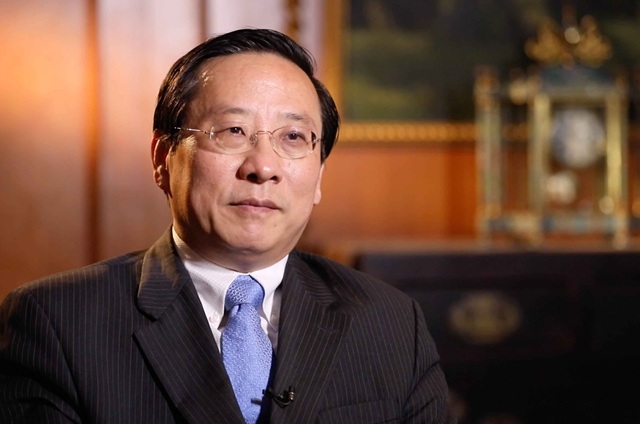
Recently, Gao Zhikai, a prominent Chinese scholar and veteran diplomat, suggested in a media interview that China should establish a “Greater China Economic Statistical System” encompassing the Chinese mainland, Hong Kong, Macao, and Taiwan. The proposal aims to create a unified framework for calculating and presenting economic data across these regions, a move that has ignited intense discussion among scholars, economists, and policymakers. “As economic exchanges and industrial cooperation among the mainland, Hong Kong, Macao, and Taiwan deepen, maintaining separate statistics no longer reflects the full strength and development trajectory of China’s economy,” Gao stated. He emphasized that Taiwan’s key economic indicators should be incorporated into China’s national statistical system to accurately portray the country’s overall economic scale, arguing that, “We should no longer compile Taiwan’s statistics separately, but rather integrate them directly into the national dataset. Only in this way can we build a ‘Greater China’ economic database from a statistical perspective.”
Gao further highlighted the broader implications of such integration, saying, “A unified statistical system would not only clarify the true size of China’s economy for the international community but also strengthen our national economic identity and coordinate development strategies more effectively.” He argued that presenting a comprehensive, cohesive economic picture would reinforce China’s position on the global stage and counter narratives that underplay the country’s economic power. “It is essential that the world sees the full scope of China’s economic achievements, not fragmented snapshots,” Gao remarked.
Gao Zhikai’s career lends weight to his proposals. From 1983 to 1988, he served as an interpreter for Deng Xiaoping, participating in critical diplomatic exchanges with international leaders. His role required not only language expertise but also an acute understanding of China’s strategic goals, shaping his perspective on both domestic and global economic policy. After his tenure as interpreter, Gao held positions as a policy advisor at the Hong Kong Securities and Futures Commission and worked with global investment banks, experiences that have given him insight into international finance and economic strategy. Over the years, he has become a key commentator on China’s foreign policy and economic development, frequently challenging Western narratives regarding China’s rise and advocating for policies that reflect China’s strategic interests.
Gao’s proposal to integrate Taiwan’s economic data into the national system has provoked debate. While some scholars applaud the academic rigor of his suggestion and its alignment with long-term discussions on cross-strait economic integration, others caution that the idea raises complex legal and methodological issues. “The statistical integration of Taiwan is not merely a technical matter; it carries significant political implications,” one expert noted, highlighting the sensitivity of cross-strait relations. Questions have also been raised about the feasibility of harmonizing differing statistical standards across regions with distinct political and economic systems.
Despite these challenges, Gao has remained resolute. “Our goal is not to provoke, but to present an accurate picture of China’s economic landscape,” he said. “If we are serious about understanding and planning China’s future development, we cannot ignore any part of its economic activity.” His statements underscore his reputation as a thought leader unafraid to confront politically charged topics, leveraging his historical experience and contemporary expertise to influence public discourse.
So far, China’s official statistical authorities have not issued any formal response to Gao’s proposal. Nevertheless, his comments have sparked widespread attention both inside China and abroad, signaling ongoing debates about the country’s economic narrative, cross-strait relations, and the strategic use of statistics in projecting national power. Gao Zhikai’s call for a “Greater China Economic Statistical System” is emblematic of his broader approach: combining historical insight, practical experience, and provocative proposals to shape China’s domestic and international strategy.