Japan is poised to begin formal discussions on acquiring nuclear-powered submarines, a move that could mark one of the most significant shifts in its postwar defense strategy. The push comes amid growing concerns over China’s maritime assertiveness and the need for Japan to strengthen its underwater deterrence capabilities.
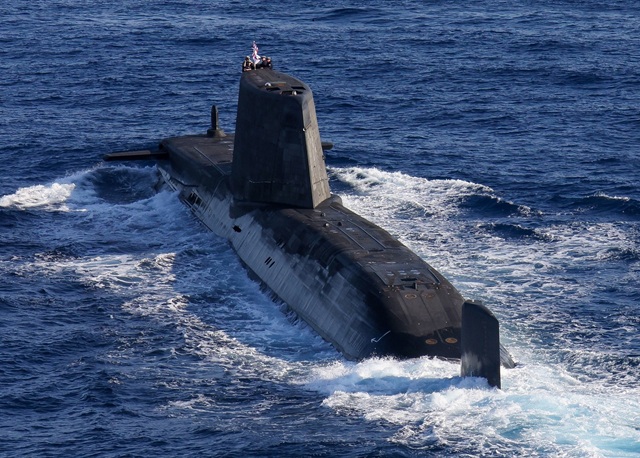
As part of a coalition agreement in October, the ruling Liberal Democratic Party (LDP) and the Japan Innovation Party (Nippon Ishin no Kai) pledged to promote the development of submarines powered by next-generation energy sources and equipped with vertical launching systems (VLS) capable of deploying long-range missiles. Such submarines would offer Japan a level of operational endurance and secrecy far beyond its current diesel-electric fleet.
Defense Minister Shinjiro Koizumi signaled a possible turning point in a televised interview on Thursday, saying, “The environment surrounding Japan is so severe that we have to discuss whether to use diesel as we’ve done so far or nuclear power.” His remarks reflect a growing awareness that Japan’s existing diesel-electric submarines, which rely on lithium-ion batteries and must periodically surface to recharge, may be inadequate for sustained operations in increasingly contested waters.
Nuclear-powered submarines, by contrast, can remain submerged for months, allowing them to patrol vast ocean areas undetected. Equipping them with VLS launchers would also enable them to strike from a distance, but such systems require a larger hull and high mobility — capabilities that only nuclear propulsion can reliably provide. Experts estimate that Japan would need at least three nuclear submarines to maintain an effective operational cycle covering maintenance, training, and active missions.
However, the financial and logistical hurdles are formidable. The introduction of nuclear submarines would demand an overhaul of the Maritime Self-Defense Force’s structure, which already faces chronic manpower shortages. Recruiting nuclear engineers and radiation safety specialists would be essential, as would addressing potential concerns about nuclear safety in port cities where the submarines would be based.
Legal and political barriers also loom large. Japan’s Atomic Energy Basic Law limits nuclear technology to peaceful purposes, meaning the government may need to amend or reinterpret it to permit military applications. Winning over local communities and navigating public sensitivity toward nuclear issues — deeply rooted since the Fukushima disaster — could prove equally challenging.
Within the Defense Ministry, opinions remain divided. One official acknowledged that “the introduction of nuclear submarines has been a taboo subject in the Self-Defense Forces for a long time and has not been properly discussed,” adding that much depends on whether political leaders are prepared to make a decisive commitment. Another voiced skepticism, questioning whether such costly assets are necessary “if it is only to monitor and deter China and Russia.”
As debates unfold, Japan faces a defining moment in its defense evolution — one that will test not only its technological and financial capabilities but also the political will to break from decades of self-imposed restraint.