For two centuries, Letizia Bonaparte, mother of Napoleon, has been remembered as a formidable matriarch—stern, frugal, and often irascible. But according to historian and descendant Laetitia de Witt, Letizia, titled Madame Mère during the empire, was a more loving and conscientious mother than popular legend suggests. Writing in a new biography, de Witt argues that her strictness and frugality were necessary to preserve her family in turbulent times and secure the futures of Napoleon and his seven siblings.
“The emperor held his mother in deep esteem. She played an important role. She stood up to him. He later said that she was the only person he respected,” de Witt told The Times UK. The historian, vice-president of the Institut Napoléon, aims to give Letizia a “flesh and blood” presence, moving beyond the simplified and often contradictory portrayals that emerged during Napoleon’s reign.
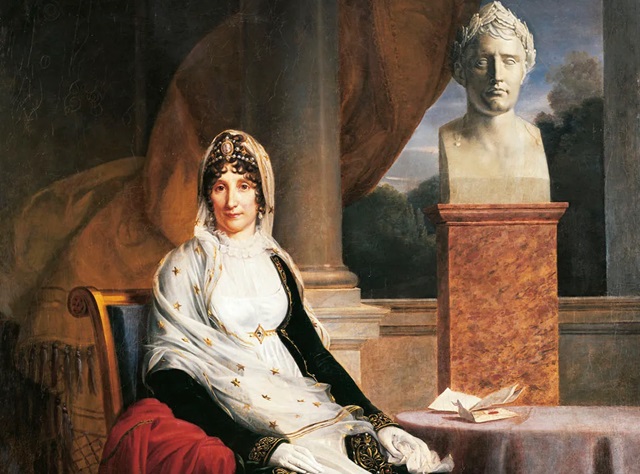
Art and history have cast Letizia in contrasting lights. Court painters portrayed her as a noble Roman matron, while detractors called her Madame Radine, or Stingy. Later, during the reign of Napoleon III, she was celebrated as a stoic heroine. In Romantic-era imagination, she became “Madame Mère du destin,” the mother of destiny, admired for her beauty and her unwavering authority.
Letizia’s personality could be formidable. When Napoleon crowned himself in 1804, she reportedly responded in her Corsican accent: “Let’s hope it lasts,” and was not invited to the ceremony due to disagreements with her son and hostility toward Empress Josephine. Widowed at 34 and living to 85, she passed on a steely resolve to her children. Napoleon, exiled in Saint Helena, wrote of her: “Her tenderness was severe. She punished wrongdoing or rewarded goodness indiscriminately. She held us accountable for every little thing.”
De Witt notes that Letizia and Napoleon were often at odds, particularly over his imperial ambitions. She once refused to kiss his hand, astonishing Marie Louise of Austria, Napoleon’s second wife, by asserting: “In Vienna, you were the emperor’s daughter. Here, I am the emperor’s mother.” The historian emphasizes that mother and son shared traits such as authority, perseverance, and pride, which sometimes made their relationship conflictual, but also deeply influential.
“Letizia Bonaparte was a mother like so many others: loving, protective, present, stubborn, manipulative, demanding, anxious and keen to control everything,” de Witt said in an interview with the Napoleon Foundation magazine. The subtitle of her book honors Napoleon’s tribute to his mother in Saint Helena: “I owe all my good fortune to my mother.” Letizia Bonaparte died in 1836 in Rome, fifteen years after her son’s defeat at Waterloo, leaving behind a legacy that de Witt argues deserves reevaluation.