Francisco Franco did not win the Spanish Civil War through strategic brilliance but through a brutal plan to crush and eliminate his opponents, according to renowned British historian Paul Preston. In a wide-ranging interview originally published by El País, Preston — considered one of the world’s leading experts on 20th-century Spain — dismantles the myths that have long surrounded the dictator’s legacy.
Preston, now 79, admits he has grown weary of discussing Franco after more than fifty years studying the man, the Civil War, and the dictatorship that followed. Yet he recognizes his research remains crucial as false narratives about Franco continue to circulate, both in Spain and abroad. He first gained international recognition with Franco: A Biography, later expanding it as new evidence surfaced about the regime’s corruption, propaganda, and systemic violence.
Asked whether global perceptions of Franco have changed, Preston said that the English-speaking world long held a surprisingly positive view of the dictator. He explained that Britain’s anti-communist establishment often sympathized with Franco and quietly aided him under the guise of “non-intervention,” a policy that, in practice, undermined the Republic. Preston also emphasized that while historians frequently highlight Hitler’s and Mussolini’s military support for Franco, British political backing has been less acknowledged — despite proving instrumental to the rebel victory.
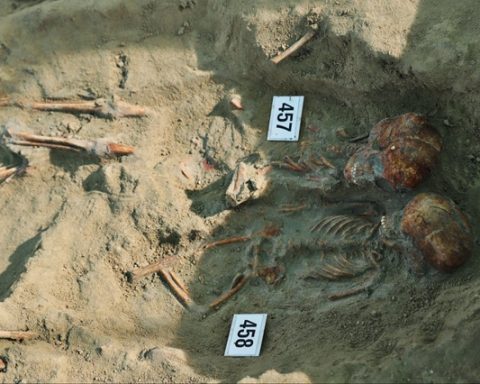
One of the most persistent myths, Preston said, is the idea that Franco was a brilliant military strategist. In reality, he argued, Franco waged war slowly and brutally, aiming to “conquer Spain inch by inch” through terror and mass elimination of Republican supporters. Comparing him to major military figures such as Rommel or Montgomery, Preston noted that Spanish military training lagged decades behind the rest of Europe. He described Franco’s brutal tactics as rooted not in strategic genius but in the colonial warfare mindset he developed in Morocco.
Throughout the conversation, Preston underscored that Franco’s regime was deeply corrupt — a fact he admits he underestimated early in his career. Later editions of his biography, as well as his book A Betrayed People, document the extensive enrichment of Franco and his family. The historian credits fellow scholar Ángel Viñas with exposing much of the evidence showing the dictatorship was, in Preston’s words, “a regime of plunder.”
He also stressed that the regime’s power relied heavily on propaganda. Franco orchestrated a sweeping national indoctrination effort after 1939, controlling the press, education, and the Church to construct the image of a vigilant “savior of Spain.” Preston likened the scale of this campaign to modern disinformation systems, describing it as a massive, decades-long exercise in “brainwashing” that has not been fully recognized even today.
Asked whether Franco should be labeled a fascist, Preston expressed discomfort with the term’s modern use, arguing that contemporary political debate often applies the label loosely as an insult. While acknowledging Franco’s brutality, he said the regime differed from classic fascism in key ways, particularly in its loyalty to old social hierarchies and its roots in colonial militarism rather than revolutionary ideology.
Preston also rebuked claims that Franco’s violence cannot be compared to Hitler’s. While recognizing the broader scale of Nazi atrocities, he noted that the proportion of Spanish citizens killed by Francoist forces — both during and after the Civil War — was strikingly high. He recalled Franco’s infamous remark to journalist Jay Allen that he would save Spain “at any price,” even if that meant executing half the population.
As Spain moved into the Cold War era, Franco adapted his image to survive, recasting his regime as a monarchy rather than a fascist dictatorship. Preston highlighted the skilled political maneuvering behind this transformation, especially by Franco’s ally Luis Carrero Blanco. With U.S. military interests focused on Spain’s strategic location, American funding and support helped the dictatorship consolidate itself during the 1950s and 1960s.
Turning to the monarchy, Preston explained that Juan Carlos I’s relationship with Franco was complex. As a boy, Juan Carlos functioned as a political hostage, raised under the dictator’s supervision. Although the future king often spoke respectfully of Franco, Preston said this stemmed less from ideological loyalty than from personal obligation and political calculation. Juan Carlos understood, he noted, that transitioning Spain to democracy was essential for the monarchy’s survival.
The interview also touched on Franco’s antisemitism. Preston affirmed that the dictator harbored deep antisemitic views, citing writings he published under pseudonyms and the influence of European far-right networks. While Franco later claimed credit for the humanitarian actions of certain Spanish diplomats, Preston emphasized that this was part of a deliberate effort to manipulate his legacy.
Ultimately, Preston lamented the ongoing spread of misinformation about Franco — a problem he linked to flaws in education systems and the unchecked influence of social media. Even decades after the dictator’s death, he warned, nostalgia for Francoism persists among segments of the far right, sustained by inaccuracies and political opportunism.