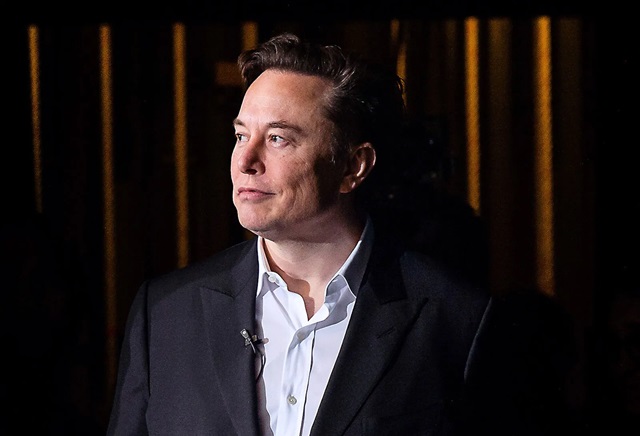
Elon Musk is once again pushing the boundaries of technological imagination—this time by projecting that artificial intelligence computation will soon migrate beyond Earth. Speaking alongside Nvidia CEO Jensen Huang and Saudi officials in Washington on Wednesday, Musk argued that AI processing in orbit could become cheaper than on Earth within just a few years.
“I believe that within the next five years, running AI in space will be far more cost-effective than doing it on Earth,” Musk said, outlining a vision of solar-powered AI satellites performing computation at a fraction of terrestrial energy costs. “Long before we exhaust energy sources on our planet, the cheapest way to handle AI computation will likely be via solar-powered AI satellites. I’d estimate this could happen in roughly a four- to five-year timeframe.”
Huang reinforced the theme of radical efficiency improvements, pointing to the sheer physical bulk of today’s AI supercomputers. “Each rack weighs about two tons, and almost all of that, roughly 1.95 tons, is just for cooling,” he said. “Now imagine a supercomputer shrunk down to a fraction of that size—each GB300 rack would become a tiny, highly efficient unit.”
The remarks came as Musk formally announced a major new project: a 500-megawatt xAI data center in Saudi Arabia, developed in partnership with HUMAIN AI, a company funded through the kingdom’s sovereign wealth fund. Powered by Nvidia hardware, the facility will dwarf many existing AI clusters. For comparison, xAI’s current Colossus 1 data center in Memphis—already among the world’s largest—operates at around 300 megawatts.
Meanwhile, Nvidia’s Huang revealed that Amazon Web Services will build its own 100-megawatt AI data center using Nvidia chips, with what he described as “a gigawatt ambition and counting,” signaling that hyperscale AI infrastructure is still accelerating.
These announcements follow the unveiling of a new AI Memorandum of Understanding between the U.S. and Saudi Arabia on Tuesday. According to the White House, the agreement will grant Saudi Arabia access to advanced American AI systems while incorporating safeguards designed to protect U.S. technology from foreign influence.
On stage at the Kennedy Center, Musk broadened his futuristic outlook beyond data centers, predicting a world transformed by robotics. “Humanoid robots will be the biggest product ever,” he said, adding that these robots could eventually make human labor optional—a declaration that drew applause from the audience.
Musk later joked after momentarily misstating the size of the new Saudi data center as 500 gigawatts—an impossible scale—that such a facility would cost “8 bazillion trillion dollars.” But his broader message was serious: rapid advances in robotics, AI hardware, and global data infrastructure could push computing into orbit far sooner than expected.
If Musk’s timeline holds, the next frontier for artificial intelligence may not be another Earth-bound megaproject—but the space above it.