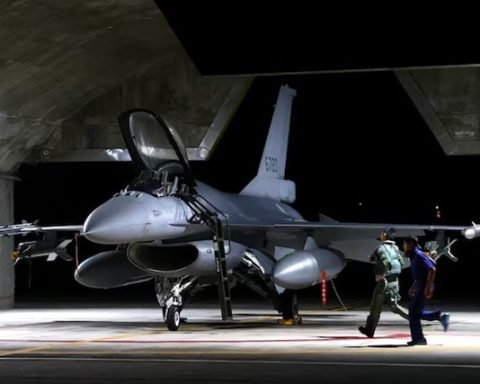
India earlier this month officially opened a high-altitude airbase near its disputed border with China, prompting debate about its strategic significance. Located at approximately 13,700 feet (4,176 meters) above sea level and roughly 30 kilometers (19 miles) from the Line of Actual Control, the Mudh-Nyoma Air Force Station is equipped to handle fighter and transport aircraft. On November 13, Air Chief Marshal Amar Preet Singh confirmed the landing of a C-130J transport aircraft, marking the Indian Air Force’s first public acknowledgement of operations at the site.
Despite its strategic location, analysts quoted by the South China Morning Post argue that the airbase is unlikely to derail ongoing efforts at border de-escalation. Observers say the facility represents a culmination of long-term infrastructure investments rather than an immediate military threat to Beijing.
He Xianqing, an associate research fellow at the National Institute for South China Sea Studies in China, noted that the airbase enhances India’s aerial patrol capabilities and supports broader initiatives to modernize and expand border infrastructure. “The harsh geography and climate along the China-India border mean that transport accessibility directly determines a country’s ability to manage the situation on the ground,” He said. Improved transport and operational facilities allow India to maintain a constant presence, enabling stronger and more frequent patrols.
Amit Ranjan, a research fellow at the National University of Singapore’s Institute of South Asian Studies, told the South China Morning Post that Beijing likely anticipated the base’s development, which had been underway for years. “They have been working on this infrastructure for a long time. It’s only coming out publicly now,” Ranjan said. “You simply can’t prepare a base within one day.”
The Mudh-Nyoma site has historical significance, having been used as a landing ground during the 1962 Sino-Indian War. Initially equipped with basic navigation and support facilities, the site remained underutilized until upgrades in 2009 allowed it to handle fixed-wing transport aircraft. Further modernization accelerated after Prime Minister Narendra Modi took office in 2014, as part of a broader push to strengthen India’s border infrastructure. Plans to develop the site into a full-fledged, fighter-capable airbase were formally launched in 2023 alongside other strategic works along the border.
While relations between India and China have improved in recent years, including a patrolling agreement and high-level meetings such as Modi’s August visit to China for the Shanghai Cooperation Organisation summit, analysts emphasize that tensions remain. Both sides continue to exercise caution following the deadly 2020 Galwan Valley clash.
“Both sides know the limitations of their power, so they don’t want to take any chances,” Ranjan said. “New Delhi may think that it’s always better to be ready for any unexpected developments.” He added that the airbase’s inauguration does not signal a confrontational move but reflects India’s ongoing strategic preparedness.
He Xianqing also highlighted the disparity in border capabilities, noting that China still maintains a significant advantage in infrastructure efficiency and construction capacity. While India’s development is progressing, it remains slower than China’s well-established facilities.
Earlier this year, Indian media reported that at least six new airbases were under construction on the Chinese side of the border, situated 25 to 150 kilometers from the Line of Actual Control, underscoring the ongoing infrastructure competition in the region.