by Our Defence Affairs Editor
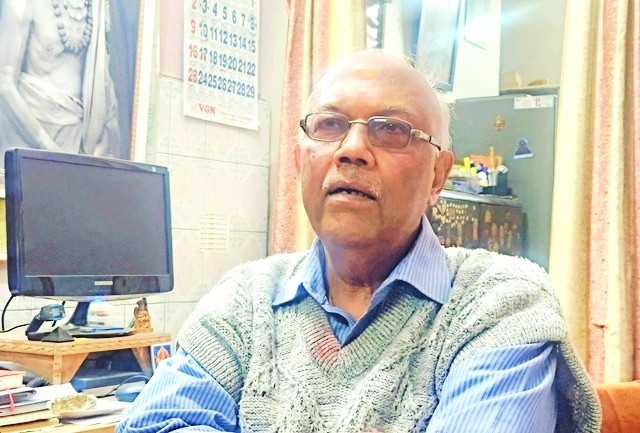
New Delhi — In a candid discussion on Sri Lanka’s militant history and recent security challenges, acclaimed author M. R. Narayan Swamy, best known for his biography of LTTE leader Velupillai Prabhakaran, categorically dismissed the possibility of the LTTE’s resurgence and refuted conspiracy theories surrounding the 2019 Easter Sunday attacks. “It may be possible for the Buddha to come back, but mark me, LTTE cannot revive; that’s how that organisation is,” Swamy said, stressing that the group’s ideological and historical circumstances are irretrievably gone.
Swamy explained that the LTTE’s formation was tied to a very specific historical and moral context, which no current group or individual can replicate. “The people who gave birth to the LTTE are all gone. Either they are gone ideologically, they are gone physically… You cannot revive it,” he said. He also dismissed comparisons with other insurgent organisations, noting that groups like Hamas or India’s Maoists are fundamentally different. “Hamas may have attacked Israel, but Hamas is a bacha, a child compared to LTTE… Maoists are a completely homegrown group and there can be absolutely no comparison,” he noted.
Highlighting the LTTE’s moral decline, Swamy reflected on its major transgressions, beginning with the Anuradhapura attack. “Till Anuradhapura took place, the moral righteousness was there… Morally. Morally,” he said. Despite the sporadic survival of extremist ideologies globally, he insisted that the LTTE as it was known is over: “Some things that happen at a certain point in history, you cannot keep on repeating them… LTTE cannot be revived.”
Addressing speculation about the Easter Sunday bombings in 2019, Swamy rejected conspiracy claims outright. “I don’t believe this… because I refuse to believe in conspiracy theories… Whatever you might say about Gotabaya Rajapaksa, there would have been… No leader of any country would have steeped so low to create the killings of people so that he can come to power. Moreover, Gotabaya’s victory was inevitable,” he stated. Swamy emphasised that actionable intelligence was available at the time, but failures within the Sri Lankan security establishment contributed to the tragedy.
Swamy also examined the broader context of insurgency and the role of education in extremist movements. He noted that highly educated individuals have historically been involved in militancy, citing Naxalites, the Khalistan movement, and militancy in Kashmir. “Educated people always existed in insurgency movements everywhere… Now depending upon what is high education, it could be school pass out, it could be college pass out,” he explained, adding that extremists are invariably fringe elements rather than representative of larger communities.
Reflecting on post-conflict reconciliation, Swamy highlighted that mindsets can evolve over time. “Things evolve over a period of time… I see the changes in their mindset… virtually they are saying we could have taken a different path,” he said. He extended this principle to ethnic harmony in Sri Lanka, stressing that Tamil and Sinhalese communities are destined to coexist. “The two communities… need to understand this, that they are destined to live together and they can live together. As friends, as brothers, as sisters or whatever.”
Swamy also shed light on India’s role during the Sri Lankan conflict, noting that while military assistance was limited, intelligence support played a pivotal role. “The intelligence help that India provided at that time was probably more crucial than any weapons they could have given… India itself would be coy of speaking about it because they don’t want to hurt sentiments here,” he said.
Swamy reiterated the finality of historical events and the impossibility of repeating them. “Some things that happen at a certain point in history, you cannot keep on repeating them. There will be no more Adolf Hitler in Germany. It cannot be possible,” he said, offering a stark lens on Sri Lanka’s militant legacy and contemporary security threats.