When the 2004 tsunami struck, George W. Bush was the President of the United States. Former President Bill Clinton was a strong leader in Bush’s rival Democratic Party. Thinking about the fate of many countries affected by the tsunami disaster, Bush set aside political rivalry and appointed Bill Clinton as his special envoy to seek aid and funds for the reconstruction of the devastated countries. Bush believed that Bill Clinton, who had strong international relationships, was the best candidate for the task. Bush was not concerned that the credit might go to a leader of the rival party; he simply wanted the job to be done.
Not only in America, but in any country, disasters such as a tsunami can be an opportunity to bring the government and the opposition together. It is like friends and enemies gathering at a village funeral.
Velupillai Prabhakaran was filled with hatred towards the Sinhalese. When the 2004 tsunami struck, he had stayed away from peace talks. Despite pressure from international peace envoys, including the Norwegian peace envoy, Prabhakaran had stopped engaging with the Colombo government, stating that the Sinhalese government could not be trusted. However, when the tsunami hit, he was afraid.
The tsunami killed a large number of people in both the south and the north and destroyed vast amounts of property. At that point, Prabhakaran realised that, in order to provide relief to affected families, he would have to compromise with his arch-enemy, the Colombo government. The Norwegian peace envoy and other donor countries stated that, to provide tsunami assistance, the southern government and the LTTE in the north needed to come together and form a joint mechanism. They proposed establishing a Tsunami Relief Board through which aid could be distributed to both the south and the north. Sri Lanka was expected to receive a substantial amount of aid through this mechanism.
At that time, President Chandrika Kumaratunga had formed a government following the 2004 general election. This government replaced the previous Ranil Wickremesinghe administration and the proposed interim government that Prabhakaran had discussed earlier. The JVP, which had formed an alliance with Chandrika for the 2004 election, raised the loudest objections, claiming that such an interim arrangement would divide the country. Chandrika herself also stated that granting an interim government to the North was dangerous.
When the tsunami struck, Chandrika’s government included the JVP. The current President, Anura Kumara Dissanayake, and several JVP ministers were part of that government. When donor countries, through the Norwegian peace envoys, proposed the Tsunami Relief Board, both Chandrika and Prabhakaran felt compelled to agree for the sake of the affected people. Chandrika agreed in order to use the funds to assist victims and rebuild damaged areas. Prabhakaran, though reluctantly, also agreed, as not only civilians in the North but LTTE members themselves had been left helpless by the disaster.
The JVP pressured Chandrika not to agree to the Tsunami Relief Board and threatened to withdraw from the government if it was formed. Chandrika was forced to choose between protecting her government and protecting the victims. When Prabhakaran set aside his animosity and agreed to the mechanism, she felt she had no choice but to proceed. She approved the Tsunami Relief Board despite JVP opposition. As promised, the JVP withdrew from the government. Several powerful ministers claimed the JVP’s decision was correct, including Chandrika’s close associate Mangala Samaraweera. The JVP then challenged the Tsunami Relief Board in court, and the initiative came to an end.
The current President of Sri Lanka, Anura Kumara Dissanayake, resigned from his ministerial post at that time in protest against the Tsunami Relief Board. I do not know whether he remembers this incident. Had the Tsunami Relief Board been established and donor countries delivered the promised aid, not only the tsunami victims but Sri Lanka as a whole could have recovered more effectively. The JVP prevented this from happening.
Isn’t the JVP now asking for international aid for the victims of Cyclone Ditwah?
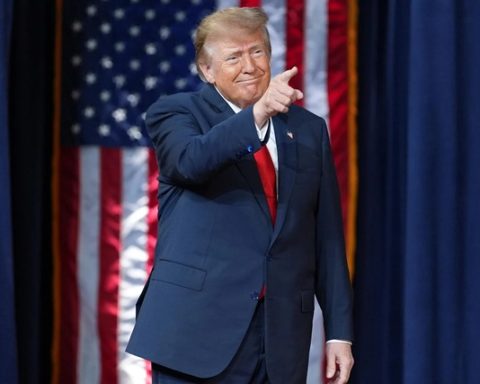
The US Ambassador to Sri Lanka, Julie Chung, stated on her Twitter account that Anura had contacted the US Ambassador to India and Trump’s Special Representative for South Asia to request aid. The United States initially pledged one million dollars, later increasing it to two million dollars. However, the total damage caused by the disaster exceeds 15 billion US dollars. Two million dollars is a pittance when measured against losses of such magnitude.
Opposition Leader Sajith Premadasa stated that he was prepared to help amend the International Monetary Fund agreement and draft a new one, recognising that the government had no clear plan to recover from the disaster. He also met separately with foreign ambassadors to seek assistance for Sri Lanka. At that time, the government had not even organised a meeting with foreign diplomats to request aid.
When Sajith extended a hand of friendship, Anura came to Parliament and said, “Please don’t ask for Sajith’s help.”
During the tsunami, Chandrika invited her arch-enemy Ranil Wickremesinghe to light oil lamps together for the victims, sending a message to the nation that they were united in rebuilding the country, regardless of party differences. She understood that unity was essential to secure international assistance. Although Ranil was reluctant to stand alongside Chandrika, who had dissolved his government and removed him from the prime ministership, he could not refuse the invitation. The reason was clear: the tsunami affected everyone—Sri Lankans of all parties, colours, and beliefs.
It is not only those who voted for the Compass who were affected by Cyclone Ditwah. Among the victims are also those who voted for the Samagi Jana Balawegaya and the Podujana Peramuna. This is not merely a humanitarian disaster; it has triggered a severe economic crisis for the entire country. Therefore, when the opposition offers help, this is not the time to say, “please don’t”. This is the time to say, “please come—let us come together”.
If the JVP fails to recognise this truth even after the Ditwah cyclone, an even greater disaster may be imminent.