Saudi Arabia has spent hundreds of billions of dollars on advanced military technology since the 1980s, seeking to protect the kingdom from threats at home and across the Middle East. Yet a missile attack by Houthi militants on Riyadh’s international airport last week, which killed at least 13 people and injured hundreds, exposed vulnerabilities in its defences and intensified pressure on the royal family. The strike also threatened the kingdom’s efforts to present itself as a secure destination for international investment, business and major sporting events as it seeks to reduce its dependence on oil.
Security footage and mobile phone videos showed Islamic pilgrims fleeing through the airport terminal amid explosions and trails of blood. The decision to release the footage was particularly significant because Riyadh could have suppressed images of the damage, as it has done with evidence of Iranian missile strikes on US military bases since Donald Trump launched his war against Tehran in February. One former US intelligence officer suggested that making the footage public was intended partly to encourage domestic solidarity, allowing people to see the threat facing the kingdom and the difficulty of responding to it.
The airport attack followed strikes on a critical oil pipeline crossing Saudi Arabia, while the Houthi advance along Yemen’s western coast has threatened the Bab el-Mandeb Strait at the southern entrance to the Red Sea. With Iran continuing to attack shipping in the Strait of Hormuz, the Houthis, an Iranian-backed armed movement, have created a second pressure point that could severely disrupt Saudi oil exports. The combined threats have left Riyadh confronting a security crisis extending beyond its borders and affecting vital infrastructure and maritime routes.
Saudi officials have described the confrontation with the Houthis as the kingdom’s greatest security challenge since al-Qaeda began a wave of attacks in the 1990s and 2000s. Some senior observers compare the present crisis with 1979, a year marked by the Islamic Revolution in Iran, the Soviet invasion of Afghanistan and a bloody siege in which Islamist insurgents seized the Grand Mosque in Mecca.
For Mohammed bin Salman, the crown prince and Saudi Arabia’s de facto leader, the attacks pose a direct test of the authority he has consolidated over the military. After a purge of senior royals a decade ago, he assumed sweeping control over the armed forces. The latest attacks have nevertheless exposed the limits of that power. “People expect a response,” one Saudi security source said.
The crisis has also damaged the economic strategy associated with the crown prince. Several high-profile business and sporting events have been cancelled, while his flagship investment conference, commonly known as “Davos in the desert”, has been postponed. Reuters reported that executives would be permitted to attend remotely, while some visitors were flying to airstrips outside Riyadh or neighbouring Gulf states before continuing by road. A UK-based consultant with business interests in the Saudi capital said clients were no longer being insured to travel there. “Until they can prove their skies are safe, very few people are coming in,” the consultant said.
Despite decades of spending, Saudi Arabia’s armed forces face significant operational limitations. Advanced fighter aircraft are poorly suited to confronting guerrilla forces entrenched in mountainous terrain, while the Houthis have demonstrated an ability to overwhelm sophisticated Patriot and Terminal High Altitude Area Defence (THAAD) interceptor systems using comparatively inexpensive, low-flying drones and missiles.
Mohammed bin Salman must respond to public demands for retaliation while avoiding another costly campaign with limited prospects of success. In 2015, as defence minister, he launched a prolonged war in Yemen that left tens of thousands dead but failed to dislodge the Houthis. Saudi forces lack extensive combat experience against the battle-hardened movement, and Riyadh is unwilling to commit ground troops to an invasion.
“MBS has got a really fine line to tread. He has to prosecute a war. They have to respond. But the Houthis are going to fire back, so there’s an escalation trap,” said Michael Stephens of the Royal United Services Institute. He questioned what strategic objective Saudi Arabia could realistically achieve, adding that the Americans had fought the Houthis for a month the previous year and “achieved nothing”.
Intelligence sources in the Gulf do not believe ordinary Saudis have turned against the crown prince over the attacks. A former US intelligence officer said the public understood the threat and the difficulty of confronting it, although people still expected a strong response. Friction has emerged within the royal family, however. Mohammed bin Salman is believed to be frustrated with his brother, Defence Minister Prince Khalid, whose repeated attempts to negotiate an agreement with the Houthis have failed to prevent further attacks.
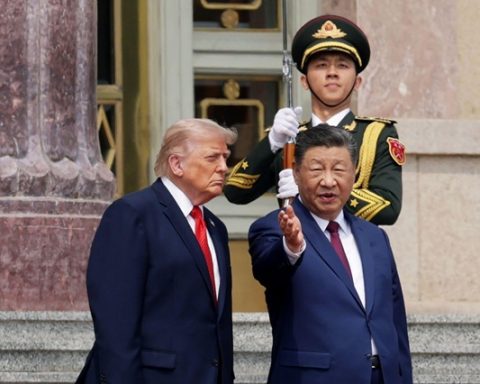
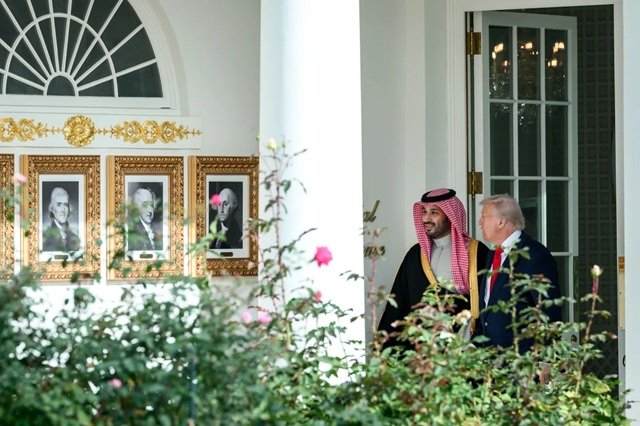
Much of the resentment in Riyadh is directed at Washington. Saudi Arabia’s decades-long purchases of American military equipment were intended partly to secure US protection, but Trump’s decision to launch the war against Iran, followed by the administration’s withdrawal of forces from the Gulf, has undermined those expectations. After the pipeline attack, Mohammed bin Salman called Trump repeatedly to urge strikes against the Houthis. Instead, the US president reached an agreement with the militants to protect American shipping in the Red Sea.
“It was supposed to be about US security guarantees. They were buying support. They were buying assistance in their time of need, and they’re not getting that,” Stephens said. Saudi author and political analyst Ali Shihabi said people recognised that the kingdom had become embroiled in a conflict that Trump had started despite Saudi opposition.
Riyadh has since invoked its defence pact with Turkey and Pakistan, signed in Mecca last year, but neither country wants to become trapped in Yemen. Andreas Krieg, a Middle East security expert at King’s College London, said they were willing to help defend Saudi Arabia but would not provide the ground capability needed to defeat the Houthis, describing the war as unwinnable.
Despite doubts about Washington’s reliability, Saudi Arabia has few alternatives to its relationship with the United States. Days after the Trump administration rejected Mohammed bin Salman’s call for strikes against the Houthis last month, it approved a $24bn sale of advanced F-35 fighter jets to Riyadh. Stephens said the Saudis would have to maintain their increasingly strained relationship with Washington because “they have no choice”.